
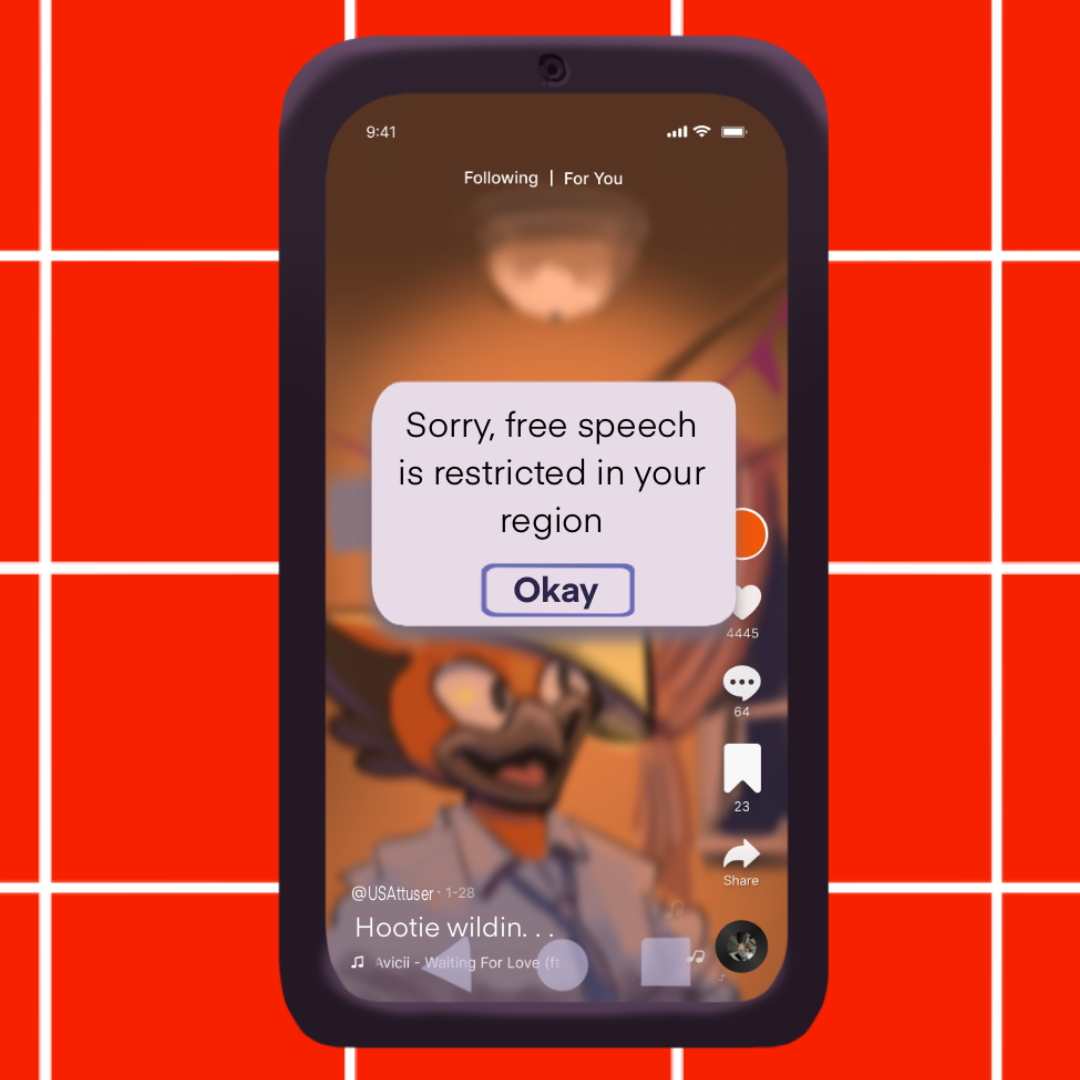
With the recent restrictions put on TikTok, we at The Equinox feel these limitations infringed on free speech and were not supported by sufficient evidence.
TikTok, a social media platform run by the Chinese company ByteDance, was temporarily shut down in the United States on the evening of January 18 due to a law passed in Congress last year. The law was passed because of national security concerns and beliefs that the Chinese government could potentially compromise American user data and privacy.
Less than a day later, the app was restored, with a message thanking President Donald Trump for helping to bring the app back.
The Equinox feels these national security concerns are inadequately addressed and are not legitimate enough to validate the app’s ban. Additionally, there are more urgent issues in need of addressing.
While the concern of national security is understandable, there is no sufficient evidence proving the Chinese government was hacking U.S. data or security, making the ban seem like more of a preventative measure. The additional focus on Chinese ownership is discriminatory, as U.S. Senators questioned TikTok’s CEO about his affiliation with China and the Chinese Communist Party. The CEO is from Singapore and has repeatedly said he has no affiliation with the CCP. Without evidence, the statements are racist and seem like a desperate attempt to turn us against China.
Social media is very relevant in our society and can be useful for spreading information. However, false information is commonly shared and many social media platforms are regulated in the wrong way.
Other corporations like Meta or Google collect the same or even more data and information than TikTok, yet TikTok seems to be singled out. Putting in an online order at a restaurant or accepting cookies on a website exposes much more of your data than TikTok does. While Meta and Google are both American-run companies and therefore obey American laws, there is nothing stopping anyone from getting around the law, proving that TikTok is singled out because of its affiliation with the Chinese government.
This ban is less about national security concerns and more about our government’s need to control the TikTok narrative. The algorithm for TikTok is extremely advanced, making it easy to reach millions of people, most commonly those under the age of 30. It seems as though our government understands the capabilities of future generations and is looking to take advantage of any aspect of control they can. Since they know how much TikTok is used by young consumers, they are trying to control this narrative to limit freedom of speech and expression.
It is even more frustrating to see the amount of control given to Trump, as TikTok made him appear as the savior when restoring the app’s services.
Many also utilize TikTok as their main source of revenue. Small businesses and rising musicians can promote their products through this source and succeed financially as a result. Banning such a vital app creates an enormous impact on this demographic of people. Additionally, these people are forced to switch to alternative products, such as those owned by Meta, which has issues with security and selling people’s data.
Having stricter privacy regulations should be the main focus instead of banning the app. It is in the hands of our legislators to make these changes and invoke these rules.
It is worrisome to see how such an impactful tool can be taken away so quickly and leads us to wonder what else can be taken from us just as fast.