

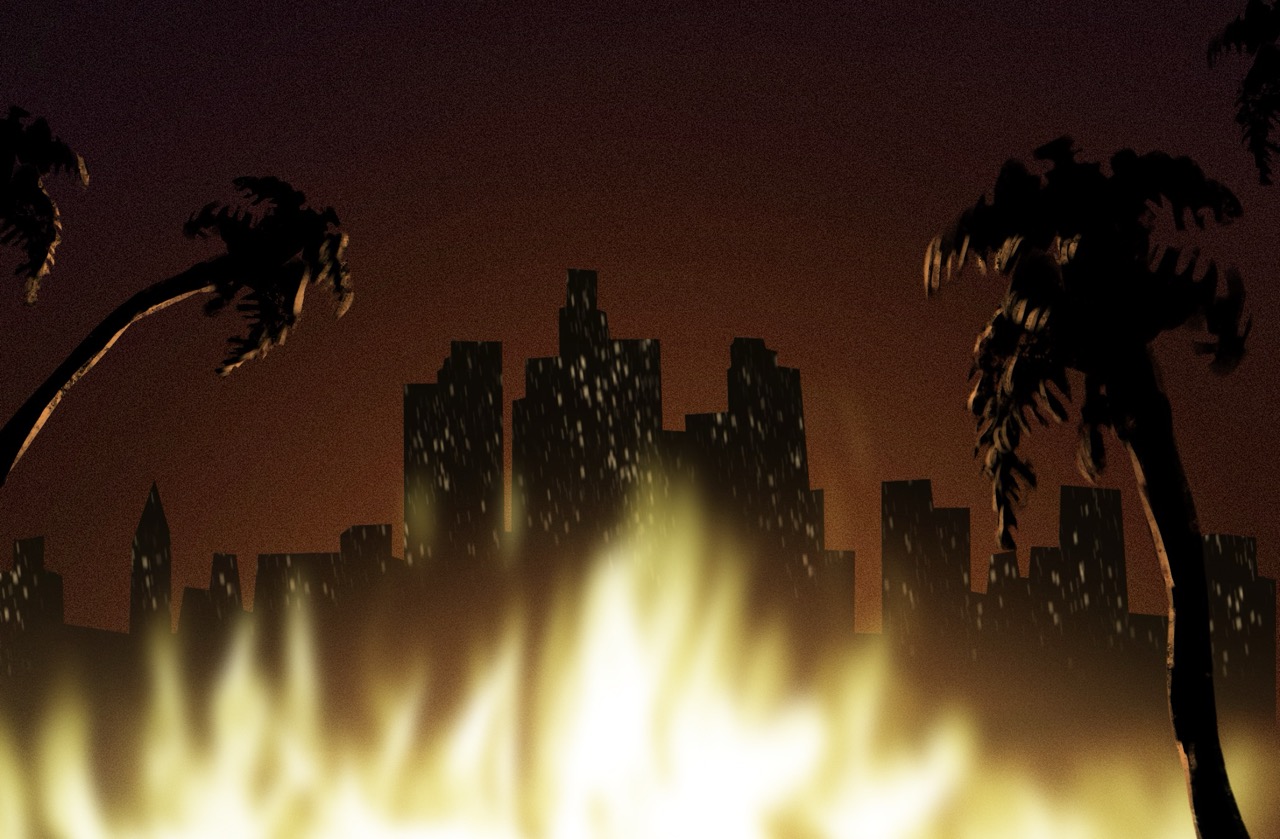
As we come back from holiday break this January, the issue of climate change has come to a stark conclusion. Climate change is here and it will be a force to reckon with.
As of January 26, Los Angeles County (L.A. County), California (C.A.) continues to burn to the ground in these devastating wildfires that have burned over 16,000 structures, according to the L.A. Times website. This will forever alter the lives of Los Angelinos and the city for a generation. The Eaton and Palisades Fires are both in the top five of most destructive fires in C.A. history, according to CalFire’s website, ranking second and third respectively and having a combined destruction comparable to the Camp Fire of 2018. The primary catalysts for the explosive nature of these fires has been the Santa Ana winds that can affect southern C.A. and the recent return to drought conditions.
The Santa Ana winds are hot, dry and fast-moving winds caused by high pressure systems in the Great Basin of Nevada and Utah, according to The Weather Channel. These winds can range from 60 mph up to 100 mph and obtain these dangerous speeds from the mountains of southern C.A. The winds from the pressure system have to funnel their way through the canyons on the way to the coast.
According to a January 4, Los Angeles Times article, L.A. County has not received a measurable amount of rain since May 5, 2024; a measurable amount is considered recordable precipitation over 0.13 inches. This has left L.A. County parched for eight months as their wet season leads off with a dry start. This dry start with the even drier Santa Ana winds has combined for a perfect storm.
From working-class neighborhoods in Altadena to more affluent Malibu and Pacific Palisades neighborhoods on the coast, homes have been destroyed and lives have been lost to a definitive case of a natural disaster caused by the effects of climate change. Of the top five most destructive wildfires in C.A. history, four of the five have been in the last 10 years. Unfortunately for us, this increase in both intensity and volatility of storms is something that will affect people across the country, not just southern C.A.
New Hampshire (N.H.) and the rest of New England is struggling with a changing climate as winters have been warmer than average in recent years. The winter holiday season of 2024 was another green one, with grass looking surprisingly healthy as we had 50 degree Fahrenheit days and rain. The rivers, lakes and ponds had struggled to freeze over as we came into winter with the setbacks on these bodies of water being the only areas having ice thick enough to stand on. We did not get our first meaningful snowstorm until the beginning of January. This is a problem we will have to reckon with sooner rather than later before it destroys our way of life and transforms our home in unforeseen ways.
Timothy Fitzpatrick can be contacted at
tfitzpatrick@kscequinox.com