

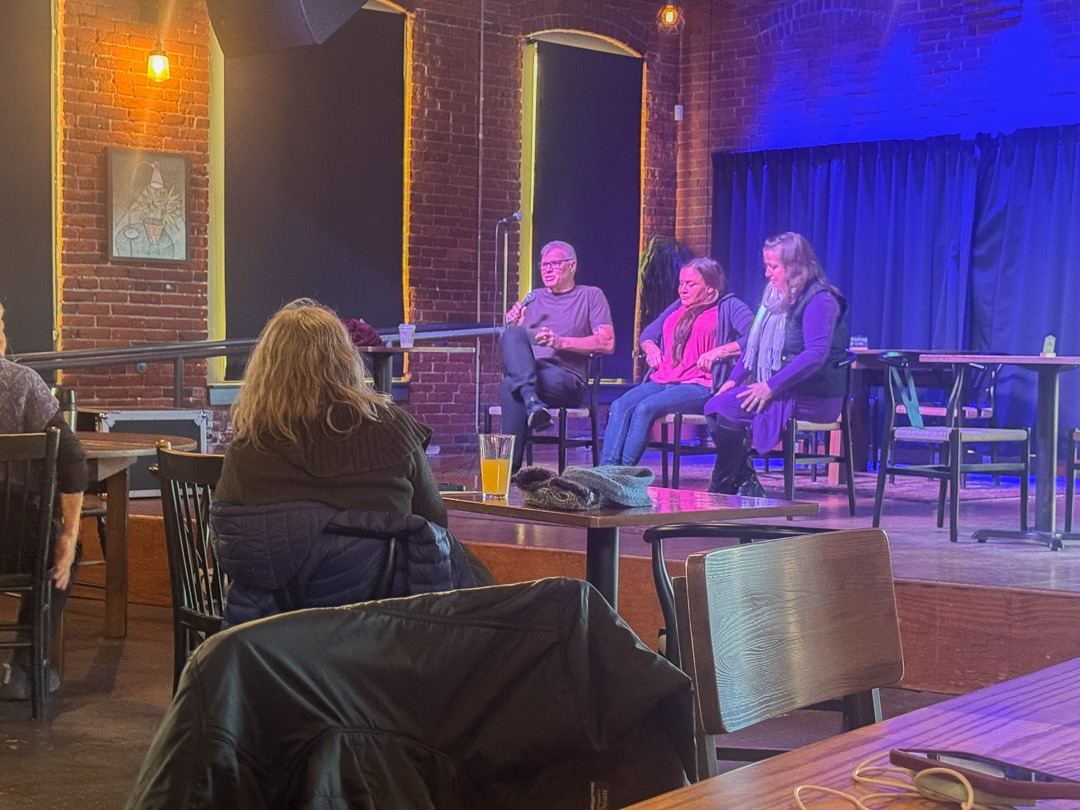


On Oct. 22, Brewbakers hosted two guest speakers for its fall elections panel. New Hampshire state representative Jodi Newell and Olivia Zink, executive director of the Coalition for open democracy, reflected on the upcoming election and voter concerns. Both Newell and Zink discussed the lawsuits against House Bill 1569 and House Bill 323.
Open Democracy NH, according to its website, “is working to achieve political equality for all” and wants “a government accountable to the people, free from the influence of wealthy special interest groups.”
The first lawsuit against House Bill 1569 requires proof of citizenship to register to vote. “We tracked data and found out many voters were married who maybe had their birth certificate and maiden name but didn’t have a way to prove citizenship,” Zink said.
One attendee asked if they would have to bring proof of citizenship after doing same-day registration without proof of citizenship, and filling out an affidavit instead.
“So there was a law that said you have seven days to show your proof of citizenship,” Zink said. “They repealed that law when they passed 1569, which requires proof of citizenship. Since we’ve won the lawsuit and brought back the affidavit, that seven days is no longer there. The attorney general will look through those qualified voter affidavits, and there is another piece of legislation that does a random audit of the citizenship affidavit.”
If someone does fill out an affidavit, there is a possibility of being contacted by the attorney general for proof of citizenship. Zink brought attention to Dick Tracy, a criminal investigator at the NH Department of Justice, who has ways to “put your name and address in and pull out records,” and that often people will not be contacted.
“If you sign a qualified voter affidavit and you’re not, it’s a $5,000 fine and a penalty of perjury,” Zink said. “Do not sign. Only sign this to say ‘I am a U.S. citizen’ if you don’t have proof on that day.”
The second lawsuit revolves around House Bill 323, which banned student IDs as a proper form of identification to vote at the polls. David Scanlan’s directive that followed the bill also advised that student IDs cannot be used to register to vote either.
On Oct. 22, the Supreme Court ruled that “New Hampshire can direct election officials not to consider student IDs when verifying voters’ identities, ahead of the midterm elections,” according to an article from The New York Times, after an emergency stay was requested.
The panel pointed out that photographs of valid forms of identification can be accepted as well. If someone forgets a form of identification, they can have someone who has access to it send a photo on their phone. “Particularly, as someone who has a 17- and 18-year-old kid,” Newell said. “I have kept all of my documents since I was 19 years old in a yellow envelope that is labeled ‘important document.’ It is very nice to know that you can take a picture of it and that will be valued.”
Debbie Bowie, a member of Citizens for Keene State College and long-term CALL participant at Keene State, brought up her concerns. “Previously, Keene State students, if they were not on the list that Keene State provided to the city clerk, my understanding is that they could bring in a bill to show their address and their name,” Bowie said. “Is that still in effect?”
Zink confirmed that students can bring a lease and confirmation of domicile.
Newell explained why she believes that reaching out to young voters is so important, reflecting on the prevalence of Turning Point USA ads and outreach.
Newell expressed concern about Turning Point’s influence on young voters, saying that a “need for community and connection” could lead to “darker areas than where we are at.”
“I keep getting these Turning Point ads, and I don’t know if you guys know who Turning Point is, but this is an organization that is very conservative,” Newell said. “I will say they are out there and are trying to do the things that we usually do in Democratic organizing. Like rides to the polls and organizing people in advance so we can do candidate outreach.”
Zink reflected on the importance of intergenerational discussions.
“How do we build this dynamic civic engagement relationship with young people?” Zink asked. “I think many of the kids today haven’t seen a functioning democracy before. They think that things are broken, and why does it matter? I think having those intergenerational conversations about concerns about our democracy. We need everybody’s ideas and voices as part of this change.”
Chloe Erno can be contacted at
cerno@kscequinox.com