
Long before the state of New Hampshire was founded, the Western Abenaki people were calling it Ndakinna.
How long ago exactly? According to Franklin Pierce University’s Professor Robert Goodby’s archeological finds, almost 13,000 years.
KSC’s Cohen Center hosted Goodby’s lecture titled “Native People in the Monadnock Region: Unearthing 13,000 Years of History, Survival, and Endurance” on Thursday, Oct. 17 at 5:30 p.m. It was held in Mason Library room 240, and people could attend either in person or through a Zoom meeting.
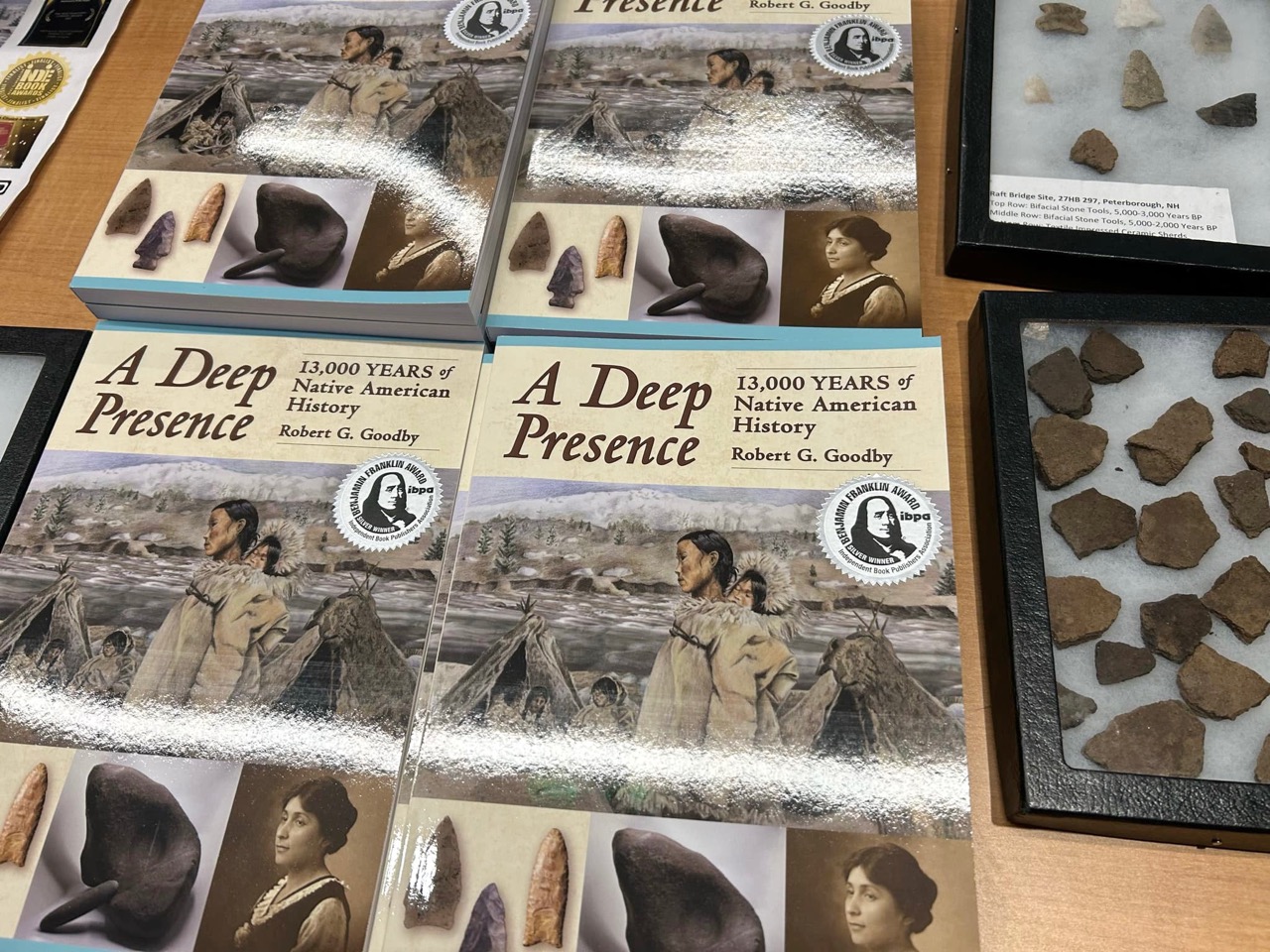
The lecture looked at Native American history, specifically the Western Abenaki people from this area, through archaeological digs Goodby has directed and been a part of. He is a professor of anthropology and a former president of the New Hampshire Archaeological Society, spending over 30 years studying Native American archaeological sites in New England.
“If you pull off … Simon Griffin’s ‘History of Keene’ published 120 years ago, like most local town histories he deals with the ‘Indians’ right up at the front of this book,” said Goodby during his lecture. “He’s basically saying that, ‘Yeah, okay, there were some native people here but not really.’”
However, despite Griffin’s book saying there were no permanent Native American settlements, the unearthed archaeological artifacts say otherwise.
One of the excavations Goodby directed was in 2010 in Tenant Swamp near the Keene Middle School. There, he and his team unearthed four distinct clusters, where stone tools and burned animal bones were found. They were able to determine that those clusters were likely where Western Abenaki houses once stood. The stone that made up the tools was also interesting, according to Goodby, because it could have come from as far away as present-day Maine.
“What this gives you is a sense that these Stone Age people living in this incredibly difficult environment actually were not isolated and primitive,” stated Goodby during his talk. “They lived in a very large and very complex world.”
He also spoke about the difficulties of finding artifacts from this period of time. Native American peoples tended to build out of natural materials such as animal furs and wood that would decompose over time.
Goodby finished his lecture by speaking about the arrival of European settlers and how it hurt the Native American peoples and their homes, both through active aggression and passive means such as European diseases that the Native Americans were vulnerable to. However, as Goodby also noted, this did not kill Native Americans and their cultures entirely, as they are still around to this day.
Attendees of this lecture found the history interesting and compelling.
“I’ve followed what [Goodby] does…and I think it’s really important for us to understand this history,” said Debbie Bowie, a book group organizer through KSC’s CALL program. “And for us to respect the land and the people who were here before.”
“We didn’t learn this history,” continued Bowie. “I recognized it at an older age that I never heard any of this.”
Goodby commented on how he first started working in the field of archaeology.
“40 years ago I found myself working on a Native American site in the Lakes region and found a 7,000-year-old spear point,” said Goodby. “It just gave me this sense of the ability to go through time, to find things that are so seemingly gone and lost.”
He also spoke on why he feels learning Native American history is so important.
“The history of these people has been so neglected,” said Goodby. “Archaeologists have spent a thousand, ten thousand times more effort learning about Egypt than they have the Indian cultures here in the United States.”
“The history of all people is important if we’re going to understand human beings,” continued Goodby. “I think it’s important for people to know the ugly and difficult truths of history.”
Orion Corbin can be contacted at