



In his initial flurry of executive orders, President Donald Trump has frozen all future National Institutes of Health (NIH) research funding. During his first weeks in office, Trump signed an executive order that blocked communication from the NIH, which according to a National Public Radio (NPR) article is mandatory for meetings to take place. If meetings are not posted on the Federal Register in advance, they have to be cancelled and rescheduled. This executive order prohibits posting those meetings for new funding applications, putting the funding process at a standstill.
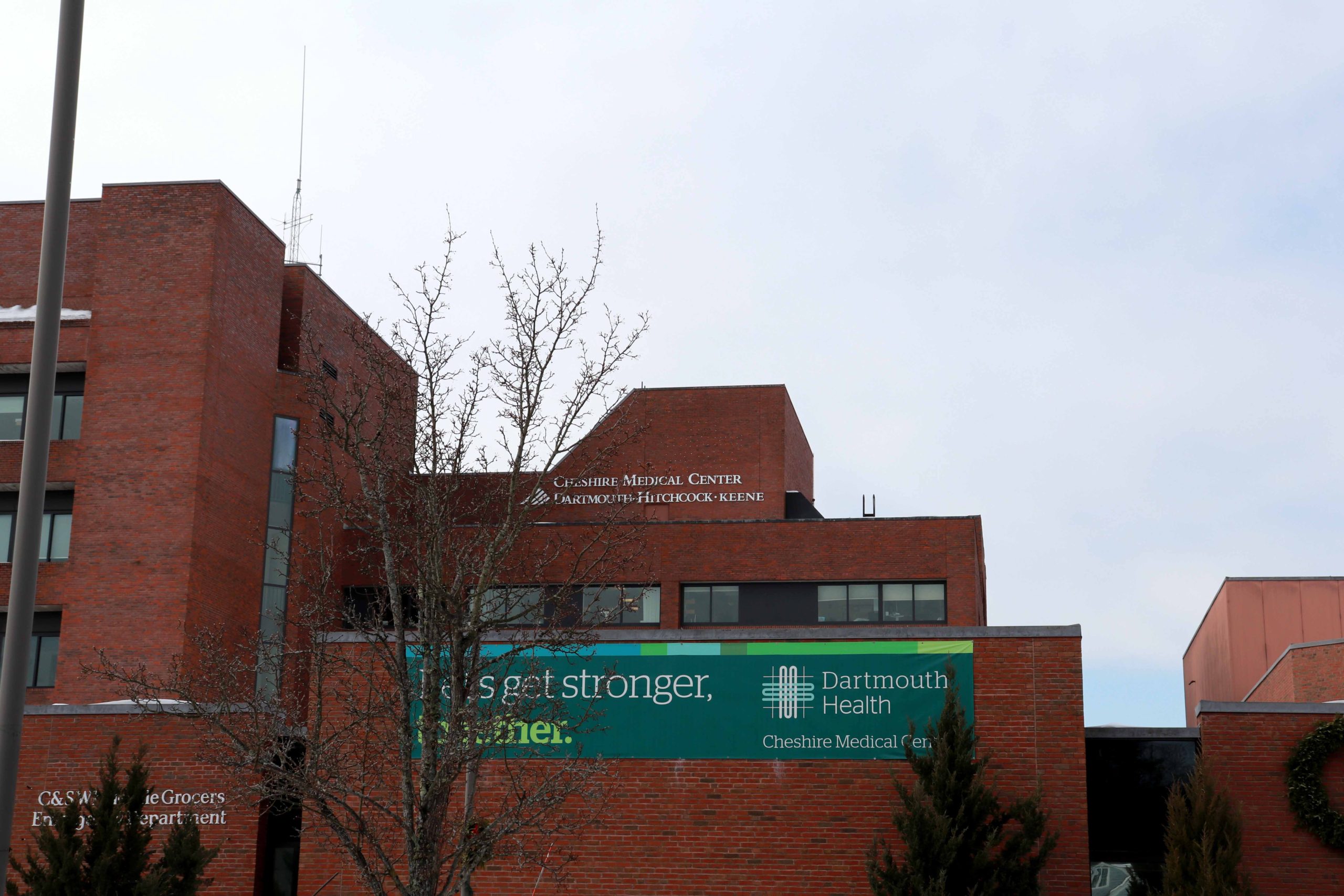
Research institutions in New Hampshire (N.H.) have been shaken by the threat of a funding freeze. In a February 14 press conference, directors of both Dartmouth College of Hanover, N.H. and Dartmouth-Hitchcock Medical Center of the Dartmouth Health (DH) system in Lebanon, N.H. voiced their concerns over the future of research funding. Chief Research Officer of Dartmouth-Hitchcock Medical Center Steve Bernstein explained the difference between direct versus indirect costs and how large of an effect the cuts to indirect costs would have.
Bernstein explained that direct costs cover everything that is needed to make the science happen: Supplies, personnel and new equipment. Indirect costs cover the other expenses of research: The light bill, building maintenance costs, facilities costs and other staff/personnel that are not directly involved with the experiment. He cited that other institutions, as well as DH and Dartmouth College, have negotiated rates with the federal government that are included in the research budgets for projects.
“[What] had been proposed to be cut … that would be potentially devastating to the research enterprise here because it would severely hinder our ability to do our work,” added Bernstein. Keene State’s Associate Dean of Academic Programs Jim Kraly said he shares similar concerns over funding.
Kraly is one of the faculty members who works to manage the IDEA Network for Biomedical Research Excellence (INBRE) program. INBRE is an NIH-funded grant program in N.H., co-led by Dartmouth College and University of New Hampshire, that dispenses funds to institutions throughout the state. Kraly said he is thankful for the current funding that has been received, saying, “I don’t wanna trivialize there are impacts, right? There are things, there are people losing their jobs and there are folks who have had grants turned off and funding taken away,” Kraly said.
Kraly added he felt these impacts were terrible, but said it is fortunate KSC’s grants are not yet affected.
Kraly said, “My biggest fear is the potential impact of future grant applications and future opportunities to find funding for students and faculty. So a different way to say that is the next grant that we thought was behind the one we have now that will sustain these efforts.”
“I think it’s too early to see some of that, but those are my fears,” added Kraly.
One of the biggest expenses of research projects is people’s time being put into the project, said Jason Pellettieri, chair of the biology department.
“A little bit of that [time] can be funded by Keene State, but I have to teach classes and I have to do administrative work for the college and so on. So when I get an NIH grant, the NIH pays for part of my time so that I can devote more time to research and make a bigger impact on the project,” added Pellettieri.
The time expense is not just an issue for faculty, but students as well. Pellettieri added that some of these funds go to undergraduate students who work on the projects as well to compensate them for their time.
A recurring theme among faculty in these conversations is not knowing what to expect from these NIH cuts. Priyanka Roy Chowdhury, professor of biology and recipient of NIH grant monies, said, “I think my grant is not affected by it [funding cuts] at this point, but I’m not sure. It’s too early to have any comment on that.”
Pellettieri echoed a similar sentiment, adding, “a lot of things [are] happening with NIH and other federal agencies and a lot of things happening in the courts and policy decisions, and this is rapidly changing and so I don’t know when the dust settles where things are going to be.”
Timothy Fitzpatrick can be contacted at
tfitzpatrick@kscequinox.com
Hayley Doda can be contacted at
hayley@kscequinox.com