
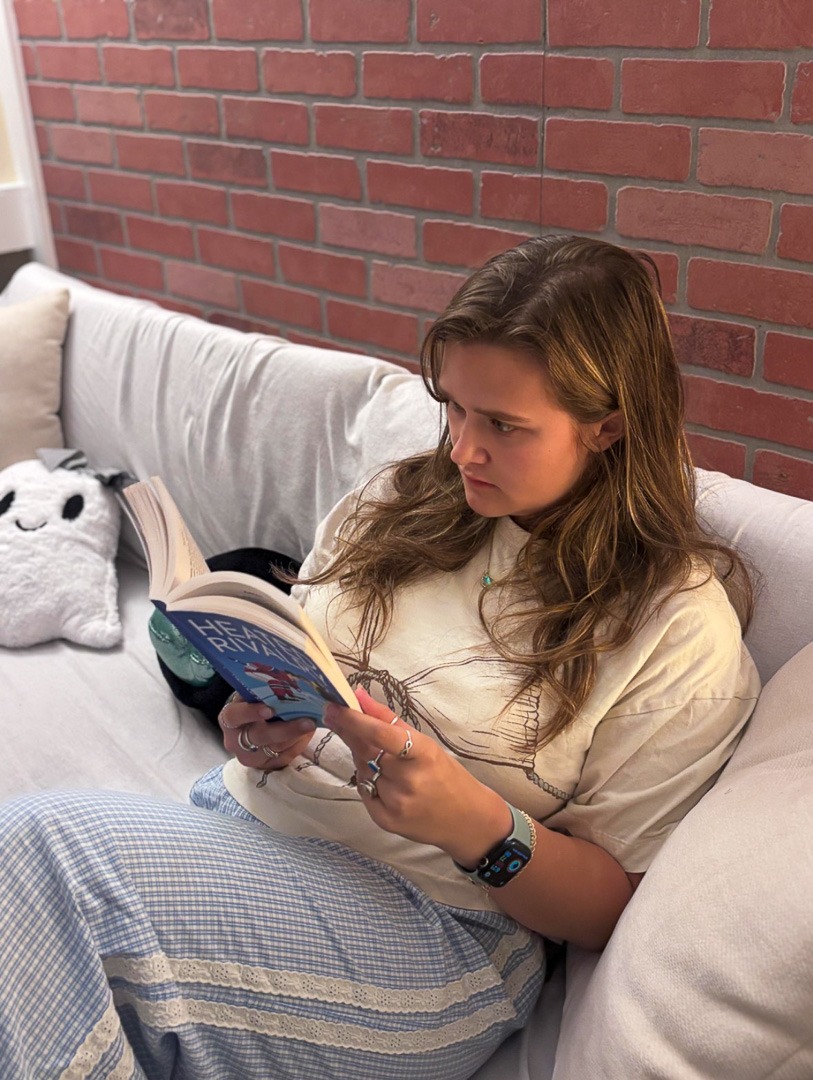
Physical books have been a form of entertainment and information for centuries. Over the past decade or so, with the rise of electronic media, streaming and algorithms, some believe that both physical media and reading have fallen to the wayside. Studies from the New York Times and the National Institutes of Health have shown that younger people are less likely to casually read than previous generations, and the cost of purchasing books has also increased the gap.
KSC students were asked whether they still read physical books, e-books or don’t read at all.
“I usually do a mix of physical and digital depending on the book that I want to read,” said senior William April. “If it’s a good book that I want to read, I’ll buy it in physical, but sometimes if I just want an audiobook or if it’s something that I don’t have access to the physical book, I would get the digital book.”
April also said that reading on his own time helps reduce his stress and anxiety. He said he believes physical books are superior because you actually own the book, compared to a digital book where you merely own a license.
Graduate Student Lily Gross said that using an e-book or audiobook can be very distracting and that digital media can be beneficial for shows and movies, but physical books are better than digital books. “You don’t truly own the media unless you have it physical, like the books in my room are mine; I own them,” Gross said. “But when I listen to an audiobook, I feel like I’m borrowing it almost.”
“If I find a good physical textbook or manual, I will dive right into it,” said transfer student River Pitts, who added that physical books are extremely valuable to people.
“I read the bible, and a bunch of novels, graphic novels,” said sophomore Joel Hill. “Reading can be valuable for a lot of people. It’s a good workout for your brain and encourages creativity.
Junior Nevaeh Gagne said she prefers physical books but appreciates that the school offers free digital textbooks. She said she prefers physical books because she doesn’t like staring at a screen for too long.
“I feel like we’ve lost that form of art in a physical book,” said Gagne. “I think a lot of people can relate to me that it’s really hard to read off a screen, but I think it’s just too expensive to get a physical book nowadays… I think libraries are great. You should just get a card, and it’s wonderful.”
First-year Nathan Dufault said he mainly still reads physical books, preferring being able to hold it and flip the pages to reading an e-book.
“Physical books, you can put them on your shelf, and you can be like, ‘Yes, I own that book,’” Dufault said. He added that both physical and e-books have pros and cons, since e-books save space in your reading library.
Seniors Parker Bartlett and Norah Clancy said they mostly read physical books and don’t really pay attention to e-books.
“I like fiction stories, and I like collecting them too,” Bartlett said. “I think a loaded bookshelf is always a sweet thing.”
Liam Thorne can be contacted at
lthorne@kscequinox.com