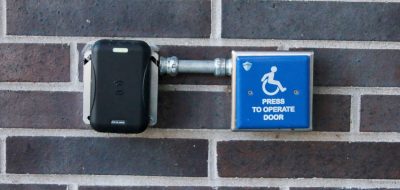

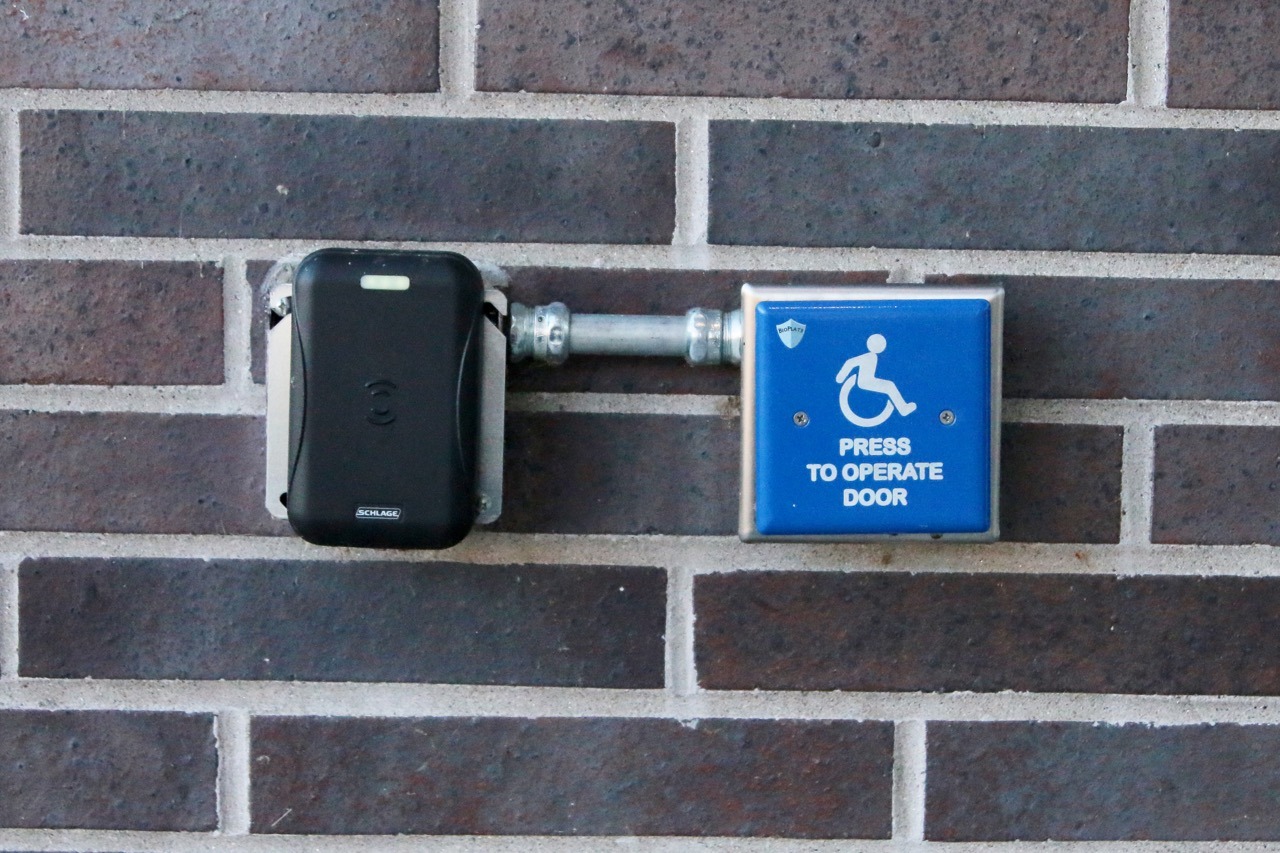
Is Keene State an accessible campus? While students praise the work done to make accommodations available under the Office of Disability Services (ODS), perhaps there are some areas that need improvement, especially with the older buildings.
Accommodations are protected under the Americans with Disabilities Act of 1990, which, according to the National Network, “is a civil rights law that prohibits discrimination against individuals with disabilities in many areas of public life, including jobs, schools, transportation, and many public and private places that are open to the general public.”
Prior to that, Section 504 of the Rehabilitation Act of 1973 protected people with disabilities from being excluded from or facing discrimination in programs receiving Federal financial assistance or ones under the jurisdiction of an Executive agency.
Casey Justice, director of transitions and community living, explained that to get accommodations in the dorms, students first have to submit their documentation to the ODS. ODS then would have to approve the accommodations before sending them to community living.
Justice said some of the most common accommodations students may be eligible for are a single room, a single with a bathroom, two refrigerators in one room, access to elevators or being on the first floor. Air conditioning is also a commonly requested accommodation, which would require a student to live in Pondside 3, One Butler Court, or the Living & Learning Commons.
“For incoming new students, they need to have their documentation in by June 30,” Justice said. “Returning students need it by Sept. 30 and [they must be] approved by ODS to guarantee accommodation.”
Justice also said that she believes the campus is widely accessible to all students. “I think overall our campus is accessible due to how flat it is,” Justice said. “I think some buildings, due to the year they were built, might not be up to the accommodations.”
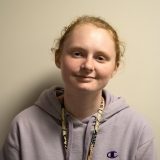
Sophomore Kalli Roy said she has requested accommodations from the college. “I have a single for housing,” Roy said. “I have a lot of academic accommodations, so extra time. I take tests in ODS. Everything I do is digital.”
Another of Roy’s accommodations is being in a dorm near a grassy area, so that her service dog can go outside. Roy is legally blind and uses her service dog to navigate campus. “Definitely getting my accommodations was a very positive experience,” Roy said. “When I met with ODS for the first time, I wasn’t too sure what accommodations were going to look like in college and they made it a very easy process to get the accommodations I needed and felt were going to be the most successful for me.”
Roy added that changing accommodations has also “never been a problem,” and that it’s been easy to communicate with ODS.
Roy said that she thinks campus is widely accessible, but that some of the older buildings can “pose some struggles for people.” Despite that, Roy said that ODS is often able to work through these issues with the person and find suitable accommodations.
“I have seen people with physical health conditions that make just going up stairs almost cause them to pass out, or actually pass out, being stuck in Huntress or Owl’s Nest,” said Senior Sage Labbe. “Which does not have any elevators. Not an academic accommodation, but definitely when it comes to physical accessibility, there are a few things that need help.”
Labbe echoed a lot of Roy’s sentiments. “For the accommodations I have received, it feels very minimal,” Labbe said. “But when it comes to the process of getting them, all the people in ODS are complete sweethearts to work with. So it’s relatively easy. Whatever things I wasn’t able to figure out, the individuals there were able to help.”
Labbe is able to use digital technology for all his tests, due to struggling with pen and paper.
“I have received accommodations for taking tests in ODS,” Labbe said. “Which has helped a lot cause actually sitting down surrounded by a bunch of people drives me insane when I’m trying to do a test. Along with that, there have been time extensions. It is definitely a massive load off my shoulders to not have to worry about that.”
Labbe said that some of the reasons students might not reach out for accommodations is because they either don’t know where to reach out to or they are scared to ask for it.
“I do not believe students know how to receive those accommodations, or really where to start,” Labbe said. “Along with the stigma of that. So many people I’ve talked to are like ‘I don’t want to go get therapy, I don’t want to ask for help when it comes to this.’”
Certain dorm buildings, such as Huntress Hall, Pondside 2 and the Owl’s Nest apartments, lack elevators. If students want to inquire about potential accommodations, they should reach out to kscdisabilityservices@keene.edu or go down to Student Academic Support Services and set up an appointment with Becca Copeland or Stephanie McGhee-Chludenski.
Chloe Erno can be contacted at
cerno@kscequinox.com