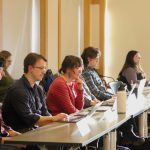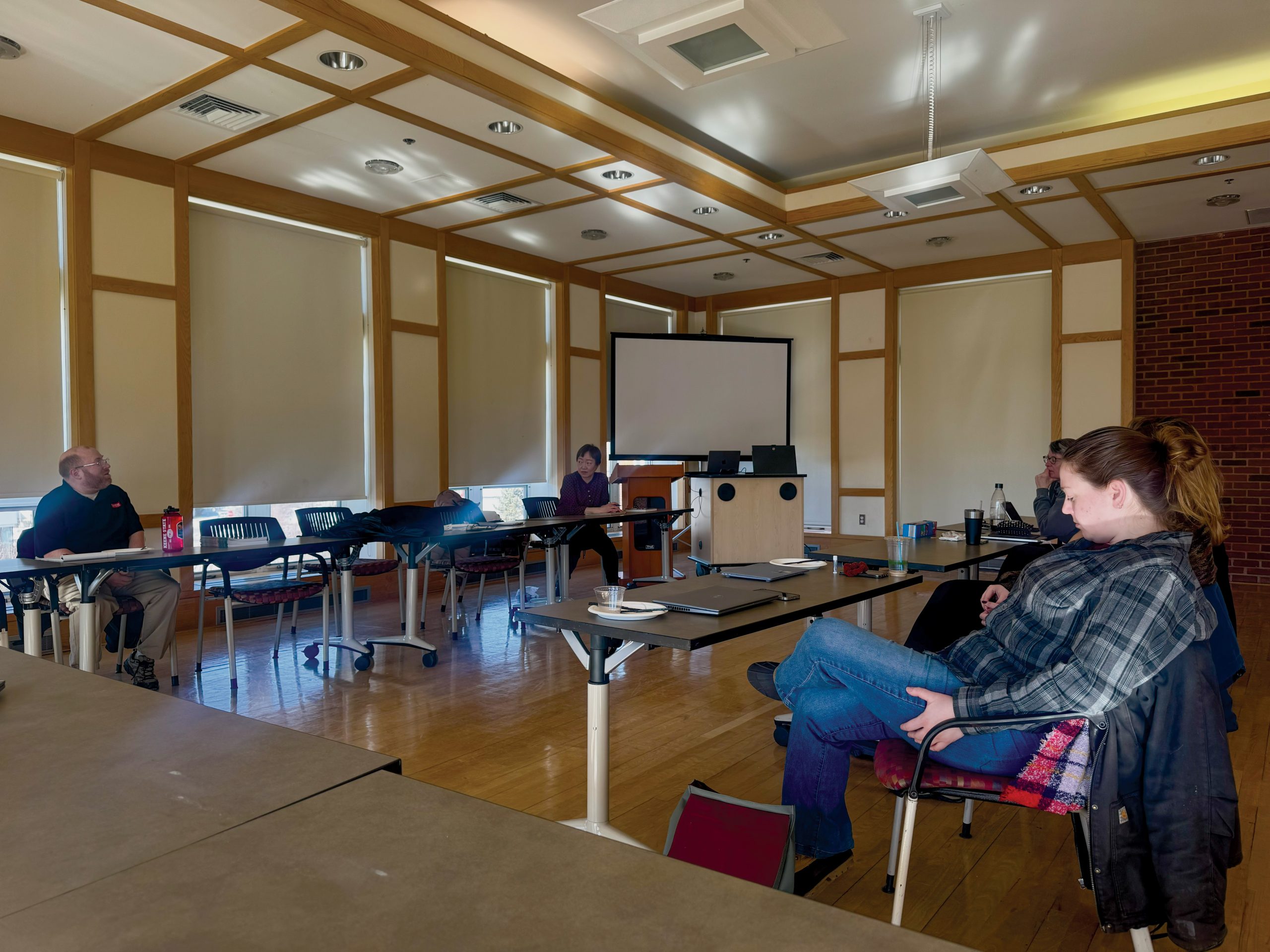
During its first meeting of the semester, the Campus Commission of Community and Belonging discussed its leadership procedures and the political climate. The commission mainly addressed the feelings of KSC’s students and how to comfort them in the current state of the country.
Jiwon Ahn, an associate professor of film and the commission’s faculty co-chair, brought up a proposal to change the current way leaders are chosen for the commission.
“This is the first time we could have an election,” Ahn said. “Before, the chairs were appointed. We can now form a really good community where we select our co-chairs.”
Dottie Morris, associate vice president for community and belonging and commission member, said members should consult with supervisors before stepping forward for a leadership role.
Ahn added that at least two people have expressed a form of interest in the nominations and that going forward, she would like to get a statement from nominees prior to either an in-person or virtual voting session.
Kat Dougherty, a commission member and assistant dean of students, raised some questions about the proposal.
“If there is somebody who has not been a part of this group in the past and who wants to self-nominate, would that be possible?” Dougherty asked.
Members discussed the question, agreeing that self-nomination would allow the possibility of expanding the group positively in the future.
Following the election proposal, the commission moved into a conversation regarding the current political climate of the United States, referring specifically to the release of some of the Jeffrey Epstein files and the shootings in Minnesota.
“We cannot not talk about what’s happening in this country,” Ahn said. “And I feel like this commission was created exactly for that. It is very difficult to talk about. Whenever something happens, we should have a forum to talk about what’s happening.”
“This is not about our individual political stances, but how to talk to students when they have questions,” Ahn added.
Jeff Kazin, library access services manager and commission member, discussed the importance of safe spaces on campus.
“We should have those safe spaces where students can go and get validation,” Kazin said. “Regardless of where you are on the spectrum, it’s important to validate students and how they’re feeling.”
“We should ask, ‘Who are we missing? How can we include them?’” Kazin added.
Dougherty also pointed out previous climate surveys, which showcased some right-leaning students not feeling safe to express their views on campus.
Kim Lauffer, associate professor of journalism and social media, spoke on how the current climate ties into her classes.
“I’m teaching a class on journalism law and ethics and we’ve spent a few weeks on the First Amendment, and one of the things we talked about this week is that students, especially college students, are scared to share their thoughts out loud.”
Hannah Eliason, a commission member and the program manager for the Cohen Institute, addressed why some students may not want to speak out.
“A lot of people feel powerless,” Eliason said. “And feel like their attempts are futile.”
Eliason also raised the question of whether potential discussion groups would be set up with the purpose of hearing from students or talking to them, with the commission raising a conversation over the possibility of doing both.
Ahn reflected on the purpose of the committee in the current political climate.
“In my mind, the reason this commission exists is to provide a forum for people who are outraged over stuff like this,” Ahn said.
Chloe Erno can be contacted at