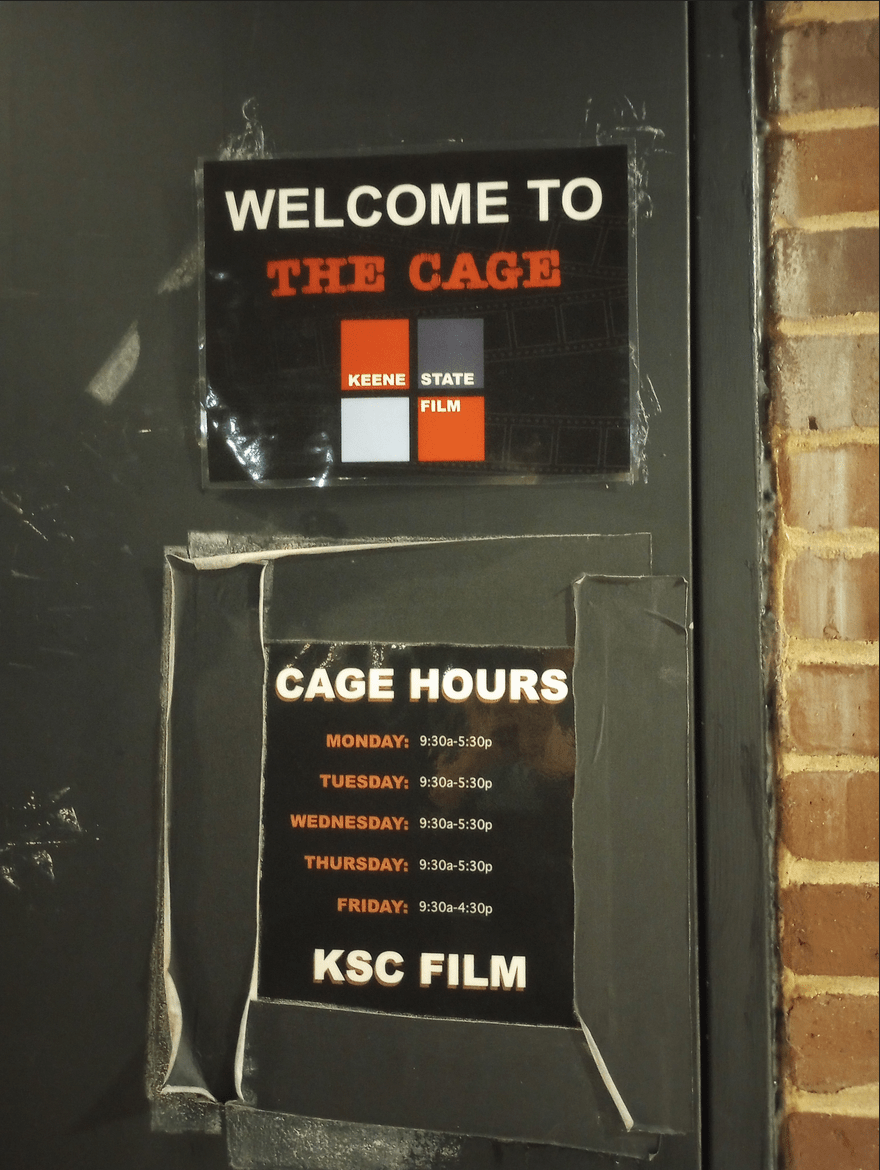
With a new academic year in full swing, the KSC Film Studies Department has added some high-quality additions to its equipment space, better known as the Cage.
Senior and film major Tyler Desjardins said, “[The] Cage is basically the film department’s whole equipment room, covering everything from basic first-year cameras to professional cinema cameras and film students get [to use] it for free, just for being in the program.”
According to Film Equipment and Operations Manager Zachary Haines, the Cage houses a variety of camera equipment for media production. Everything from high-end digital video cameras and cinema cameras to 16 millimeter, as well as any audio gear and camera support equipment, such as tripods and lighting equipment.
The new camera equipment includes two brand-new Panasonic GH7 cameras, kicking the GH5 cameras down to Film 400 Collaborative students. The new cameras are for the senior film capstone students, a year-long course where Film Studies seniors develop, produce and edit a short film, working individually or collaboratively through pre-production, shooting and post-production.
“We’ve gotten both for our thesis course for Capstone. We’ve expanded by adding, in the last few months, the Blackmagics, Pocket 6K, as well as the Panasonic GH7s. And then for our intro and intermediate courses, we’re running with the Canon R7s,” said Haines. “It’s a wide range of camera equipment in there.”
In early September, the department also introduced new LED lights from Aputure and Amaran that can be controlled with the Sidus app, as well as tentacle gear and a new MIDI keyboard for the sound suite.
“It’s really all about getting around to what the current needs of the students are, as well as continuously looking to the future of what new gear is coming out, and what we think can best help the students,” said Haines. “Expanding the program and keeping relevant with the constant changes of technology is also a big factor in planning. That’s one of the hardest aspects of being in an art field that is constantly changing is that technology can change rapidly within six to 12 months.”
With new, high-tech equipment comes a bit of concern. According to Haines, “When you get new advanced cameras, it’s really just making sure that the students are learning the new workflows to optimize the use of technology and optimizing post production. Like the speed at which they can get projects done.”
But Desjardins said the department is exactly where it needs to be. “I think that these cameras will reflect on what students will encounter in the professional film industry because these cameras can be seen at any rental house and film set,” Desjardins said. “Folks in this program are going out to be filmmakers, and these cameras are the base of what they’re going to want.”
Zoey Spirito can be found at
zspirito@kscequinox.com