

A typical stereotype that comes up during discussions of higher education is the prevalence of alcohol on campus, particularly the presence of underage drinking.
The question then arises as to how big of an issue drinking is on campus, specifically here at Keene State.
A search through campus safety’s media logs from the beginning of the spring semester until the time of publication shows there were 14 reported instances of an intoxicated/incapacitated subject or alcohol violations at various campus locations.
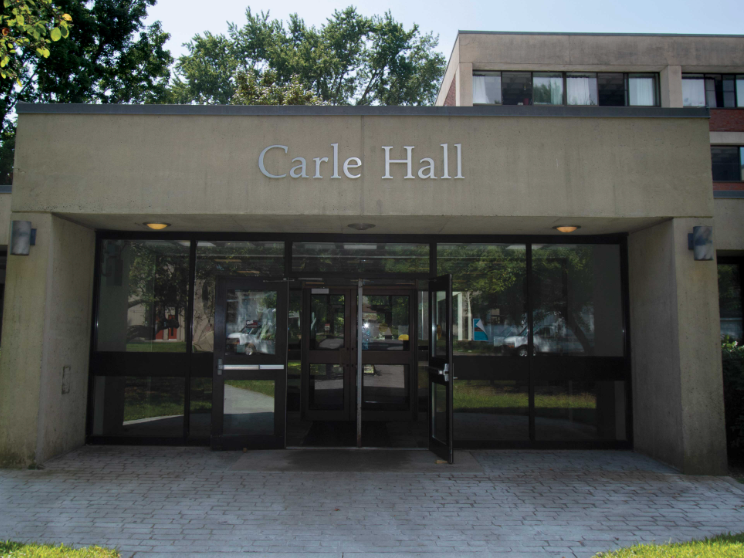
These instances spanned six campus locations: The sidewalks, Carle Hall, Winchester Lot, Huntress Hall, Owl’s Nest 3 and One Butler Court.
Seven out of 14 of the instances occurred at Carle, including one encounter on Saturday, March 8 at 1:09 a.m.
During the incident, KSC Campus Safety Officer Reegan Gigliello-Roy responded to a call placed by Carle Hall Community Director Isabelle Handy about a student who had returned to the dormitory building seemingly intoxicated after returning from an off-campus party, according to a campus safety report obtained by The Equinox.
Gigliello-Roy stated in his narrative of the incident that the student in question responded coherently to his questions and said she drank two or three Twisted Teas at the party.
Additionally, the student declined medical intervention and Gigliello-Roy allowed the student to return to her dorm room due to a sober student being present with her through the night, according to the narrative.
According to the report, Handy emptied a 1.5-milliliter bottle of Granite State vodka which was on top of the radiator in the student’s room.
Carle is a first-year residence hall on campus, and Director of Campus Safety and Compliance Chris Buckley said first-year students typically account for the instances of intoxication on campus.
“The [students] that we deal with the most are those who are unable to work or communicate,” Buckley said of encounters with intoxicated individuals.
Buckley said those entering college for the first time can feel compelled to live out some of the stereotypes about students, especially as college is often seen as one’s first foray into adulthood.
“They learn from their mistakes,” Buckley said of first-year students.
When it comes to tackling underage drinking and excessive alcohol consumption, Buckley said campus safety and other departments on campus have made several efforts to support students who may be struggling with alcohol or substance use.
One initiative Keene State has implemented is the Good Samaritan Policy, which grants students immunity from college violations if they seek medical attention for themselves or a friend, according to the college’s student handbook.
However, the policy states that students are not immune from possible criminal consequences and students may be required to complete safety programming mandated by the college.
In terms of law enforcement’s goal when responding to an intoxicated individual, Keene Police Department College Liaison Officer Jack LaPorte said the safety of the individual is of utmost importance.
“There are multiple avenues that situations like that can go, but first and foremost, we want to make sure that the person is safe,” LaPorte said.
LaPorte said that following initial contact with the individual, police will ask if there is anyone they can contact to pick the person up or if there is a sober friend that can stay with them through the night to ensure their safety.
If nobody can be reached, police act on their liability to ensure safety and take the individual into protective custody for the night depending on their level of intoxication and the threat they pose to themselves, LaPorte said.
“Liability-wise, a safer place for you, because of your intoxication level, is at the house of corrections where there’s somebody that’s going to be able to keep an eye on you until you’re sober,” LaPorte said.
However, intoxicated individuals are not always just a danger to themselves.
“If there’s a circumstance where it’s escalated to a point where criminal behavior is starting–disorderly conduct, where you’re causing a disturbance, where your behavior is tumultuous in nature, where you might be trying to start a fight or your actions or words are offensive to other people–[then] we’re starting to cross the line over into violating laws,” LaPorte said.
On campus, Assistant Dean of Students Kat Dougherty serves on the Alcohol and Other Drug (AOD) Committee, the goal of which is to promote awareness of alcohol and substance use and encourage healthy methods of consuming alcohol.
Dougherty said among the committee’s concerns is the correlation between intoxication and problematic behaviors such as physical and sexual assault, as well as driving under the influence.
“Those are of concern to us because there is this impairment in decision-making, but that’s not an excuse for the choices that individuals are making,” Dougherty said. “We really want to make sure that students, if they’re choosing to engage in the consumption of alcohol, [are] staying at a safe level, but that also they’re being active bystanders,” Dougherty said.
Dougherty said the AOD Committee is working to meet students where they are as it pertains to alcohol consumption and noted zero-tolerance policies typically are not effective in preventing risky behaviors.
“[Some] pretty common tips that we’re sharing are making sure that people are with people that they trust if they’re going to decide to consume and having a plan before you go out,” Dougherty said.
Dougherty said another tip the committee has shared with students is to stay away from hard liquor when beginning to drink.
“Start with something a little bit lower in alcohol content [including] beer or seltzers or whatever that may be,” Dougherty said.
Dougherty said overall instances of alcohol violations have been stagnant in recent years when accounting for the change in student body size.
The AOD Prevention Program Biennial Review released in 2024 detailed statistics pertaining to the number of violations and programming implemented over the years of 2022-2024.
For example, in the 2017-2018 academic year, there were 371 alcohol violations, as compared to the 2023-2024 academic year, for which there were 224 violations, according to the report.
According to KSC Factbooks published in the respective years, there were 3,688 undergraduate students enrolled in the 2017-2018 academic year, while there were 2,718 undergraduates in the 2023-2024 academic year.
“Keene State is not unique to other colleges and environments,” Dougherty said. “I think that underage drinking is a concern. I wouldn’t say that there’s an over prevalence of the underage consumption of alcohol in comparison to other campuses.”
Nathan Hope can be contacted at