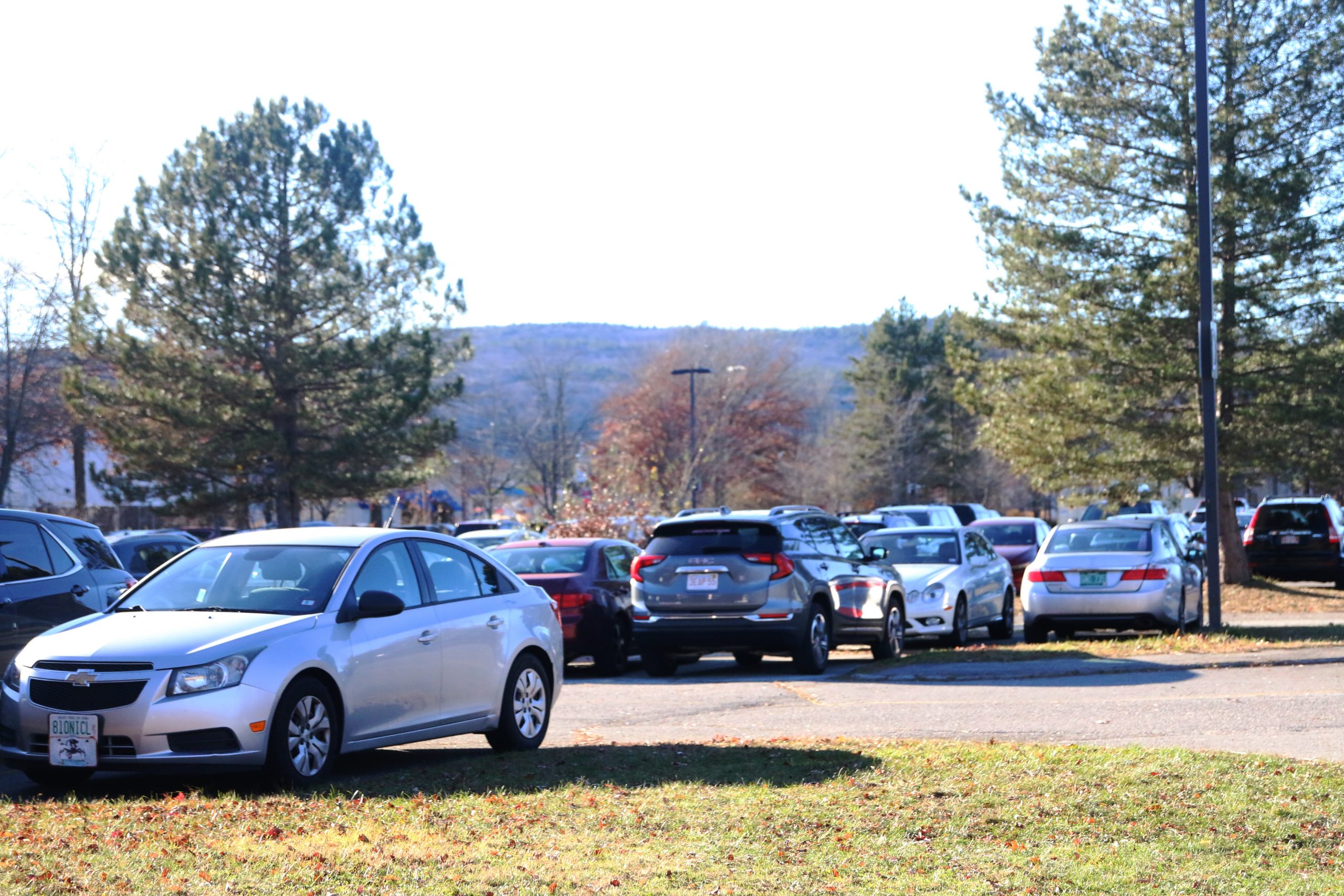
Drunk driving is a serious problem over the holiday season, and many fatal car crashes are caused by intoxicated drivers.
Assistant Dean of Students Kathleen Dougherty, who works with the KSC Alcohol and Other Drugs Committee (AOD), shared some data.
“Statistics show that during the holiday season, specifically between Thanksgiving and New Year’s, that there’s not only an increase in drinking and driving incidents but there’s an increase in fatalities,” Dougherty said. “So, as a member of the Alcohol and Other Drugs Committee here on Campus, we really wanted to make sure that students were aware of that.”
“Much of what we’re doing right now is just awareness,” Dougherty went on. “The Alcohol and Other Drugs Committee has identified a couple of different projects that we’re working on. There is something that you may have seen called a Stall Street Journal. It’s a poster that’s been up in the restrooms in the Student Center and in other buildings. It’s about safe alcohol consumption over the holidays.”
Dougherty hoped raising awareness about the situation and the dangers of drunk driving might help students stay safe over the holiday season.
Drunk driving is startlingly commonplace over the holidays and according to Policygenius, “About 6.9% of all fatal car crashes involving a drunk driver take place during holiday periods” in the U.S.
Data taken from Policygenius between 2018 to 2022 shows there were 748 fatal crashes during Thanksgiving due to drunk driving and 541 during Christmas in the U.S. Overall, there were 3,722 fatal car crashes due to drunk driving during the holidays, from Labor Day to the later holidays in November and December.
According to The National Highway Traffic Safety Administration, “In December 2021, the most recent data year available, 1,013 people died in drunk driving traffic crashes – the most since 2007. From 2017 to 2021, NHTSA recorded more than 4,500 deaths in drunk driving traffic crashes during the month of December.”
Senior Coordinator of Student Involvement and Well-Being Emily Alexander, who is also a member of the Alcohol and Other Drugs Committee, shared some additional information.
“Right now we are really just trying to get some education out,” Alexander said. “We will have some tabling on Dec. 5 in the Student Center from 12-2 around blood-alcohol content and identifying how many drinks impact your blood alcohol level, alongside some standard drink comparison and trivia … so we’ll be doing some tabling before the holidays to get some more education out. Then planning over the winter break on how we can continue to get education out in the spring.”
Lex Gargan, the well-being program manager and the student worker behind the Stall Street journal, provided some input about their work for the committee and future projects.
“When I first started at Keene, they had stopped doing the Stall Street Journal,” Gargan said. “So when I got this job, [Alexander] brought up doing it again and I was on board. Right now, we want to expand the Stall Street Journal and get it into academic buildings and not just in places like the Student Center. 40% of all fatal accidents are because of drunk driving after all.”
“I’m hoping to work on other initiatives like this in the future to help students,” Gargan went on. “Next semester we’re actually working on a wellness week for the overall safety and health of Keene State students. There will also be mocktail recipes on the next Stall Street Journal coming out.”
Gargan provided a preview of the upcoming Stall Street Journal for December. It will include QR codes that bring up non-alcoholic beer, wine and spirit alternatives. It will also give tips on how to say no to alcohol and ways to stay safe during the holidays.
According to College Parents Matter, “most college students do NOT drink excessively. Unfortunately, the popular – but false – notion that underage and/or excessive drinking is ‘normal’ leads some students to rationalize their participation in what is actually an extreme behavior.”
Margaret Smith, a faculty member on the AOD committee, warned about the dangers of driving while intoxicated in any sort of way.
“The B.A.C. limit in the U.S. is 0.08%. However, impairment begins at 0.05%,” Smith explained. “The suggestion is that you don’t drink and drive at all, or drive with any form of impairment for that matter. If you have been smoking marijuana you are four times more likely to get into an accident.”
“I’m excited about the committee being active again,” Smith went on. “Looking at these issues that revolve around students’ health and safety is important. It’s wonderful that the committee is focusing on it. Around the holidays, visibility is important and making sure people know there are resources available to help.”
Chloe Erno can be contacted at
cerno@kscequinox.com