
The Redfern Arts Center is home to an expansive collection of musical instruments for students to use, each of which has its own maintenance requirements for keeping the instruments in prime condition.
According to Assistant Professor of Music and Coordinator of Winds, Brass, and Percussion Dr. John Hart, there are approximately 350 wind and brass instruments alone. Hart said that taking into account the whole collection, not including pianos, the instrumental inventory is “probably valued at several million dollars.”
“An instrument that is in good condition responds better to the person playing it,” Hart stated, describing why instrument maintenance is so important. “People tend to put instruments on these pedestals, and think they’re these great immutable objects, but no, they’re tools, like any other. You have to keep up your tools.”
The instruments receive maintenance on an “as needed” basis, according to Hart. When an instrument needs maintenance, Hart or another member of the music department faculty contacts a certified and trusted maintenance technician who specializes in that type of instrument. The instruments are then sent to the technicians, who complete the maintenance process.
Hart also spoke about which instruments require more maintenance than others, saying, “The instruments that have wood as part of their makeup often require more maintenance. Instruments with wood, such as all of our string inventory, really require a particular type of environment because wood is a porous substance, it reacts and responds to heat and humidity. If there’s variation in either of those two variables in this environment, that can cause problems with the wood.”
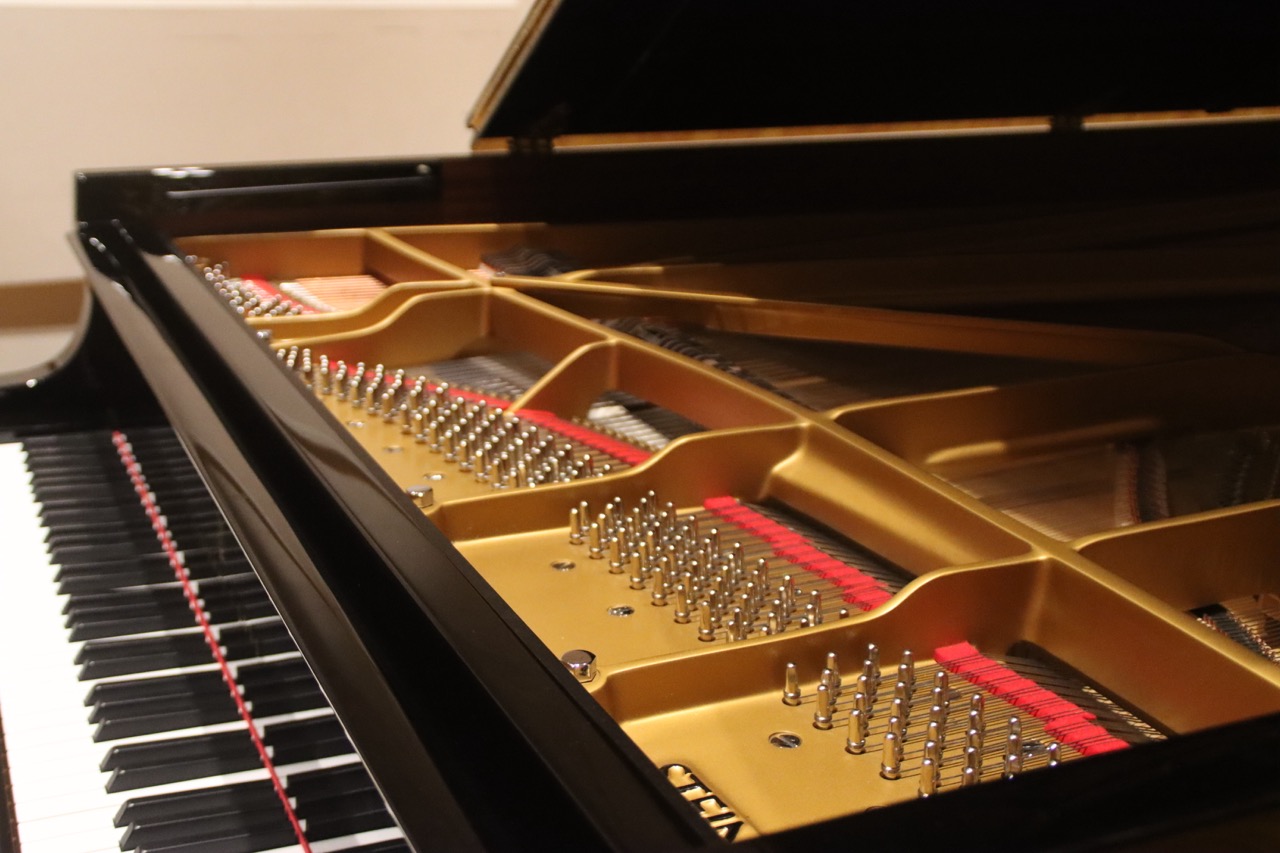
According to Dr. Christina Wright-Ivanova, Associate Professor of Music and Piano Coordinator, the “top of the line” Steinway pianos in the Redfern require regular maintenance throughout the year to keep them healthy.
“First of all, pianos are wood and metal and each Steinway grand comes with over 12,000 parts, so you can imagine humidity, dryness and weather conditions, building conditions, all of these things factor into how a piano breathes, and literally expands and contracts, and it has it’s very own life and fingerprint, so they’re very much living instruments,” Wright-Ivanova said.
Wright-Ivanova said Piano Technician Mike Puleo was hired at the Redfern following a nationwide search that occurred before the COVID-19 pandemic. Puleo, along with Steinway’s own technicians, work together to maintain the condition of the 24 Steinway pianos that the college owns. The maintenance of the pianos includes tuning and a six to eight hour regulation process, which involves making sure that every part of the piano is aligned as it should be.
The next step, Wright-Ivanova says, is to upgrade the Redfern building to properly house the high-quality instruments it contains. Wright-Ivanova expressed the need for a building with proper humidity regulations, in order to keep the pianos as healthy as possible and maximize their lifespans.
“The Redfern is number one on the list of buildings to be either significantly renovated and repaired, or to be completely redone,” Wright-Ivanova stated. “We are number one on the list and we need it, this building desperately needs it, now that we’re housing excellent instruments with lots of support that are needed for them.”
Music Department Chair Dr. Daniel Carberg could not be reached for an interview.
Justin Dearborn can be reached at