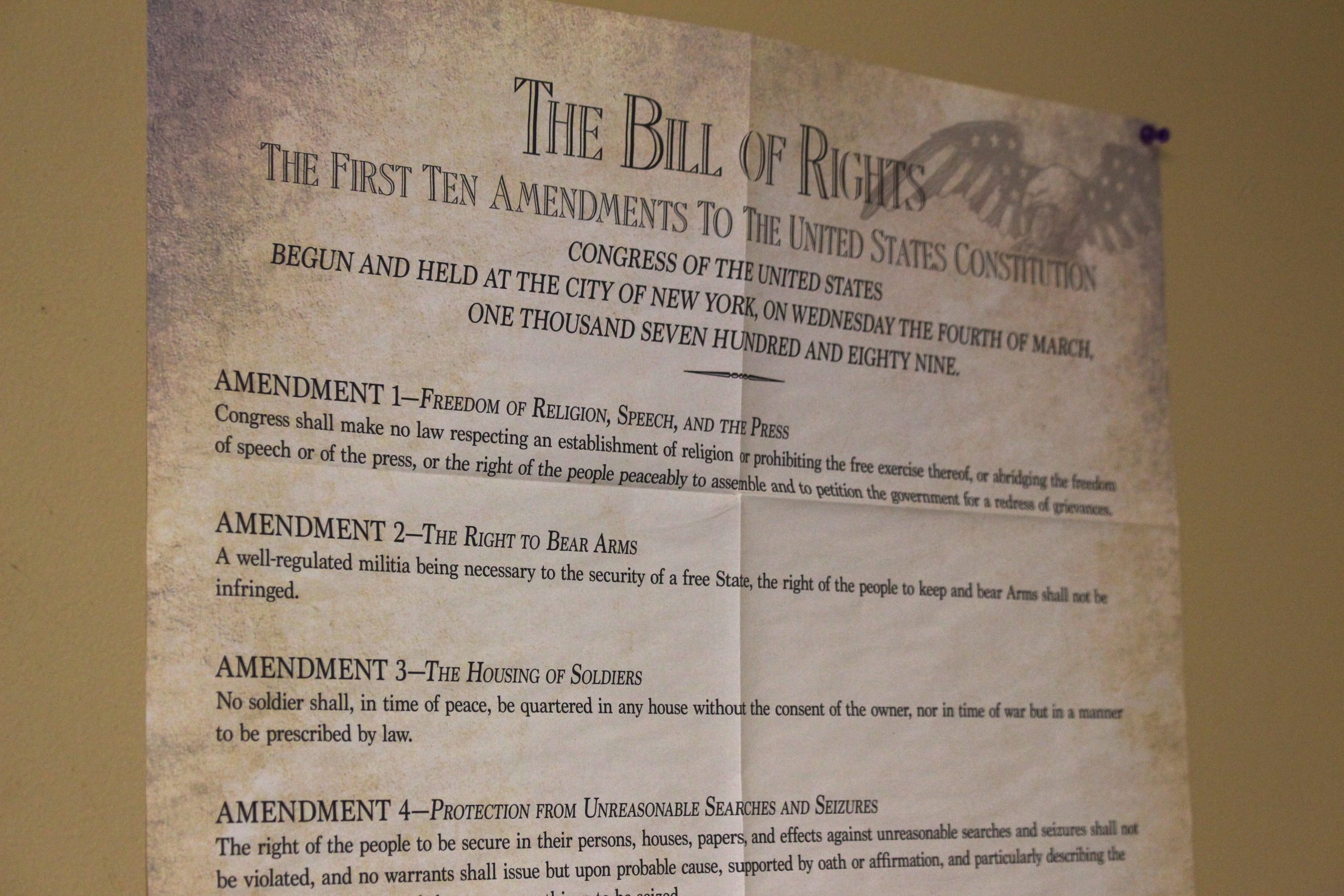
Constitution Day marks the anniversary of the signing of the Constitution and requests that people discuss the document in celebration.
This year commemorates 237 years since the signing of the Constitution on Sept. 17, 1787, according to the Department of Education. In celebration of this document in United States history, it’s important to discuss why, centuries later, its content is still pertinent, according to an article titled “Constitution Day and Citizenship Day” on the United States Courts web page.
When asked about the importance of the document, KSC’s American Democracy Project Coordinator Kim Schmidl-Gagne explained that the Constitution is the “blueprint of our democracy” and it “balance[s] the greater good with individual rights.”
She went on to say, “If I were to pick one thing to spend more time on it would probably be voting because it feels like all things come from the root of ‘I am a person and I can vote and that means I have influence on all these other things.’”
Gagne added that in today’s political climate, people may feel worried about continuing to have those rights.
Mike Welsh, the political science department chair at Keene State, also weighed in on the topic of voting, stating that “students need to appreciate [their right to vote] and show appreciation by trying to vote.” He said he thinks that having the right to vote is something incredibly important to students and a freedom they should exercise.
When questioned about the possibility of the Constitution being misrepresented to appeal to voters in today’s polarized political climate, Gagne said that she believes the parties are using the Constitution to cultivate fear. “Not only are there opposing viewpoints, but then the threat of what it means to you … feels like the messaging is different,” she said of candidates accusing each other of trying to take away certain Constitutional rights. The way the parties are talking about Constitutional rights feels very personal, and that can be used to appeal to voters in a specific way, according to Gagne.
Welsh stated that it is “time to make some adjustments, [however,] we’re afraid of significant sized tweaks to the Constitution.” He went on to say “that’s going to be the real test of how durable the thing is – is how in the next 40, 50 years what kinds of changes get made out of necessity and what kind of essential features sustain through the adjustments.”
Gagne also responded to the argument about whether or not the Constitution is a living document that should be adapted as times change. She expressed that as we learn, “there needs to be adjustments to [the Constitution]” and therefore, “amendments are some of the most beautiful pieces” of the document. She also referred to the Constitution as a “perfectly imperfect document,” stating that the “evolution of the document is what’s most important” about it.
Sophia Tanguay can be contacted at
stanguay@kscequinox.com