
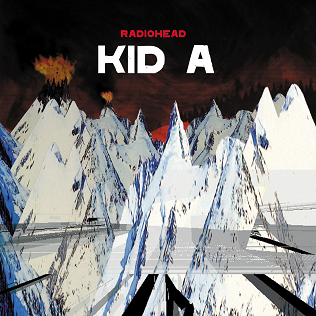
On a list of all my favorite music albums to ever be made, Radiohead more than likely has a handful within that top 20. However, one sits higher than the rest and that album is – “Kid A.”
I acknowledge having any amount of Radiohead on your list of top albums might seem pretentious or maybe they are obvious picks, but I am here to tell you that is OK. On that note, I am also here to make my case as to why I think “Kid A” is my favorite Radiohead album and might just be one of their best.
“Kid A” is Radiohead’s fourth full-length album released in October 2000. Before “Kid A,” Radiohead never really experimented and played it relatively safe by keeping to the alt-rock or indie status quo of the 90s.
Don’t get me wrong, “The Bends” and “OK Computer” are fantastic and definitely push some boundaries in the music sphere, but they do not do it like “Kid A” – I’m choosing to ignore Pablo Honey here because why listen to that album when you can just listen to The Bends plus Creep.
“Kid A” honestly lays the groundwork for modern Radiohead. It does this through their early use of soundscaping which they love to use so often now. This is something prior albums did but I think this one was a little more split between genres from song to song while still making sense that they all belong together. It blends some electronica with classical, alt-rock and jazz, all to make one of the best out-of-body listening experiences someone might have.
Right off the bat, “Everything In Its Right Place” introduces us to this album. It’s techno-esque style and the title shows that everything in this album is in the right place. The song sets itself apart from previous Radiohead albums, it lets the listener know this is not like anything they have done before.
Even though this album might have random breaks of just instrumentals, or for example, the title track that is filled with distorted electric vocals, it carries it through the album and blends into the next song gracefully. The transition between “Kid A “and “The National Anthem” is probably one of the smoothest transitions on the album, dare I say of all time.
As mentioned above, “The National Anthem” in itself is another song that sets this album as the groundwork for future Radiohead songs. Its inspired use of jazz combined with electronica is another frequent flyer amongst future albums like “Amnesiac” and “In Rainbows.”
On this album, there are a few tracks I find super notable, but two are – “How to Disappear Completely” and “Motion Picture Soundtrack.”
“How to Disappear Completely,” to me, almost makes you disappear completely. While listening to it, it is easy to get lost in the instrumentals. While this song is one of the more depressing on the album, it encapsulates that feeling perfectly by being able to make it feel like you might just be disappearing.
The other track, which is one of the last on the album, “Motion Picture Soundtrack” is again quite the depressing track, but it is most definitely one of the most beautiful songs I’ve ever heard. The way the strings come in at around the minute-and-a-half mark mixed with Thom Yorke’s vocals make this maybe one of their best songs to date.
“Motion Picture Soundtrack” gave me more appreciation for more of what Radiohead is now. Take “Moon Shaped Pool” and a lot of the singles they released in 2016, it is similar in that aspect by the use of soundscaping and creating this musical sphere that you can just get sucked into.
“Kid A,” at the end of the day, is really what I think pushed them forward to escape the alt-rock genre and into experimenting more with their creativity. As mentioned earlier, the album really lays the groundwork for the future of the band and the direction they decided to go creatively.
Tim Bruns can be contacted at