
In a digital world populated by increasingly oversaturated and monopolized markets, we all should be careful not to become too quick to devalue art.
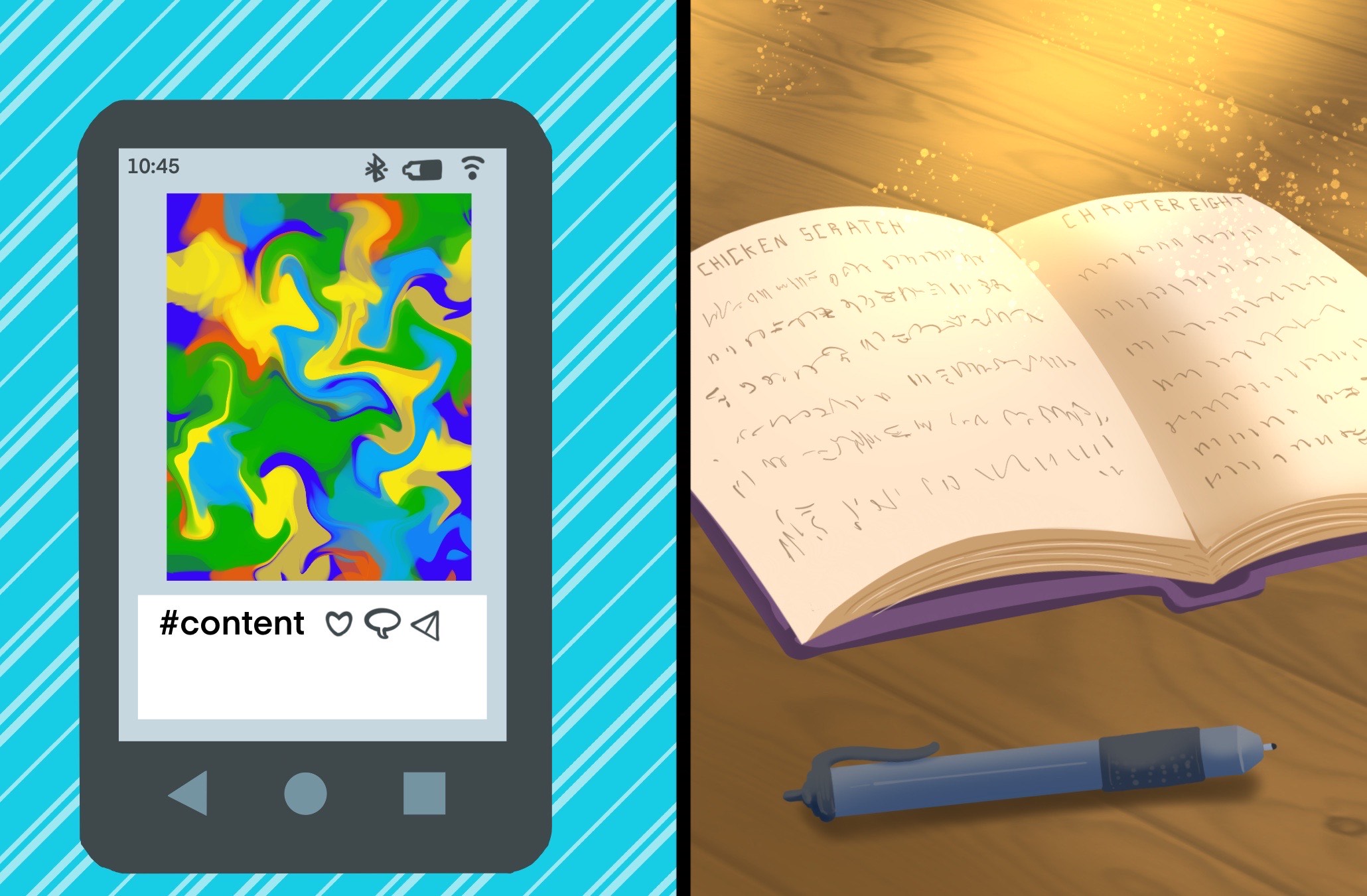
The term “content” used to describe media products is a relatively new addition to the popular lexicon, made commonplace by the rise of social media as an increasingly valuable creative marketplace. In many cases, one may try to distinguish “content” from their own personal definition of what constitutes “art.” I believe attempts at making such a distinction to be fruitless and even dangerous.
First, I would encourage the freedom to use the term “content” in a way which avoids making it sound like a dirty word. All art is content; it is created and it contains the product of the materials used to create it. It is a fundamentally neutral description.
Second and perhaps more difficult to swallow is my encouragement to view that which is degraded as “content” to be art in its own right. Something made with the sole intent to profit can still be considered art; there is only no guarantee that it is particularly good art.
In the society we live in, nearly all examples of art we encounter in the pop culture sphere will bear the stink of profit incentive. A popular and well-regarded film from an acclaimed director may often be produced and distributed through a company with the goal of making money, the same goal held by the producers behind vapid view-baiting videos on TikTok or Instagram.
Obviously there will be a huge difference between those two things in terms of the level of effort put in and the engagement the audience receives from the final product, but if we consider these the defining factors of art as opposed to content, where do we then draw the line where one ends and the other begins?
If I create a film but do not put an amount of effort which is considered “enough” into it, does my work get thrown in a pile labeled “content” rather than the one labeled “art?” That strikes me as unfair to creator and audience alike.
If we allow ourselves to become comfortable with the idea that some of human creation is inherently bad and worthless, we run the risk of becoming closed-minded. If presented with abstract art from a previously unknown creator, will we dismiss it as worthless because it does not fit our limited view of what defines art? Will we consider an engaging and effortful work “content” because of petty factors like the medium through which it is delivered or popular dialogues among those who engage with it?
My definition of art may be broader than most; I would expand it as far as being simply “that which is created.” My impression of the quality of any given piece of art is a separate scale that is unique to me, and I certainly have my own preferences.
Nevertheless, I consider my assessment to be one which helps me appreciate the diverse and beautiful range of creative expressions without falling into the trap of judgmental thinking and missing out on something fantastic in the process.
Charlotte King can be contacted at
cking@kscequinox.com