

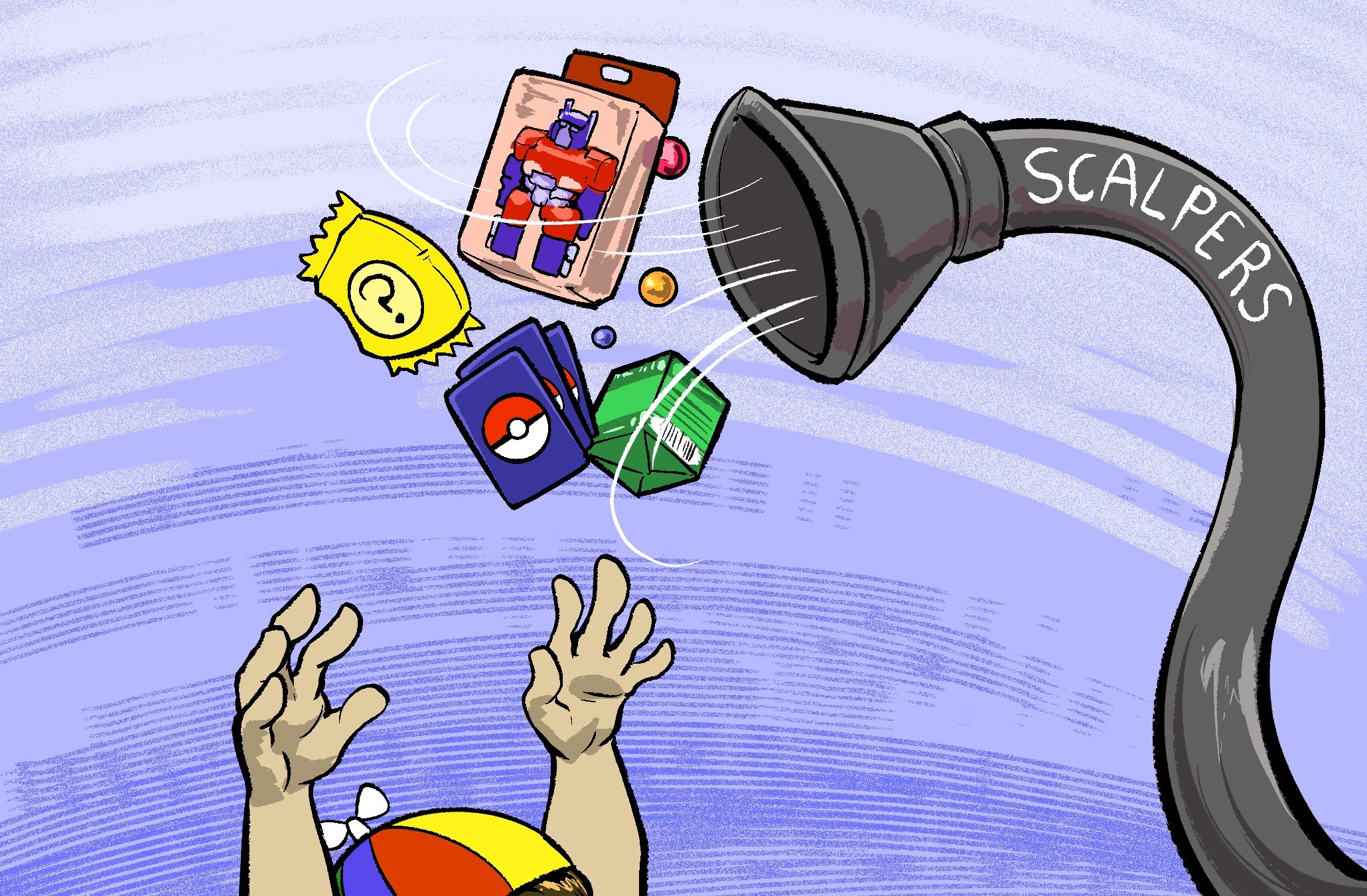
There was a time in my life when being a fan of something was pure fun. Being able to talk and bond with others over a shared interest or hobby made spaces feel so tightly knit together.
In recent times, though, there seems to have been a change in how these spaces operate. For some, it is no longer about just having a hobby; it is about making money and filling these spaces with exclusion.
When I was younger, there was a certain kind of wonder in being brought to Target with my mom or my dad. I always ran right to the shelf near the registers, looking up and down to see what sort of Pokémon cards they had. It was a simple interest that my brother and I loved. Nowadays, when I head to that same area at Target, there is an odd lack of those booster packs, and that is not just a coincidence. Over the last few years, there has been an increase in people buying out these packs.
Popularity in trading card games like Pokémon is not anything new. What is new is people engaging in an act known as “scalping.”
Scalping is the practice of buying large amounts of newly released, high-demand trading card products like Pokémon or Magic: The Gathering at retail price, and reselling them at a much higher price for profit.
As a result of these practices, popular card packs often sell out almost immediately, with scalpers buying or hiding entire store stocks so that anyone who wanted cards from that set would have to buy through them or try to find them hidden under store displays.
The online stores are not safe either, as scalpers use online bots to buy these restocked packs online almost instantly.
Things like this drive the demand for whatever card packs got scalped ridiculously high, which in turn bumped up their prices. Families and people who didn’t have the money for these prices were sadly shut out from being able to enjoy their hobby.
Luckily, communities and stores have been doing what they can to push back against these people. Stores often refuse to sell more than a specific number of packs to one person, or they will cut the seal on the packaging to make sure they are not sealed or “pristine” anymore.
Communities have easily shown disdain for people like this, and who can blame them? They often do not know or care about the cards or product at all; they only care about making a profit out of it.
If you are someone of a younger generation like myself, you might even hear these people be called “LARPers.”
The modern internet has taken this phrase, originally used to describe people who do Live-Action Roleplay (LARP), and distorted it into an insult meant to mimic the meaning of “poser.”
The heart of the term still technically exists. If you are a LARPer, you are pretending. You were not really there during the time period being reenacted, but you are pretending as if you were.
In the modern internet, if you seem like you are not actually a fan of something, this term may be thrown in your direction. You will be seen as someone who is not a true fan of something, simply someone trying to profit off of it for popularity or money.
Although people like this may exist only in online spaces, people have been using this term for basically anyone they do not see as a “real fan.”
If you do not remember the shoe color of the main hero? “You are a LARPer.” Forget what the main character said one time in episode 24? “You are LARPing.”
It is no longer about trying to stop people from taking advantage of something’s popularity; it is about seeming superior due to interest. You are more of a fan than they are, which makes you better for some unspoken reason.
Having an interest or hobby in this day and age has begun to feel tougher and tougher. Either someone stops you from enjoying a product so that they can take advantage of it, or people exclude you from the space for not knowing everything.
There are spaces that welcome you with open arms, happy to see someone new get interested in what they also like, but if certain spaces keep pushing away people who may just want to learn more, then a community that is supposed to feel united will unravel quicker than they would like to admit.
Michael Ardita can be contacted at
mardita@kscequinox.com