
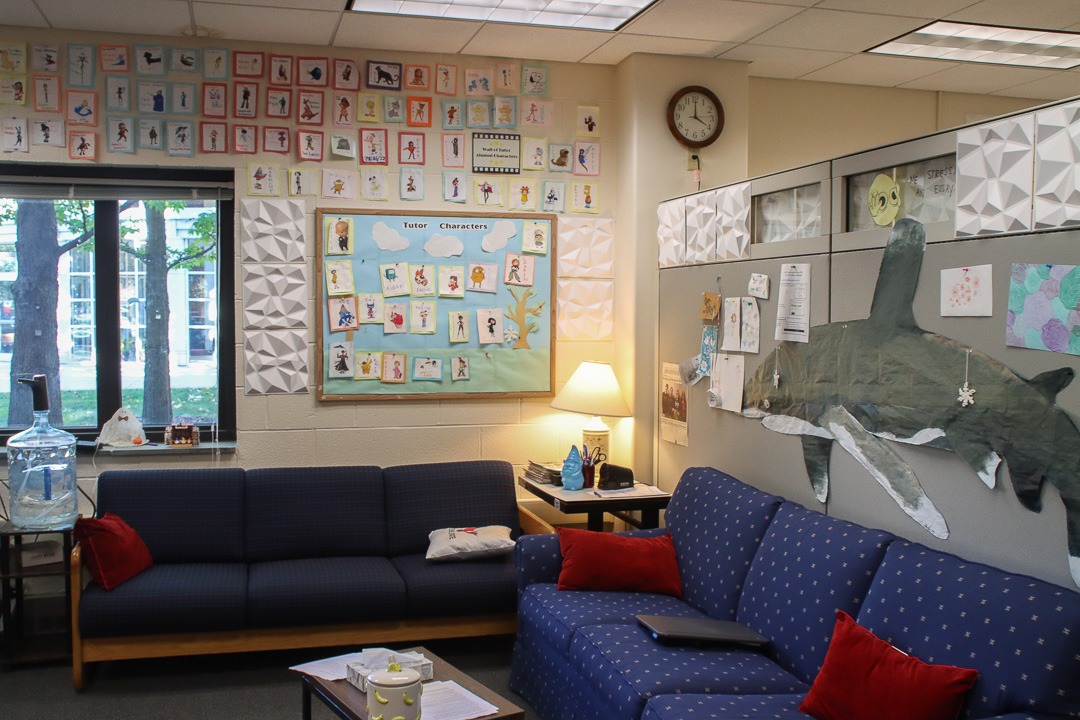
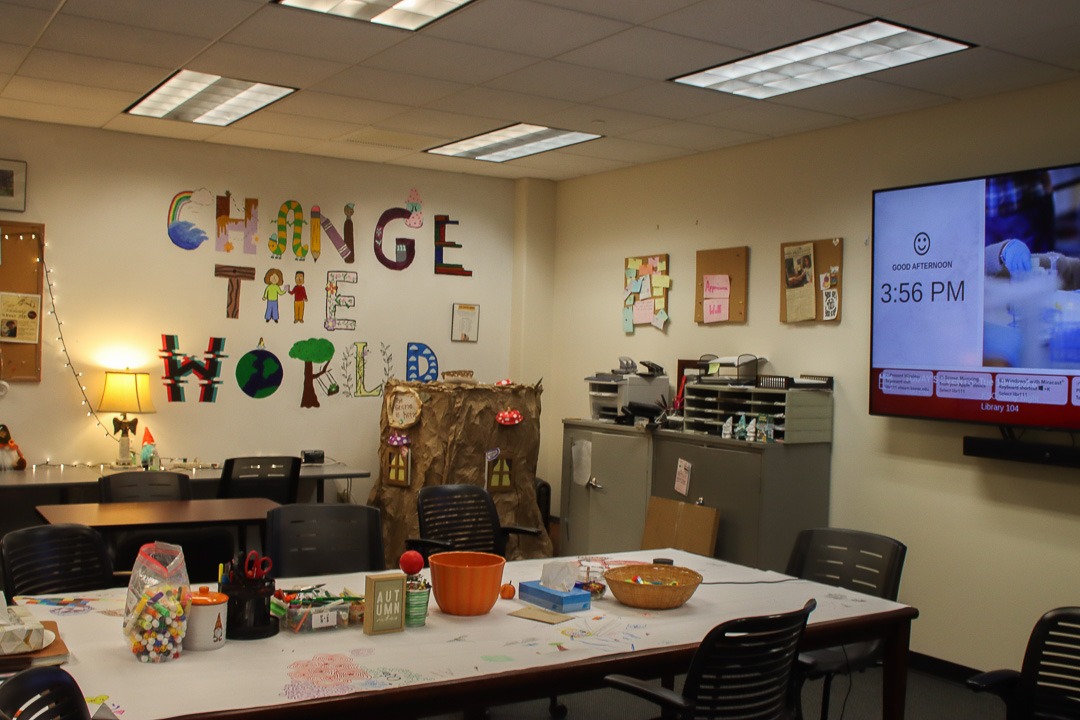


While footsteps patter against the concrete ground of Appian Way and students head to their next destinations, some may find themselves headed up the steps to Keene State’s Mason Library. Whether you are looking for a quiet study room, a comfortable desk tucked away behind the large bookshelves, an artifact from the archives or a little extra help with a writing assignment, the Mason Library offers some respite from the hustle and bustle of campus life with its laid-back atmosphere and friendly faces.
While some may think of the Mason Library as a home for books and quiet research, it is also a home to faculty dedicated to creating spaces to assist and engage with KSC students. The Equinox got to know some of these faculty and discuss what they do in their positions.
“I do not know if it is the same for you guys in this day and age, but books are like a treasure for some of us out there,” said Kathy Stiles, the Mason Library’s interlibrary loan coordinator (LLC).
Stiles said that while she had not initially intended to fall into her role as the Mason Library’s LLC, she had been working in libraries long before Keene State hired her.
In regard to her day-to-day responsibilities, Stiles said, “Probably 75% of what I do is online, getting academic articles from journals for people online that we don’t have in our library. We have a huge database of stuff that is available for everyone, but sometimes there is something here or there that we do not have that we have to borrow from somebody else.”
“I would say 25% of it is picking books off the shelf and sending it to other libraries,” she continued. “I also do a tiny chunk of helping out the front desk a couple of days a week and helping out with other little projects here and there. I am also starting now to take over the ordering of books, processing them and putting them in our catalog.”
Head of Special Collections and Archives, Rodney Obien, described his own day-to-day responsibilities at the Mason Library’s Archives.
“On paper, I am supposed to oversee the collections that we have here,” Obien said. “Which are the college archives, the records [and] anything relating to the history of the school that dates back to 1909.”
“My job is to more or less oversee that, make sure things are cared for, preserved [and to] make sure that [it is] accessible,” Obien continued. “I kind of liken my job to running a little library … working with patrons, reference, organizing things [and] digitizing things. I am also a professor in the history department, so I teach classes.”
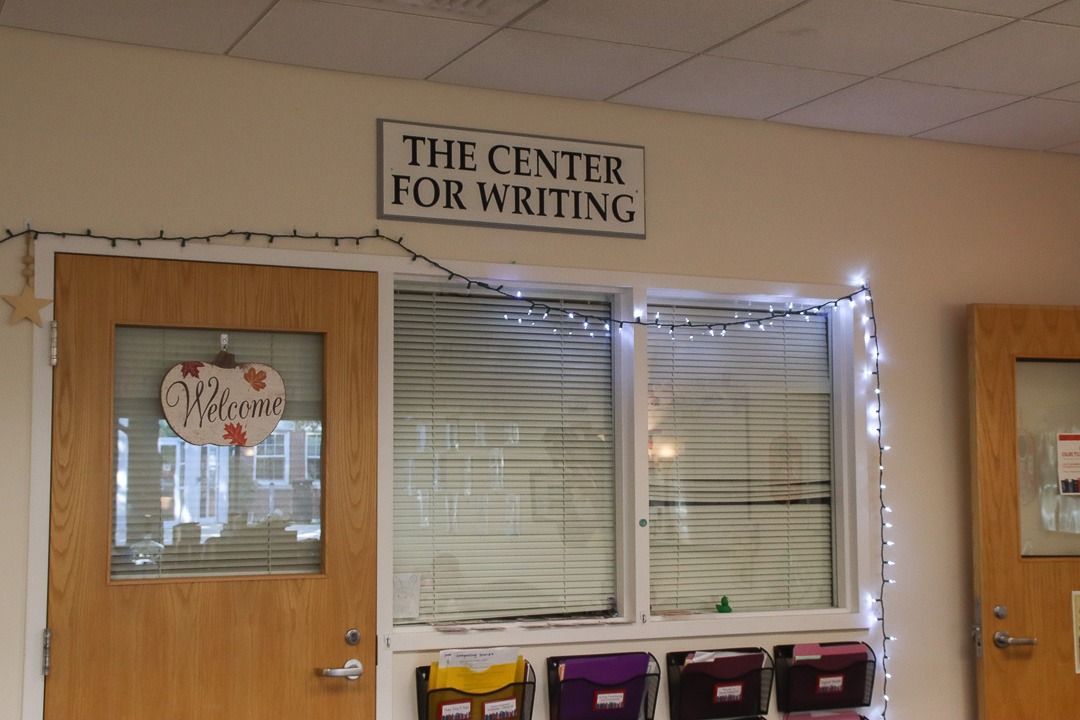
Kate Tirabassi, director of the Center for Research and Writing, said that her daily responsibilities include meeting with tutors, helping students with various research and writing tasks and meeting with Keene State professors to refine curricula and develop assignments. Tirabassi is also a professor in the communications department.
When asked about how artificial intelligence (AI) plays a role in her job, Tirabassi said, “We spend time with the students [and] with the tutors talking about kind of seeing where AI can be a tool. We don’t ever say to a student, ‘Are you using AI?’ The tutors might say, ‘Let’s talk about that.’”
She continued, saying, “There [are] a lot of ways in which AI can get you into trouble, so we try to help communicate that to students as much as we can.”
Stiles and Obien spoke on the importance of their passions in an age where most things have been completely digitalized. “When you look at something that is archival, a piece of paper [or] a photograph, the instant value that comes to mind is information. What is important is the information— what you see,” Obien said.
“When you are holding a collection of passports belonging to Holocaust survivors, you are only one degree separated from that individual who was trying to leave Nazi Germany. In some ways, it is time traveling, because you are holding something that existed in that time period with that person … people are craving authenticity.”
Stiles added, “It is kind of heartbreaking for librarians that everything is online. I think libraries are super important because society at large kind of lacks that value of sharing and things being equally available to everybody. I think we need more of that in today’s world.”
Despite each section of the Mason Library being housed in a different area, faculty work together integrally.
“We all kind of fit together perfectly,” said Stiles. “While I am getting books for people, [the Center for Research and Writing is] helping people write their essays and papers and everything. Same with archives. I do not get to go over there as much as I would like to, but [it is] such a great resource for anybody who is interested in history.”
Tirabassi commented on collaboration between departments. “We [the Center and Archives] sometimes collaborate on different programs or projects.”
Tirabassi also spoke on the Center’s own history at Keene State. “[The Writing Center was] originally in the little house that was the cultural center and we had already started our collaboration [with the Research and Writing Fellows] in 2019. We actually had some students who did both.”
Tirabassi explained that the old writing center and the Research and Writing Fellows had tutors working for both programs, who would hand out pamphlets and advice to students. “A lot of times, a research problem can be a writing problem, and a writing problem can actually be a research problem,” she said. Tirabassi said the two services eventually integrated, and that soon after, the entire program was moved into the Mason Library. “It was a good decision to move. Students can find us because they are already in the library a lot of times doing research.”
When asked what they think students should remember when coming into the Mason Library, Stiles, Obien and Tirabassi each offered their own pieces of advice.
“As rare as things can be [and] as unique as things can be, it only takes a request either through email or in-person or otherwise to access something,” said Obien. “So anything you see—unless it is super fragile—you as a student can look at it. That is your privilege.”
“If you are in a field where you are not sure what you want to do but you have a very curious and playful nature, working in Archives or Special Collections is certainly one to consider,” Obien concluded.
“We want this to be a space where people can be productive, get things done and feel like they are moving forward in the work that they are doing,” said Tirabassi.
Stiles finished by saying, “I think students should know that we are always open and welcome to everybody, and we really want to help everybody out and do whatever we can for everybody that we can. We are always happy to help people.”
The Mason Library is located on Appian Way, open from 7:45 a.m. to 11 p.m. Mondays through Thursdays, 7:45 a.m. to 6 p.m. on Fridays, 10 a.m. to 5 p.m. on Saturdays and 12 p.m. to 11 p.m. on Sundays. Kat Stiles can be contacted at Kathy.Stiles@keene.edu, Kate Tirabassi can be contacted at ktirabassi@keene.edu and Rodney Obien can be contacted at robien@keene.edu.
Nicholas Ackley can be contacted at
nackley@kscequinox.com