

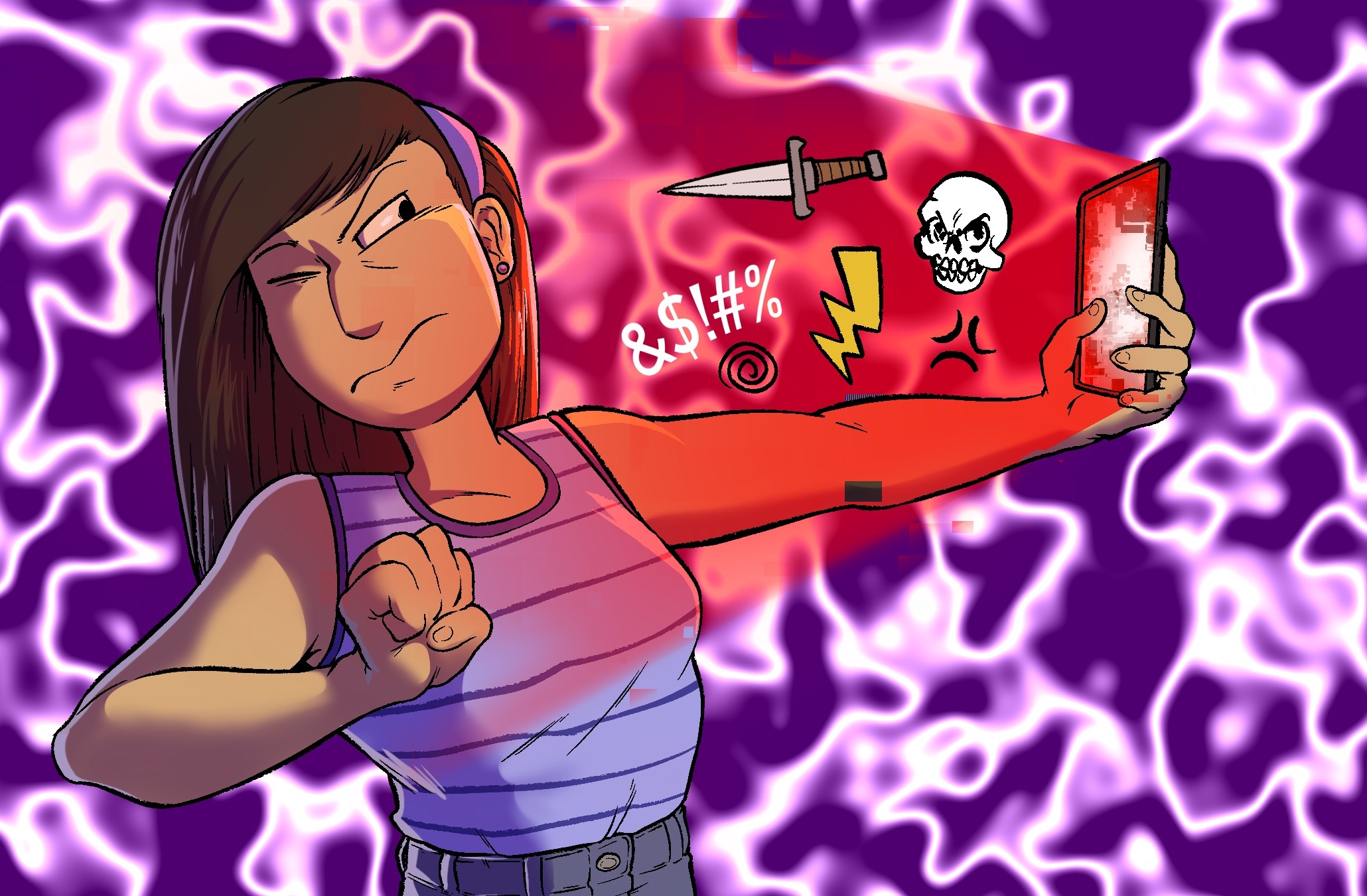
There is a new word for women with hip dips. It is “hiplet.” If you are lucky, you have never heard it before. If you are on TikTok enough, you probably have.
That is how online misogyny works; someone invents a new insult for a completely normal female body part, the algorithm decides it is entertaining, thousands of people repeat it and suddenly young women are staring at themselves in the mirror wondering if something is wrong with their bodies.
There is nothing wrong with our hips. But apparently, the internet needed to tell us that again.
“Foid,” “Hiplet,” “Females,” “Roastie,” “Used goods.” The vocabulary changes, but the message is remarkably consistent: Women’s bodies are objects to be judged, ranked and rejected by men. And somehow, we are supposed to laugh along.
The “hiplet” trend that spread across TikTok this summer was framed partly as a response to women who say they prefer taller men. Women with hip dips were turned into the punchline. The whole thing was supposedly a joke, a bit of internet retaliation.
But that is exactly what makes this kind of misogyny so effective. It is always just a joke until you are the girl looking at your own body differently because of it.
That is what bothers me most about the modern manosphere. It is not simply that there are men online who dislike women–there have always been men who dislike women–what has changed is how easily those ideas can be packaged, repeated and delivered directly to millions of young people.
The manosphere is not one website or group; it is a collection of online communities built around ideas about masculinity, dating, gender and women’s supposed role in society. Some corners are openly hostile toward women, others appear more harmless, presenting themselves as places where men can talk about relationships, self-improvement or “traditional values.”
And then there is the language.
Calling a woman a “foid” (feminoid) does something very specific: It strips away the word “woman” and replaces it with something closer to an object. “Hiplet” does something similar in a different way. Instead of simply saying “woman with hip dips,” it turns a completely ordinary physical characteristic into an identity that can be mocked.
Once you have a word for something, you can build an entire culture around it, that is why feminists have always cared about language. Words teach us what we are supposed to notice, what is valuable and what is shameful.
Young women are learning these lessons while they are in college, one of the most important periods of our lives for figuring out who we actually want to be. We are told to get an education, find a career, become financially independent and build a life for ourselves, and at the exact same time, our phones are showing us videos telling us that ambitious women are lonely, independent women are undesirable and feminism has made women miserable.
Then comes the tradwife. If the manosphere is the angry side of the internet’s gender politics, tradwife content is often the prettier side. It is the spotless kitchen, the homemade bread, the flowing dress and the perfectly edited family life. There is nothing inherently wrong with wanting any of those things. Women should be able to choose motherhood, domesticity and traditional femininity if that is what they genuinely want.
The problem is when the algorithm turns that personal choice into a prescription for everyone else. You do not need someone screaming “feminism is bad” into a camera. You can make the argument look like a dream; A video about baking bread can lead to one about becoming a “traditional wife,” which can lead to videos about why modern women are unhappy, why careers make women miserable and why men supposedly want submissive wives.
The message does not always arrive as politics; sometimes it arrives as an aesthetic. That is exactly why it can be so powerful.
College-aged women deserve better than a social media feed that alternates between telling us that our bodies are disgusting and telling us that our highest purpose is becoming somebody’s wife.
We deserve to exist outside of men’s approval, to have bodies that are not constantly categorized, to be ambitious without being called masculine and to be feminine without being told that femininity requires submission. We are allowed to want motherhood without being told that it is our only meaningful contribution. We need to hear the word “feminism” without immediately being told that it ruined everything.
Maybe the most radical thing a young woman can do online right now is stop asking whether the internet thinks she is desirable, stop letting strangers decide which parts of our bodies are acceptable, stop treating independence like a character flaw and stop apologizing for wanting more.
The internet is going to keep inventing new ways to tell women who we are supposed to be. We do not have to believe it, and we certainly do not have to become it.
Charlotte McDaniel can be contacted at
cmcdaniel@kscequinox.com