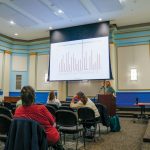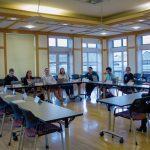

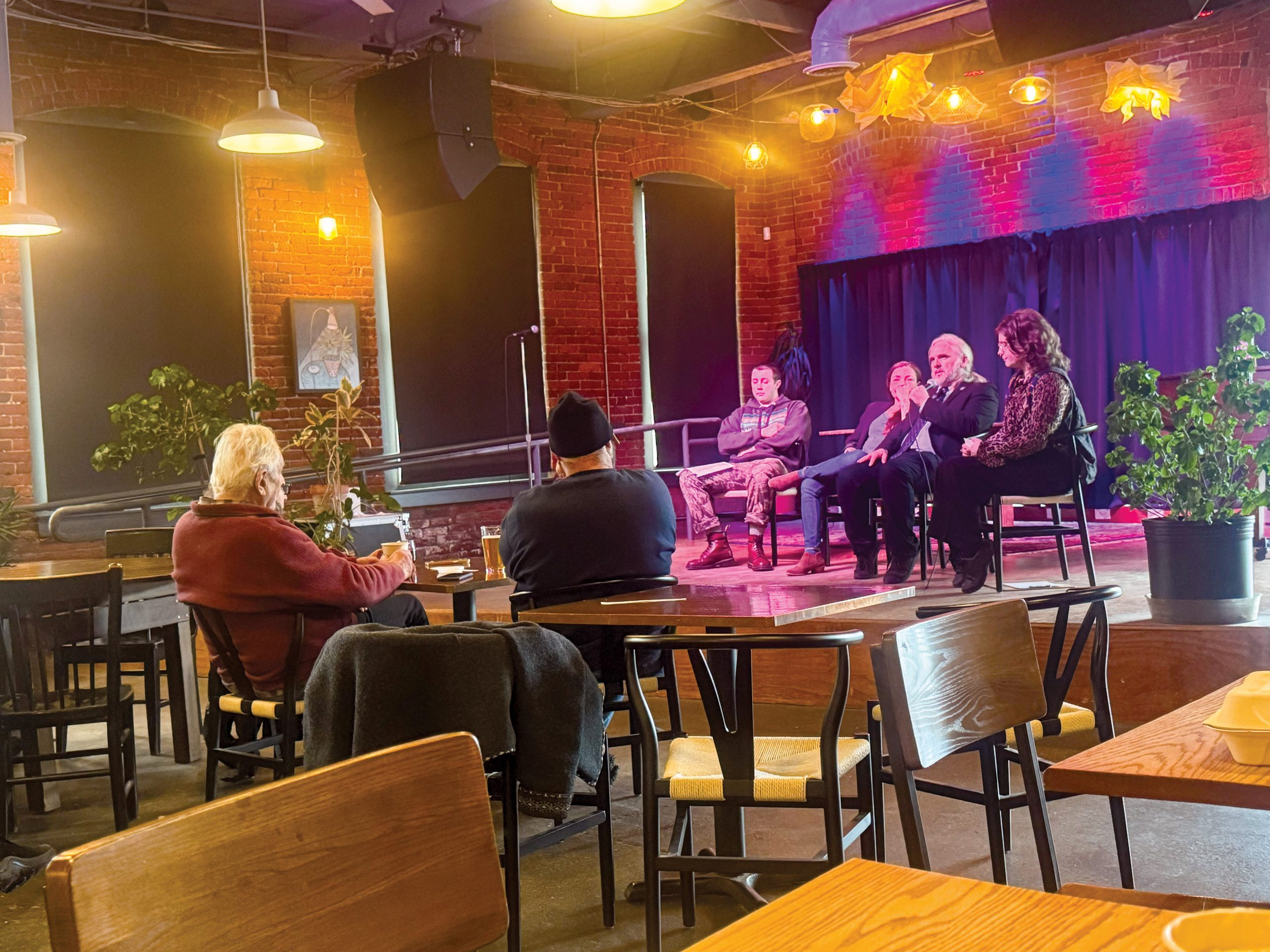
During the fourth session of “What Can We Do About It Here?” at Brewbakers Café, panelists discussed whether or not the U.S. government can be reformed.
Bobby Williams, a Keene city councilor, said reforms are often less than perfect.
“My general opinion on governments is that they reflect the society they’re a part of,” Williams said.”If you have a broken society, you’re going to have a broken government.”
However, Williams added that social movements are what lead to reforms ultimately going through.
Jodi Newell, representative for N.H. House Cheshire County District 04, reflected on how reform requires people in power to listen to the public.
“My first step to that [activism] is that the people who are making policies did not have lived experience or weren’t listening to the people who have lived experience,” Newell said. “You’re going to wonder why all these fundamental things aren’t being provided in the wealthiest society. How are the people on the bottom doing?”
Newell commented on her own experience and said, “When we’re fighting over SNAP benefits, over these things, we’re fighting over whether my children and I live or die. That’s how I view it.”
The third panelist, Alexander, a Keene State alum from 2023 who declined to share his last name, said he was doubtful that the government could be reformed.
“What are the metrics of success?” Alexander said. “That’s what I think about a lot….this sort of repeating cycle has led me to become a pretty strong advocate for anarchism.”
“When I think of reforms, I think of a population of irate people on the brink of revolution and the government acquiescing so we don’t murder them,” Alexander said. “I really agree with the idea that reforms can be positive in the right context.”
Alexander said that attending some of the 2020 protests and seeing riots in person opened his eyes to the current state of the country. He asked the crowd whether they believed that police cameras and police training work, to which the crowd largely disagreed that they were effective.
Following the panelists’ comments, an open discussion encouraged participants to engage with one another and ask each other questions at their tables.
To close off the panel, there was an open mic section where both the panelists and audience members could provide closing statements and remarks.
During the open mic section, Newell, who also works as an advocate against homelessness, spoke on what she has seen during her work and not judging others based on their situations.
“I went to someone’s [homeless] camp, this gentleman, who said he had been there for around 13 years,” Newell said. “It was a really interesting experience and the police came at one point. I ended up hanging out with this dude and he shared his artwork with me. I saw him later and he was looking for a couch for his new place.”
Williams discussed his views on violence and its effectiveness in making reforms.
“Violence is a fire and it can burn anything,” Williams said. “Revolutions get a lot of innocent people killed and that isn’t okay with me. Once the fire starts, you don’t always see where it will end up, and I think people should take care about that.”
Newell reinforced that trauma-informed care and understanding is very important to have, especially when working with others.
“When you’re understanding different people, you’re understanding that they’re coming from different contexts,” Newell said.
Chloe Erno can be contacted at