

A string of attacks has been carried out against Iran by the United States and Israel with the goal “to dismantle the Iranian regime’s security apparatus, prioritizing locations that pose an imminent threat,” according to the United States Central Command.
In the U.S. – and in New Hampshire specifically–the impacts of the war have been felt through the activation of the National Guard and the rise in gas prices.
The Supreme Leader of Iran, Ali Khamenei, was killed in the early strikes on Feb. 28. Mojtaba Khamenei took up the role of Supreme Leader following his father’s death, with Iran retaliating through missile and drone strikes on nearby U.S. allies and Israel, as detailed by the BBC. Targeted areas include military and government sites in Israel, notably in Tel Aviv.
Other countries that have been the subject of Iran’s missile and drone attacks are Bahrain, the United Arab Emirates, Jordan, Qatar, Kuwait, Saudi Arabia and Oman.
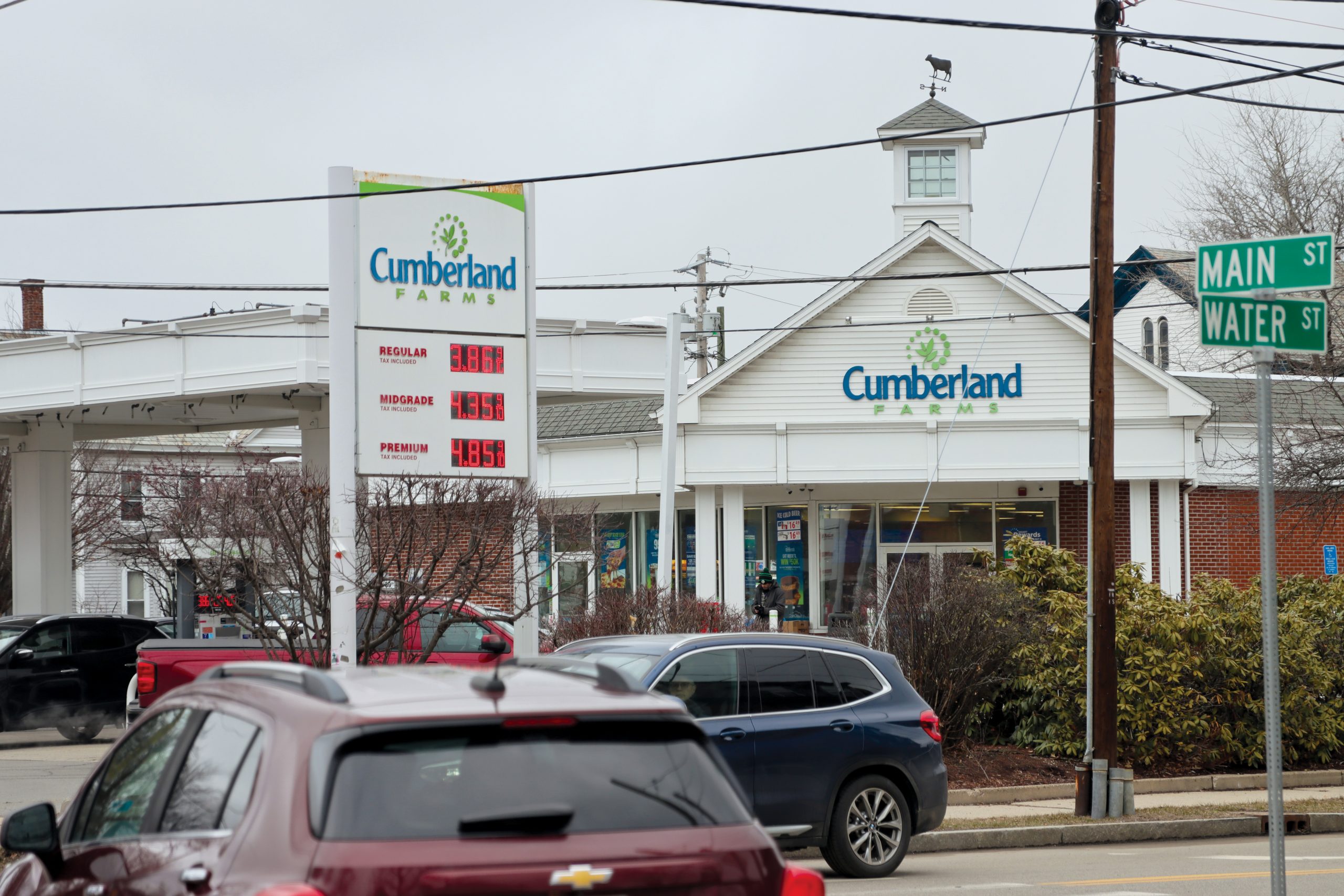
In the U.S., gas prices are on the rise at the pump due to the ongoing conflict.
As detailed by NHPR, “Prices at the pump are currently averaging $3.718 a gallon, according to the latest data from the American Automobile Association (AAA), which tracks prices nationwide. That’s up nearly 80 cents from a month ago.”
Lisa Johnson, coordinator of global education, shared some of the possible effects New Hampshire residents could see due to the ongoing conflict.
“I think we’re already seeing in the news that the conflict is causing gas prices to go up,” Johnson said. “Since the flow of gas from the Middle East is being blocked right now by Iran from the Strait of Hormuz, the first thing we’re going to see is the economic impact.”
Both Hezbollah, a militant group and Lebanese political party, and Hamas, the militant political organization in control of Gaza, have responded to the conflict. Hamas has encouraged Iran to cease its strikes on the Gulf states and Hezbollah retaliated through rockets with the goal “to avenge Khamenei’s assassination” on March 2, according to the BBC.
One of the core reasons behind the initial U.S.-Israel attacks was the growing unrest over the possibility of Iran developing a nuclear bomb and rebuilding its nuclear program–a concern shared by both countries.
The New Hampshire National Guard was activated in early March in relation to the war, with the Vermont National Guard confirmed to have contributed to the strikes against Iran, according to NHPR.
Johnson addressed the possible impact the conflict could have on the New Hampshire National Guard and its role in the war.
“I can imagine that there are New Hampshire guardsmen who are residents of Keene and they may be called to duty,” Johnson said. “It’s my understanding that the reserves, the guardsmen, are meant to be in support positions and not necessarily active combat.”
Johnson said she doesn’t expect that the conflict will have an impact on the global education office at the moment, but that “if the situation were to continue for a longer period of time I wouldn’t be surprised if it were to raise concern over global travel in general.”
Johnson said faculty or students who have “ties to the region” will feel the effects of the war due to family relations.
Johnson also reflected on how the call to service can be very “disruptive” to the person impacted and their family.
“Any instance where a person is expected to drop everything and go to a war area is, in my mind, problematic,” Johnson said. “Because the person who does that, they really have to believe in supporting the U.S., which I am absolutely for, but it becomes more difficult to do so when it’s not clear why we’re there in the first place.”
Senior Chris Conley, who enlisted in the Marines at age 20 and left as a combat engineer, spoke on his experiences with the military and what N.H. residents can expect to see going forward.
Conley’s last deployment was in 2019, close to the Strait of Hormuz, and he described the mission as a “force of readiness.”
“I don’t believe there will be a big impact for our service members in New Hampshire,” Conley said. “We will see a decent amount of air attacks, drone and missile strikes. I can’t really see us going for boots on the ground. But that’s up for debate.”
“I’m not a tactical expert, but I can speak on my own experience,” Conley went on. “We can only hope we don’t have to send any additional people as boots on the ground.”
Chloe Erno can be contacted at