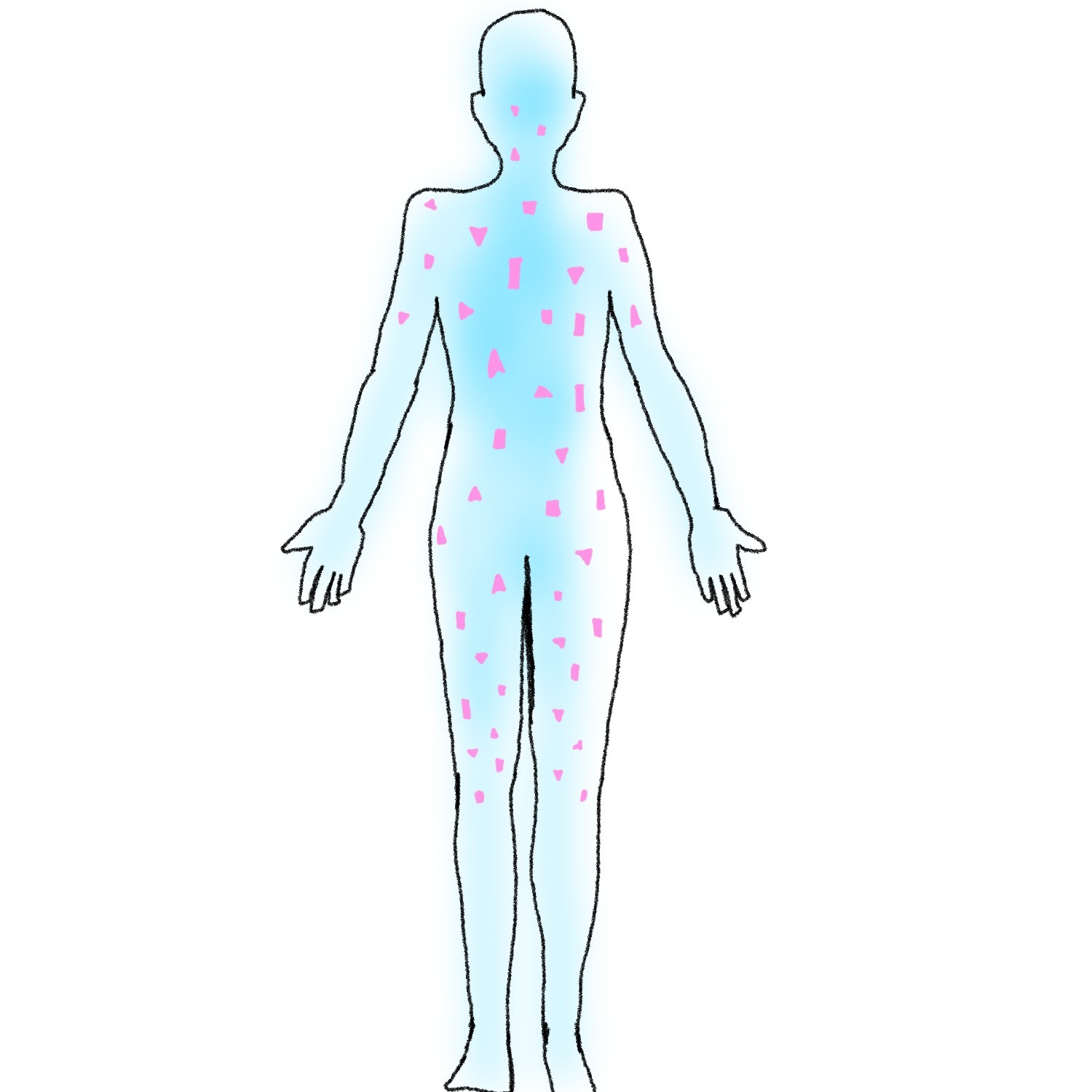
I think we all know not to eat plastic, right? I hope we have all moved past our Wii Nunchuck and Barbie chewing days way back then (or was that just me?), but it seems even leaving those habits behind couldn’t stop plastic from getting into our bodies through practically everything else. There are some obvious places where we find plastic, such as in cosmetic products and exfoliating scrubs, but they hide in a lot more things than you would think– even inside your body.
So what are microplastics? By definition, they are any pieces of plastic under 5 millimeters (mm) in length, according to The Guardian. There are also nanoplastics, which are any pieces smaller than 1 micrometer (μm). For perspective, the average grasshopper is 76,200 micrometers long. Pretty small, right? Just wait until they group together.
These things usually come from improperly disposed of plastics, such as bottles and bags, that degrade into the environment and make their way into everything, according to the New York Times. Depending on how the plastic degrades, it can make its way into different things. Byproducts of industrial practices, wear and tear of car tires, wastewater treatment plants, bodies of water and the air we breathe are full of the stuff from microplastic degradation.
Food isn’t safe, either; we might as well be back in second grade playing with those brightly colored and disproportionate pieces of fruit and vegetables. The plastics that are filtered out of wastewater end up in a sludge that is used for fertilizer and farming, according to the New York Times. From there, those plants take in the plastics and embed them in their roots. But it’s not only fresh food; processed foods are practically plagued with microplastics because of the machinery used to make and package them, as well as the plastics that get on the workers’ clothes that can spread.
Hope you don’t plan on wearing clothes, either. There is some evidence that these plastics and the 16,000 harmful chemicals that can be contained inside of them can be absorbed through our skin, and the materials of our clothes usually shed microplastics.
So now you can’t eat, breathe, drink or get dressed without bombarding yourself with plastic. If practically everything wasn’t made of plastic, we could actually do something about it, but, unfortunately, we can’t live in a world without the stuff unless we hit a factory reset. The extent to which corporations and production companies have to pollute everything is something that should be talked about more. My lungs feel full just thinking about these things.
And no, there should not be plastic in your body for those who haven’t put that together yet, considering that we are not dolls or the Pacific Ocean. There is no complete understanding of what this amount of plastic may do to our bodies, but may I say that there is no way it can be good?
Animal studies conducted have shown that microplastics can affect a lot of the body and its processes; decreased fertility and damage to the immune system are some of the harms, to name a couple. It can even cause cancer in areas such as the lungs and colon, plus cardiovascular disease.
But you know what they say– if you can’t get rid of it, get used to it. There are some ways to stall some of the effects, depending on how much you feel like becoming 30% G.I. Joe. According to The Guardian, there is an antioxidant called Anthocyanin found in fruits such as blueberries, blackberries and red grapes that can counteract the negative effects on the reproductive side of things. It’s also what gives the produce it occupies that purple, blue and/or reddish color.
There are also ways to avoid a ridiculous intake of microplastics. According to VeryWell Health, processed protein products are a large carrier, so say goodbye to your chicken nuggets. Gum is also a large contributor to microplastic ingestion, even if you don’t swallow it. For more general ideas, avoid plastic containers– especially from takeout places– plastic water bottles and highly processed foods.
Writing about not eating plastic was not on my 2026 bingo card. I know there isn’t much we can do about it, considering plastic is a widely used and relied-on resource, but I thought we might know how to deal with the problem by now, considering plastic manufacturing really boosted during and after World War II, according to the Science History Institute. Plus, Team Seas has been cooking for a bit. Maybe more should follow in their footsteps and try to keep the streets clean. If the streets and beaches are clean, then our lungs and brains will be too.
I think every single person had the talk in elementary school about how littering is bad and that our planet is slowly getting more and more trash-filled. I never knew that trash would slowly start to build up in us, too. Maybe this is what will cause the apocalypse, rather than a disease that turns people into zombies.
Hayley Doda can be contacted at
hayley@kscequinox.com