



Spring has sprung here in Deutschland; the sun is out more and it is actually reasonably warm for a change. As classes meandered along, we had a short break in the monotony with an excursion week for the program. Students were given the choice between two trips: One to München (Munich) and Wien (Vienna) or one to Köln (Cologne) and Amsterdam. I chose the latter.
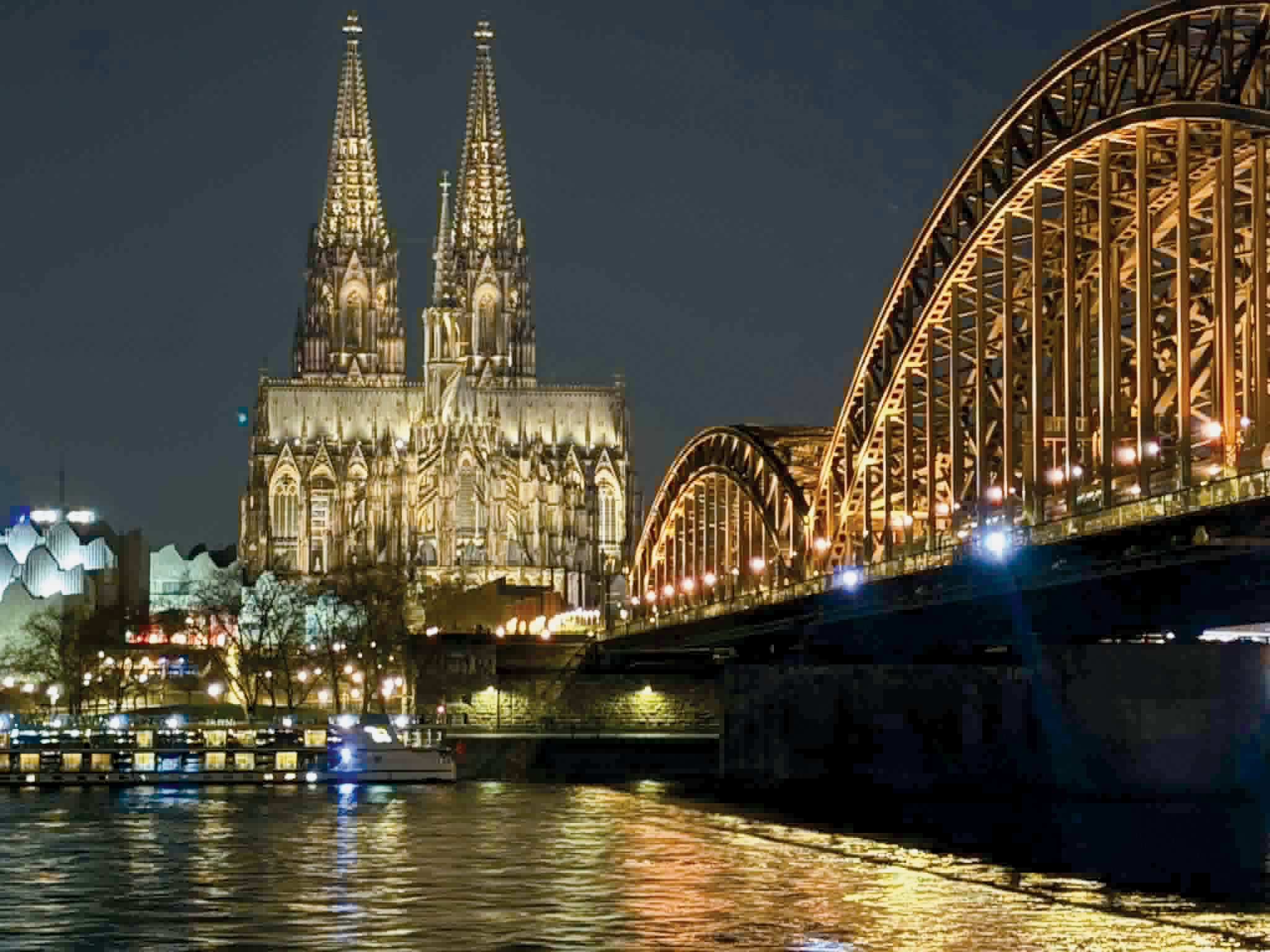
Whisked away on an InterCity Express high-speed train, the DeutscheBahn did not let us down as the train was only a cool 30 minutes late for our arrival at Köln Hauptbahnhof (Hbf). The city did not let us down either. Rolling over the Hohenzollernbrücke (a rail bridge over the Rhein), you are greeted by the imposing Kölner Dom in the city skyline. The Dom is famous for its size as the largest two-spired church in the world, clocking in at 157 meters [515 feet] tall. If you are feeling brave, for five euros you can climb the 533 steps to the observation deck on the south spire, which is only 97 meters [318 feet] up.
Köln was a city of simple pleasures, sitting on the banks of the Rhein watching boats go by, walking the Alte Stadt and admiring the architecture and shops lining the streets. Or drinking.
According to our guide for the city walking tour, a popular pastime of the Kölsch night scene is to go “kiosk hopping.” In this case, a kiosk is a convenience store with snacks and mountains of beer being sold at blockbuster pricing of roughly two euros a pint. Unlike many places in the U.S. and a motion that was voted down recently in Keene, the whole city is a “social space.” You can find someone walking around in public with an open beer at just about any time of the day as there is no law against open containers. The Dutch fall into a far more interesting category.
Amsterdam is far more eclectic and free-spirited, if you will. It is a beautiful city that looks familiar to a New Englander like myself. The canals were filled with houseboats, the streets filled with cyclists and lined with old brick buildings featuring shops with a uniquely Dutch twist. The buildings were crooked, sometimes because the foundations of the buildings had settled, and sometimes on purpose.
The guide on our walking tour informed us that because of the relatively small footprints of the houses, it was common for large objects to be hoisted into the buildings from the windows. However, when it is gusty, the object you are trying to move can swing into the building and break things. The Dutch solution was to make the façade of the building intentionally out of plumb so there is more space to swing.
There is another quirky solution the Dutch have been rolling with, which is the concept of “gedogen.” Pronounced ghu-do-ghen, it is this view of legal illegality. Dutch marijuana law works this way: it’s legal for “coffee shops” (dispensaries) to sell marijuana products and for individuals to grow for personal use. However, individuals cannot sell marijuana products, coffee shops cannot buy marijuana products to sell legally and it is not legal to smoke in public. That is the beauty of gedogen for you; it becomes de facto legal with the systemic non-enforcement. Just make sure you are downwind of the cops and you are fine.
Timothy Fitzpatrick can be contacted at