
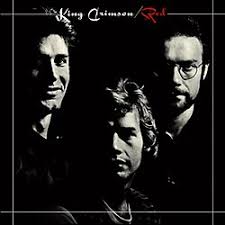
King Crimson was a well-respected progressive rock outfit by 1974, but its core members had been slowly dwindling, enough that by the time the group stepped into the studio to record “Red,” it was reduced to only three consistent musicians: Robert Fripp on guitar, who helped form the group in 1968 and was its only constant member throughout its many iterations, John Wetton on bass and vocals and Bill Bruford on drums. While other musicians are featured on the disc, the music is primarily based on what these three men can accomplish.
The title track, appropriately titled “Red,” is a bombastic, heavy opening that really sets the tone for the record. Both the guitars and the bass have a lot of distortion, which at times makes the two blend together. Fripp’s tasteful use of dissonance and uncommon chord progressions keeps the listener engaged, even as things slow down in the bridge with the introduction of double bass and cellos, making for a very 20th-century art music vibe.
The next track, “Fallen Angel,” is the first to feature John Wetton’s vocal work. Wetton’s characteristic velvety baritone takes center stage as he delivers poetic and sad lyrics about a man losing his brother to gang violence. These vocal lines are interspersed with improvisational sections, hearkening back to the group’s earlier work featuring cornet and oboe on top of the bed of hard-hitting distorted guitars.
“One More Red Nightmare” follows, a tune with a similar structure to “Fallen Angel” but with a totally different vibe. The opening riff is built around a whole tone scale with a lot of space that drummer Bruford takes advantage of, using it to show his technical prowess on his instrument. The improvisation here is led by alto saxophone, a unique timbre that manages to cut through the heaviness of the rhythm section.
“Providence” feels the most out of place on this particular disc, but is still in line with the loose, atonal improvisations the band experimented with on previous albums. Bruford has described Crimson as “an instrumental group with occasional songs,” a dynamic that has been flipped on its head for most of the disc. This avant-garde ambiguity perfectly sets the stage for the crowning achievement of this album: “Starless.”
This final track opens with a pensive string sound produced by a Mellotron, an early synthesizer that uses magnetic tape loops. As the rhythm section bubbles beneath, a heartbreaking melody comes in, expertly played by Fripp and sounding less like a guitar and more like a synthesizer. Wetton delivers the best vocal performance of the whole disc, and once his three verses conclude, one would be forgiven for thinking the song would stop there. Instead, we get a middle section with a growing, distorted bass riff in 13/8, taking a 12-bar blues structure and distorting it. This builds to an explosive final section with intense drumming and wailing saxophones; the melodies of the first section are restated with the pounding, doom-laden rhythm section hammering away underneath.
Fripp would disband this iteration of King Crimson only two weeks before “Red’s” release. They would eventually reform in 1981 with an almost entirely new lineup and a totally different sound. While I’m glad this new version was able to come into being, many others and I wonder what could have been if Fripp, Wetton and Bruford hadn’t gone their separate ways.
May Cassidy can be contacted at