
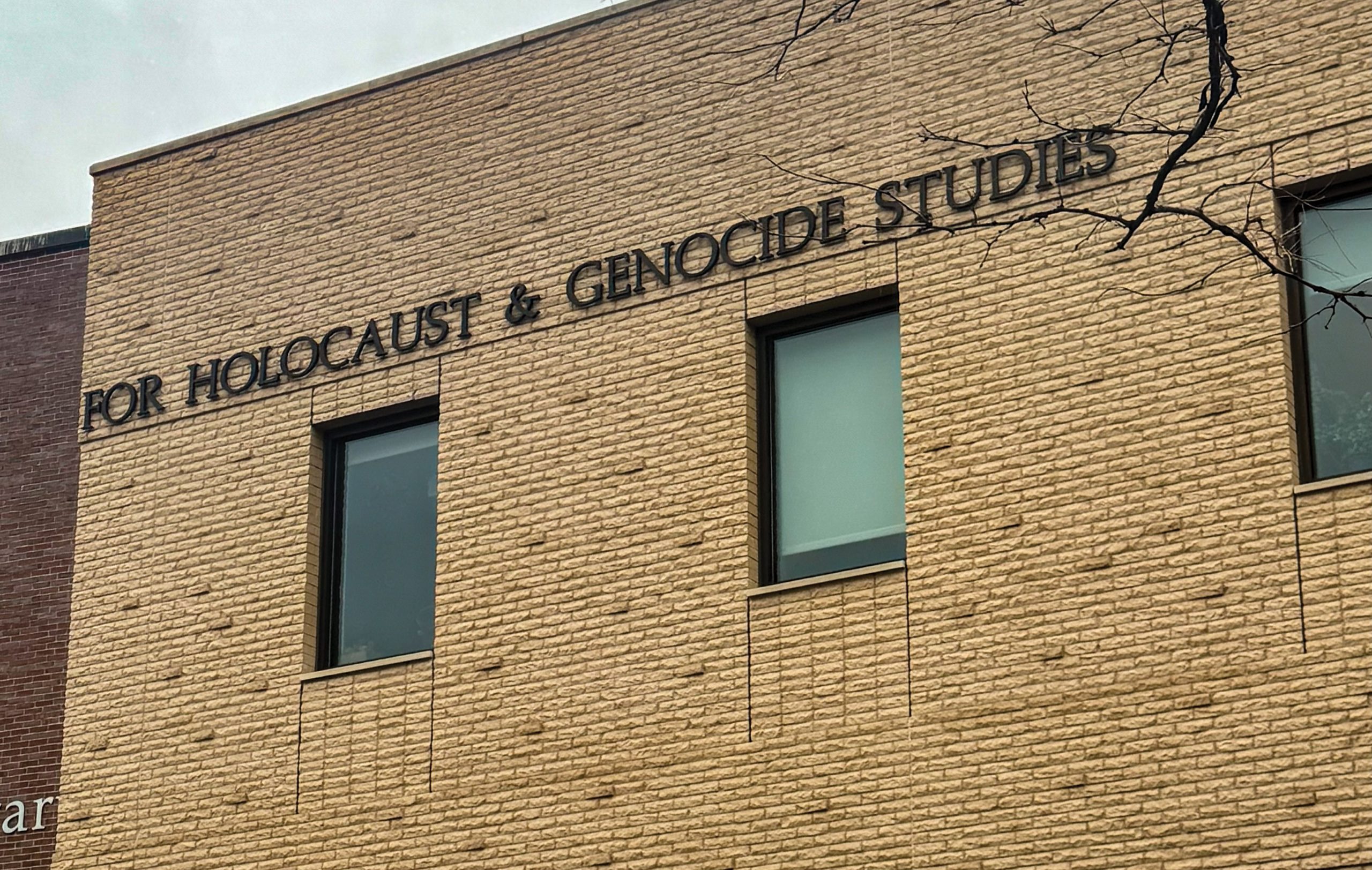
From January 12-23, 2026, the Cohen Institute will host a study tour down to the Australian cities of Melbourne and Sydney. The tour is designed to address how Jewish refugees after the Holocaust and Aboriginal rights in Australia interconnect.
Some of the planned events during the tour include visiting the Great Synagogue in Sydney, touring the Melbourne Holocaust museum and going to the Sydney Zoo.
Kate Gibeault, director of the Cohen Institute for Holocaust and Genocide Studies, explained how the institute goes about choosing a study tour location.
“Our goal since I’ve started as director is to get to a place where we offer one study trip every calendar year,” Gibeault said. “So when we put the trips together, one thing we look at is faculty expertise, connections and relationships with organizations and scheduling availability.”
Gibeault also addressed Monash University Teaching Associate Sue Hampel’s role in shaping student interest on the issue.
“We had a speaker [Hampel] a few years ago from the Melbourne Holocaust museum,” Gibeault said. “When she came, people were really interested in this topic.”
Hampel also works as the co-president for the Melbourne Holocaust Museum. Earlier this year, Hampel was a part of the Living Holocaust program in Poland, which coincided with both the end of WWII and the liberation of Auschwitz by allied forces.
Hampel visited Keene in 2023 for a Kristallnacht lecture titled “Australia’s Response to the Holocaust.” The lecture went over the White Australia Policy and Australia’s response to Nazi Germany. The White Australia Policy, according to Britannica, was “fundamental legislation of the new Commonwealth of Australia that effectively stopped all non-European immigration into the country and that contributed to the development of a racially insulated white society.”
Gibeault explained why this issue in particular felt important to address by the Cohen Institute.
“I think part of the reason we were drawn to this particular topic was since these two histories are very intertwined,” Gibeault said. “There are points of connection and a broader search for equality.”
“We decided on Australia, but we were also thinking about Rwanda,” Gibeault added.
John Sturtz, professor of education, provided his thoughts on the trip.
“I was asked if I wanted to be a part of it, since I did research on Australia in the past,” Sturtz said. “We’re looking at the intertwining histories and both of those are represented in Melbourne and Sydney.”
Sturtz added that the Australia study tour is “very important” and that the “hosts there have deep research on this.”
According to The Joint Australia, “For some, Australia represented a promising haven and in the period from 1945 to 1961, around 25,000 Jewish refugees migrated to Australia, reinforcing an Australian Jewish community that numbered only 23,000 in 1933.”
The Aboriginal population of Australia are the Indigenous people of the land. Captain James Cook, a naval officer for Britain, claimed the island as a British territory in 1770, with colonizers setting up British Settlements from 1788 to 1901. The early colonists had a prejudiced view of the Aboriginal people, having believed that Australia was a “no man’s land.”
Disease was a major cause of death and destruction for the Aboriginal people, with smallpox, syphilis, and influenza being some of the diseases introduced to them by the colonists. The Aboriginal Heritage office details how “the vast majority of clans living in the Sydney Basin were killed as a result of the 1788 invasion” and “Much of what we do know about the northern Sydney clans must be gleaned from their archaeological remains.”
In the modern day, Aboriginal rights have still been a pressing issue in Australia, with police brutality and the deaths of Indigenous people in custody being significant causes of concern.
In an interview with the BBC, Keenan Mundine, an Indigenous man, lamented how “The only time the blue uniform comes into our community is to take away a loved one.”
Chloe Erno can be contacted at