

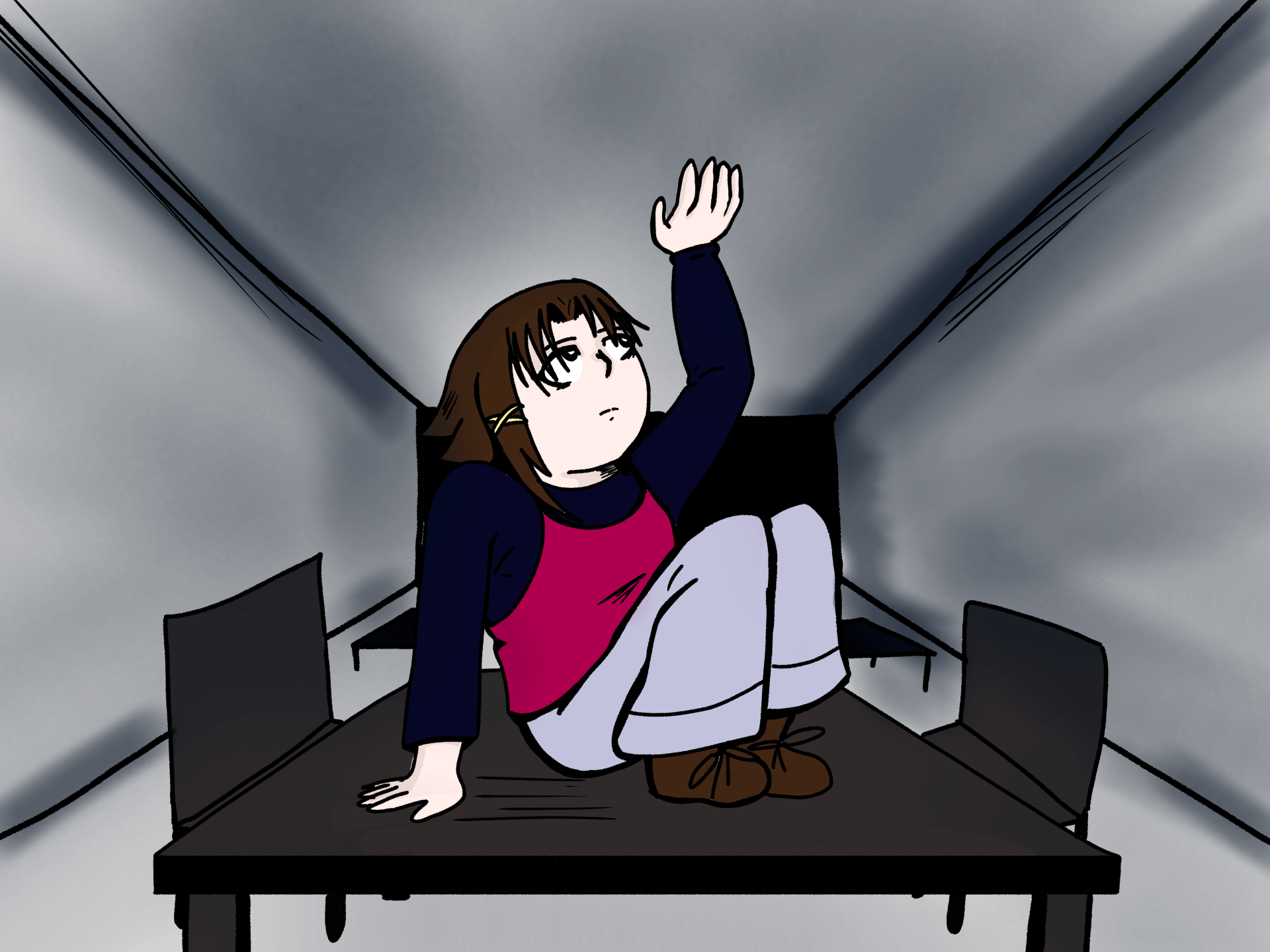
Let’s take a look at the public school system as we know it. You throw a random group of kids into a classroom and hope they don’t have too many friends so they can manage to pay attention to whatever they’re being taught: Math, English, Science, History, etc. But what if schools took away half of that experience? What if students were taught independently?
That’s what one Swanzey School in New Hampshire has: a smaller classroom known as “The Younger Years” for students who need to be taught individually. While this classroom may seem ordinary, it is the learning environment for only one student, the second to be put into The Younger Years at Swanzey since the program began in 2024, according to The Sentinel.
This is an emerging educational trend, considering it still has no federal definition and is not overseen by the N.H. Department of Education. Despite existing beforehand, microschools were popularized in the COVID-19 pandemic, probably out of fear of the disease, yet according to a 2025 study by the National Microschooling Center, about 2.1 million kids attend these schools.
They are said to focus on students’ interests, but because of the diversity of what is being taught, I can’t imagine it’s easy to get a student back into a program, if that’s what the goal of these microschools is. While it can be a way to get away from the constant sitting down and trying to focus on things that practically nobody wants to, it’s also a way to take away some of the most crucial parts of being in school.
After helping out my mom in her Kindergarten classroom a few times, I understand that some students have a hard time focusing in class, especially younger students; however, when you take a kid away from a classroom, it’s really making it tougher for the kid to fit in with their classmates later in their school years.
Sure, their grades will be better, but early years of school are crucial for a kid to make friends, which typically end up being people they’re close to for the rest of their primary and high school years– sometimes even past that. Taking this away is like taking away all of the rides at an amusement park and expecting a kid to still have a good time with the few overpriced food stands and gift shops left scattered around crowded pathways and large patches of grass.
To be put in a microschool, a student has to be registered as a homeschool student within the state, and the program is like being homeschooled, consisting of online lessons curated by an educator, and breaks despite still being in a classroom. They are classified as a child care center kind of learning experience, but I don’t understand why this has to be a separate curriculum.
I understand that kids can be rowdy, but that’s part of being a kid. Secluding them to be taught on their own – although that might be necessary in extreme situations – is taking away the foundations that I don’t think can be taught with a whiteboard and marker, such as manners, making friends, sharing, and learning how to interact with others, and that’s just in Kindergarten.
As kids get older and move up in school, if they are being bullied, truly struggling to focus in class, or if the parents planned to homeschool their kid(s) anyway for any particular reason, then I could understand it more. It may be more interesting and encouraging for a student, giving the student the motivation to actually want to go to school while providing flexibility and a personalized educational curriculum.
There are just so many gray areas that need to be worked out. I can understand the idea if there are extreme cases of students not interacting well with others or not being able to focus and accomplish the grades they need to move up grade-wise, but maybe it would be better to integrate individual programs for these students rather than completely secluding them.
Sectioning off some one-on-one time with a para-educator or a teacher hired for individual student lessons to hone down on students’ actual education could be better, but still include the student in other periods such as snack time, recess, and indoor activities, so that the student could still be included in everyday life.
Depending on how well they can learn whatever basics that are being taught in class, para-educators could even throw in some basic lessons on things they’re interested in, making this a program and melding it into a way for a student to learn more while keeping up with classes. Maybe making this into more of a program rather than a completely sectioned-off classroom could also be a way to help gifted kids excel in classes.
So let’s fix The Younger Years while it’s still figuring itself out. Make it a program rather than a separate experience, and then maybe we will have a fully functioning system and tool to help students excel in the classroom while still being included in the typical classroom experience.
Hayley Doda can be contacted at
hayley@kscequinox.com