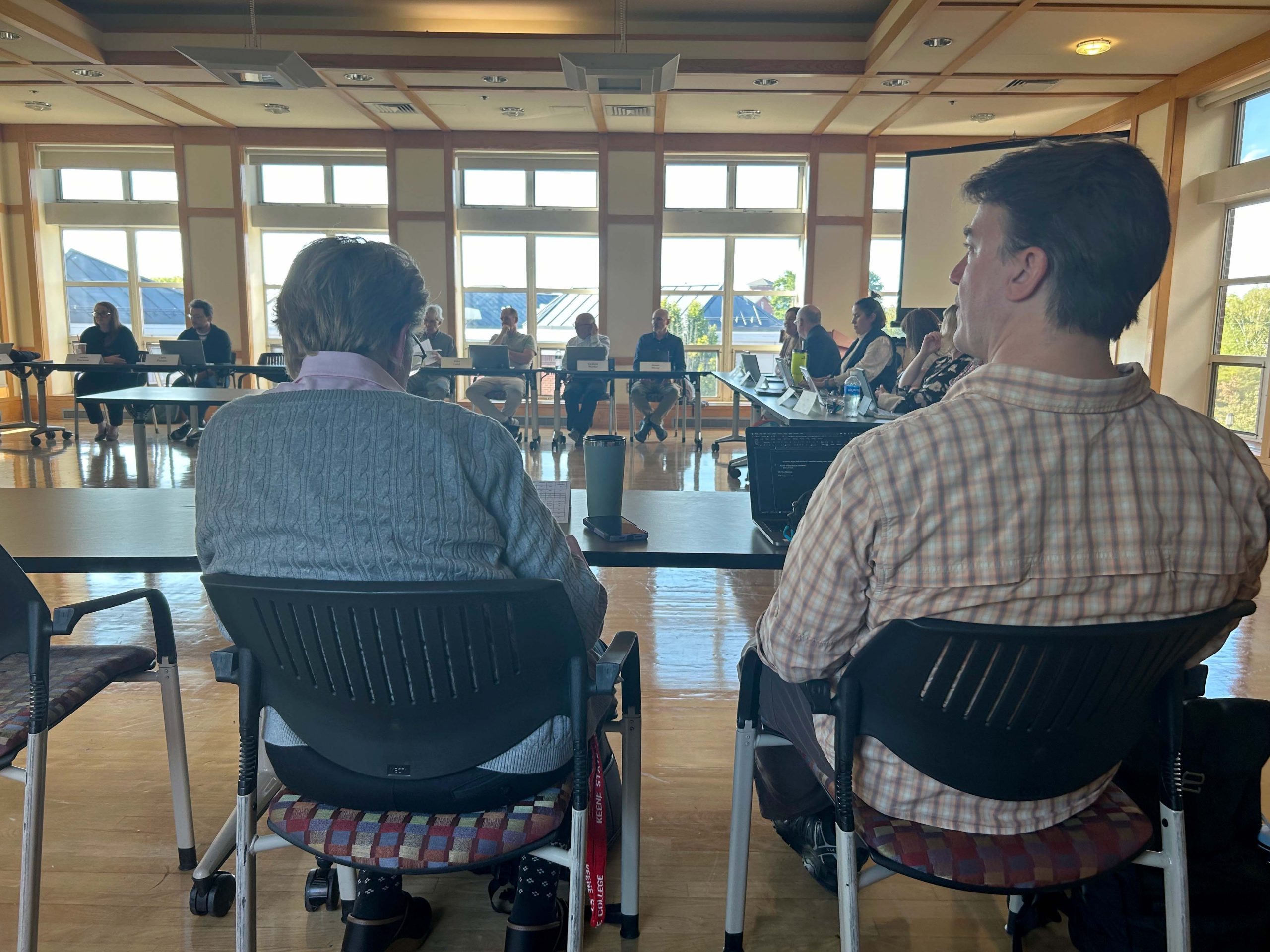
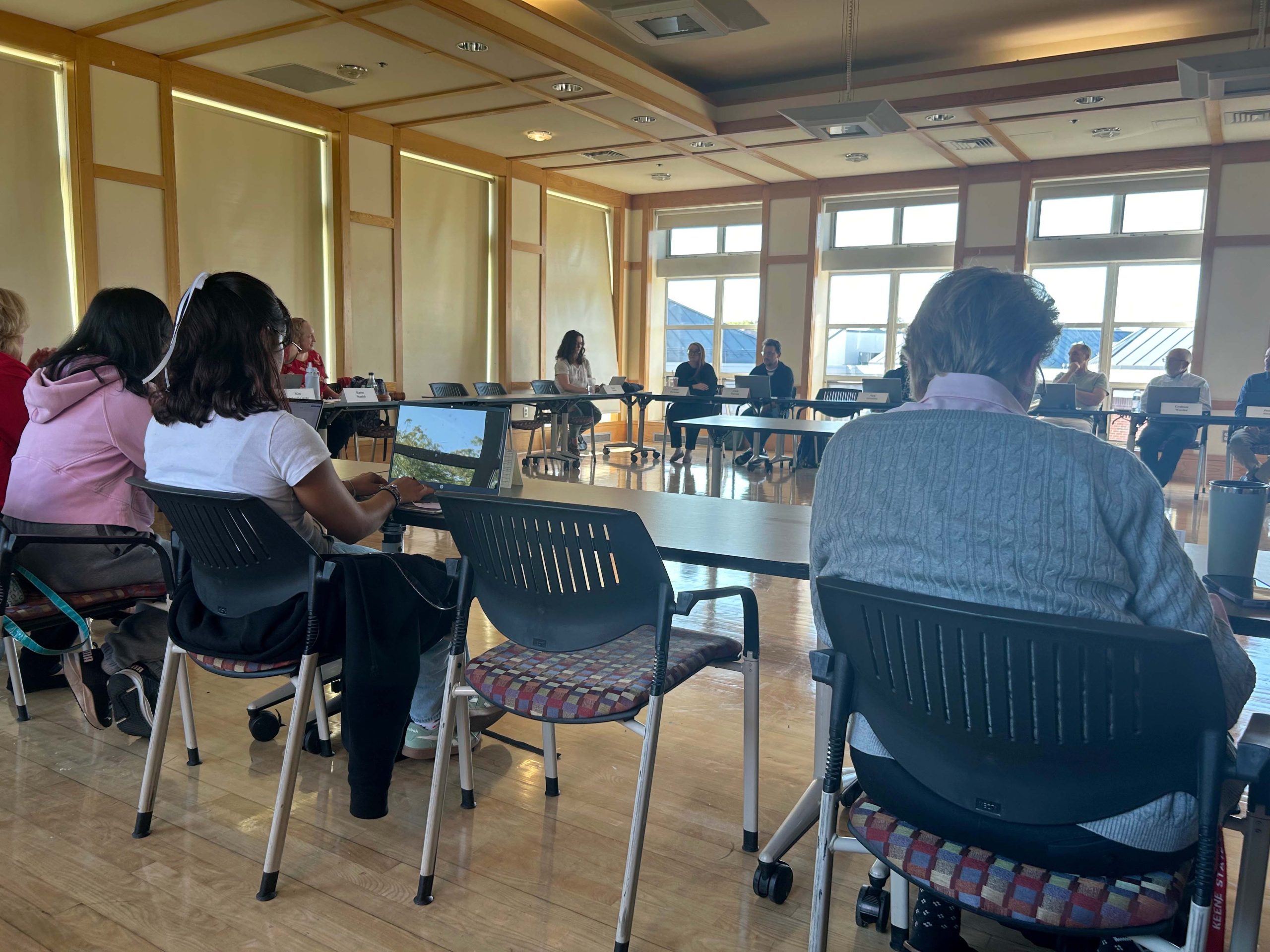


“Our board [the University System of New Hampshire Board of Trustees] has very clearly stated that we [Keene State, Plymouth State University and the University of New Hampshire] will remain three separate institutions, independently accredited, working harder to make sure we’re meeting our own institutional financial targets,” KSC President Melinda Treadwell said during her remarks to the KSC Senate, the academic policy-making and legislative body of the college.
Treadwell’s comments were made as the KSC Senate’s first meeting of the academic year opened, following a summer where the college saw the state legislature deal a 15 percent, or $26 million, cut to USNH, of which Keene State is a member institution, according to previous Equinox reporting.
The cuts had spurred debate as to whether USNH member institutions may go further than just system-wide shared services or if a possible merger of institutions may take place, though this speculation has been repeatedly shot down by the system.
Treadwell said that work will continue to be done with shared services as part of the college’s ongoing effort to meet its financial goals.
KSC Senate Chair and Professor of Mathematics Karen Stanish discussed the KSC Senate Leadership Committee’s work over the summer to pass certain “urgent” policies before the academic year’s start.
Stanish said one of the items passed was a proposal meant to avoid penalization toward departments if they chose to put a permanent course in place of an experimental course during this academic year’s curriculum moratorium.
Another item passed related to the implementation of a chromatic grading system, which uses pluses and minuses along with letter grades.
Stanish said the change was passed back in 2017, but the college was not able to implement it in the years following.
Due to the launch of Workday Student being on the horizon, Stanish said the change will allow the grading system to be implemented more seamlessly.
Stanish also said policies that conflict with the original 2017 chromatic grading system change would be updated by the Academic Policy and Standards Committee (APS).
Following a question from Senator and Professor of English Education Chris Parsons about the implementation timeline for the grading system change, Stanish replied that the anticipated launch of Workday Student would be in the fall of 2027, as of now.
Stanish said the launch of Workday could cause the body to hold a special meeting to update certain policies to be in line with the service, but said she hoped there would not have to be one called.
“There has been a strong request from the system level and the Workday folks at the system level [about] some of the policies that [concern] Workday, so the add/drop period, for example, would be implemented into Workday, so if they’re different from the three campuses that we should try to be uniform across the three campuses,” Stanish said, noting that only the policies affecting Workday would likely need to be changed.
Stanish also said the Senate would not act as a rubber stamp to policy changes as well.
Tweaks to the academic calendar were also passed over the summer, with changes pertaining to eight-week-long graduate courses.
“Now we have eight-week sessions, two each semester, and one in the summer for graduate courses,” Stanish said.
Add/drop and withdrawal dates were also changed accordingly for these sessions, Stanish noted.
The items were passed in order for the changes to be implemented at the beginning of the fall semester’s first eight-week session.
Collegewide Academic Program Committee (CAP) Chair and Professor of Mathematics Mike Cullinane said the committee had a productive first meeting but did not have much to report on immediately as they began work.
APS Chair and Professor of History Greg Knouff said the committee discussed its mission, its scope within the Senate’s bylaws and the expected workload for the year.
Knouff said the committee will analyze policies relevant to Workday and that the college’s associate provost has compiled a list of the policies in question already.
“The one that was a little time-sensitive to my understanding [is that] they want a decision on the schedule adjustment period pretty soon,” Knouff said.
Knouff said a two-week free add period and a two-week free drop period proposal was thrown out but that the committee will likely look to find a variant of the policy more suitable to Keene State.
Knouff added that a compromise would be maintaining a one-week free add period but moving to a two-week free drop period.
Another item on the APS agenda was a proposal for the change of the declaration of major/minor policy to allow students to register for major courses in a more timely way, Knouff said.
The Senate Curriculum Committee (SCC) did not meet, but SCC Chair and Professor of History Nick Germana said the committee would work closely with the CAP committee to parse out the workload going forward.
Nathan Hope can be contacted at