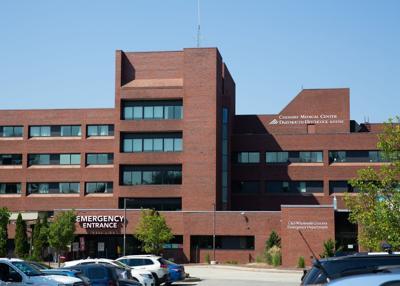
Last summer, around the time Cheshire Medical Center nurse Steven Finnell allegedly began taking painkillers meant for patients, officials from the Keene hospital asked state regulators to lift sanctions put in place to prevent drug diversion, regulatory documents show. The state Board of Pharmacy agreed.
But if the allegations against Finnell are true, he began diverting drugs before the hospital’s request, at a time of increased scrutiny from state and federal regulators. And the case raises new questions about Cheshire Medical’s ability to secure its opioid inventory.
The pharmacy board had mandated these sanctions after an earlier case where large quantities of fentanyl solution were lost or unaccounted for at the Dartmouth Health affiliate, according to a July 2022 settlement agreement.
The agreement between the board and Cheshire Medical Center attributed some of those drug losses to a nurse who, as Finnell allegedly did two years later, diverted opioids from the hospital.
Under the settlement, which allowed Cheshire Medical to keep its license to run a pharmacy, the hospital was told to tighten its oversight of controlled substances and hire an outside monitor to do regular audits. Hospital officials were directed to share these third-party reports with the pharmacy board for the agreement’s three-year duration.
But roughly two years in, on Aug. 21, 2024, Cheshire Medical asked the board to lift the restrictions, pharmacy board minutes from that meeting show. The board granted this request at the meeting, saying in its ruling that the hospital had complied with the agreement in good faith.
As detailed in the state nursing board’s emergency suspension of his license, Finnell’s alleged diversion of an unknown quantity of opioids starting in June 2024 came to light the following January.
Cheshire Medical Center did not say where in the hospital Finnell worked or what protocols he allegedly breached, so it’s hard to know if continuing the sanctions would have caught his alleged diversion sooner.
Finnell, who according to Cheshire Medical Center no longer works at the hospital, previously declined to comment.
State-level sanctions weren’t the only increased oversight triggered by the earlier diversion of fentanyl. A June 2023 settlement agreement with regulators from the U.S. Drug Enforcement Administration includes monitoring requirements and remains in place.
A thorny issue
Diversion, or drug theft, in medical facilities is a serious and thorny problem in health care. Hospitals need an inventory of strong sedatives and painkillers, many of them highly addictive, as part of patient care.
These drugs enter hospitals regularly and in significant quantities, and several personnel, from the pharmacy staff who receive the shipment to the nurses who deliver these medications to patients, handle them. Diversion can happen at any point during the process and can involve people in different parts of the hospital.
The extent of the problem is unknown because diversion, even when it is discovered, is often under-reported. The ASHP, the largest group of hospital pharmacy professionals in the U.S., estimates that 10 to 15 percent of health care workers misuse alcohol or drugs at some point in their career, a prevalence similar to in the general population. But it’s much more difficult to determine exactly how many take prescription drugs not meant for them.
ASHP’s 2022 guidelines for preventing drug diversion detail some scenarios. Hospitals have electronic systems to track drugs from the moment they arrive. But diversion can happen when professionals administer partial doses to patients, while logging the full amounts on medical records, as the state pharmacy board alleges Finnell did. In other cases, providers might prescribe and dispense themselves opioids or order medications for patients who have already been discharged.
In a March letter to the editor, submitted after The Sentinel reported that opioids had again allegedly gone missing from Cheshire Medical, President and CEO Joseph Perras said the hospital follows best practices to prevent this from happening.
“Despite the very best practices that any hospital may implement … the fact remains that highly motivated and shrewd individuals will find a way to divert controlled substances,” Perras wrote.
That hospital officials promptly reported Finnell to state and federal agencies, Perras asserted, shows Cheshire Medical’s diversion monitoring worked as it should. Led by a drug diversion specialist, he wrote, the hospital’s program is in service to “Cheshire’s unwavering commitment to delivering high-quality care, provid[ing] a safe patient and employee environment, and ensur[ing] regulatory compliance in all aspects of the hospital’s operations.”
A Cheshire Medical Center spokesperson did not answer questions about the type of measures that were put in place after the hospital discovered the earlier fentanyl diversion. An emailed statement from Perras sent in response to a question about why Cheshire wanted to lift the state-level sanctions said the hospital had demonstrated it had strong systems in place to prevent diversion. It’s an assessment he said the Joint Commission, an independent accreditation organization, shared.
The Office of Professional Licensure and Certification, which oversees the state pharmacy and nursing boards, did not answer numerous emailed questions. They include whether Finnell’s alleged diversion will prompt the pharmacy board to reinstate its settlement agreement with Cheshire Medical, and the board’s plans, if any, to change its own oversight process.
Instead, a spokesperson provided meeting minutes and copies of the third-party progress reports from Cheshire Medical.
The reports from September 2022 through July 2024 showed the hospital was largely able to keep track of the controlled substances in its inventory. Cheshire Medical reported a loss in November 2023 where it could not rule out diversion. In April and June 2024, the hospital reported additional losses, but diversion was not suspected.
The reports did not specify the type or amount of lost drugs.
Under the hospital’s 2023 agreement with the DEA, Cheshire Medical must notify regulators if another significant loss occurs within three years. A spokesperson from that agency declined to comment on the agreement, citing an ongoing investigation.
These articles are being shared by partners in the Granite State News Collaborative.
For more information, visit collaborativenh.org.