

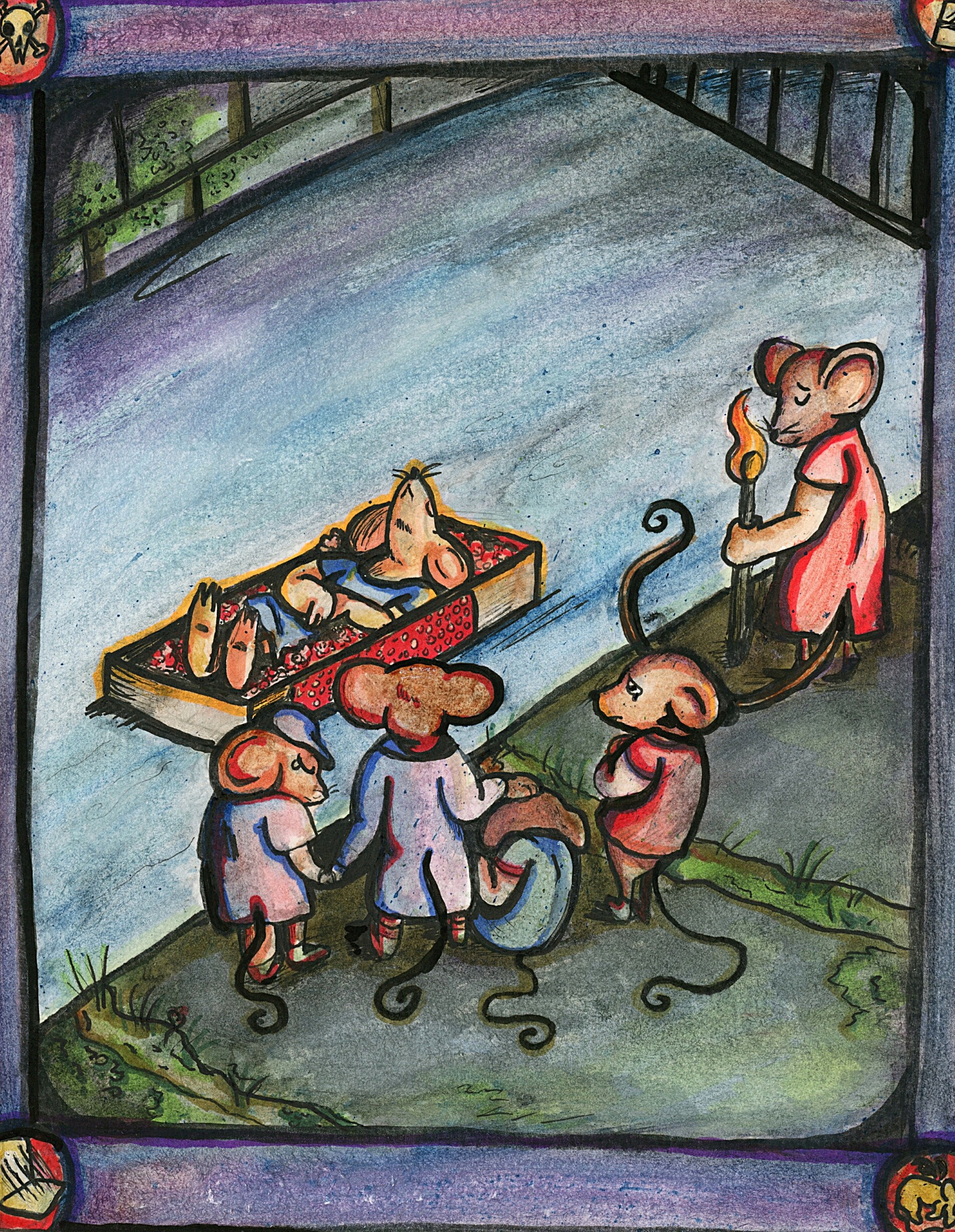
HB152 was indefinitely postponed on March 26. The proposed bill would have prohibited the use of glue traps for rodent pest control. A glue trap uses an adhesive to keep rodents in place until they die or can be removed. Supporters of the bill argued the glue trap was a primitive method of pest control, while opponents pointed out the bill would be difficult to enforce and easy to circumvent.
Humankind’s relationship to rodents and other pests has always been fraught, to say the least. The concept of a pest is interesting as it has nothing to do with the mechanics of our environment but instead describes the relationship of these animals to human business and property. In nature, there is no such thing as a pest. It is only when humans attempt to control the environment that a species receives that label.
I know what it’s like to have pest issues. Growing up, my family dealt with a revolving door of squirrels, bats, and, of course, rats and mice. The problem got even worse once we were gardening more. We finally settled on the “Havahart” traps, which kept animals alive and unharmed until they could be moved to a safer location. Inside the house, though, it was a different story.
There are many methods of pest control that humankind has developed. For rodents, this usually means traps, of which there are essentially two kinds: Those that simply trap and those that kill. The former is by definition more humane, but the latter is far more convenient and, as a result, more common. It is much easier to dispose of dead rats and mice, and there is a lower chance, of course, that those particular animals will return. But to my mind, the instinct to eradicate these animals simply highlights the hubris of our species.
This is not to say that we should abolish all traps and live in a naively idealistic world of rainbows and butterflies. Rodents and other pests can be huge barriers to business and agriculture, and they can be dangerous spreaders of disease. What I am advocating for is a reframing of the way we think of these animals.
We are ingenious creatures. We are at a stage in our development where we can create and use advanced technology, but many extrapolate this to mean that we have the right to control our environment. To quote Rachel Carson from her landmark book “Silent Spring,” “…man is a part of nature, and his war against nature is inevitably a war against himself.” I do not purport to have some grand solution or even an alternative to rodent traps. Truth be told, I agree with the Republican standing on this bill; it would be nigh impossible to enforce. But we are a vastly intelligent species, and I fail to believe that we are incapable of finding a humane method of mitigating the issues rodents cause. We are fellow creatures in the same environment. What right have we to dictate the worth of their lives?
May Cassidy can be contacted at
mcassidy@kscequinox.com