
Students from Holocaust and Genocide Studies Department Chair Ashley Greene’s Introduction to Holocaust and Genocide Studies class worked with KSC’s Special Collections and Archives to bring a pop-up Holocaust exhibit to the Mason Library.
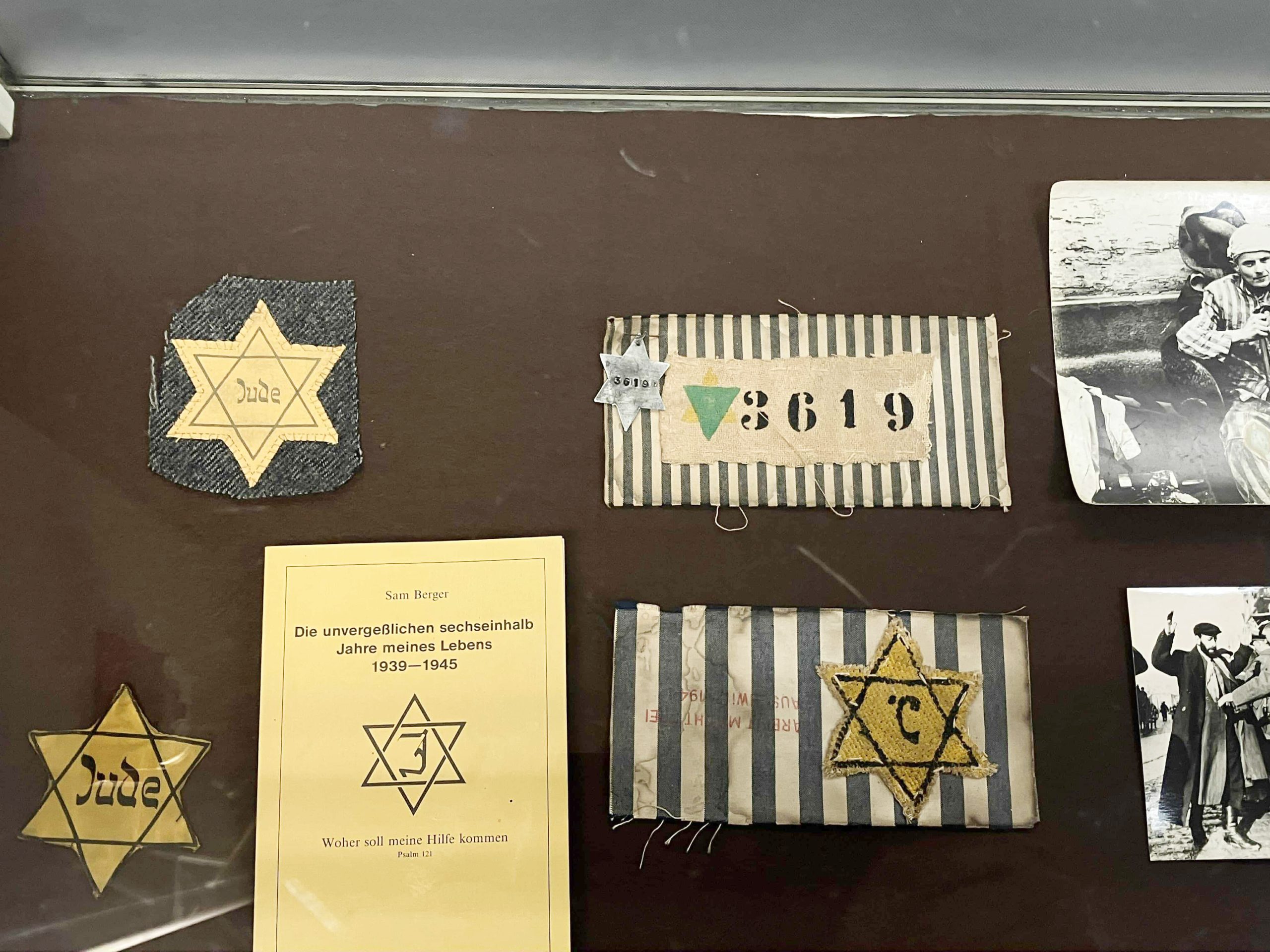
The exhibit opened on Monday, March 24, and included relics from the collection of Ira Schwartz and various items donated to Keene State College by Holocaust survivors and their families. Two display cases included relics such as original photographs from the Holocaust, various badges worn by concentration camp prisoners and a preserved Nazi flag, among various other artifacts.
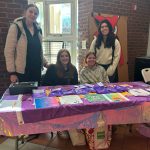
A table featuring scanned copies of survivor photographs was arranged by Greene’s class and included student research on their lives. The class collaboration was part of a longstanding tradition of interdepartmental projects between Special Collections and Archives, the KSC Holocaust and Genocide Studies (HGS) Program and the Cohen Institute for Holocaust and Genocide Studies.
According to Associate Professor and Head of Special Collections and Archives Rodney Obien, collaborating with the HGS program gives students the opportunity to have hands-on experience with authentic Holocaust evidence and research material.
“Normally with the HGS classes we do a session with them where me or one of my colleagues will bring things from the collection for them to look at, and the message to students is that these are here for you to use for research, so if you just want to see them or use them for research, all you have to do is make an appointment with us,” said Obien.
“That’s the privilege you have at Keene State College where you have access to these materials,” added Obien.
Obien said the pop-up exhibit is a deeper opportunity for students to engage with real artifacts and apply the experience towards future research.
“It’s a hallmark of the HGS program that whether it’s curating an exhibit, doing an internship or research, you’ll have an opportunity if you want to take your learning about the Holocaust or other genocides and apply it towards working with original archival material,” said Obien.
The exhibit was scheduled to be displayed between 11 a.m. and 12 p.m. on Monday, March 24, but remained on display until Friday, March 28. Obien said that he hopes to establish a permanent display of Holocaust materials.
“I’d like for us to have a permanent display that people could come and see. I know that students are thankful and appreciative of the chance to see what we have in the collection and the ability to access it,” said Obien.
According to Obien, viewing KSC’s collection usually requires a scheduled appointment, and a permanent exhibit would provide a chance to view archival relics informally.
First-year student Emma LeBourveau works with Obien in Special Collections and Archives, as well as being a student in Greene’s class. LeBourveau, along with a class partner, researched the life of Walter Singer, one of many stories included in the photo and write-up portion of the exhibit.
“He’s from Vienna, Austria and his story is that he and his wife tried to flee Austria in the late 1930s before it was occupied by the Nazis. The passports we saw show different countries they visited and tried to flee to. They were denied entry into Latvia, and he was arrested during Kristallnacht and sent to the Sachsenhausen concentration camp,” said LeBourveau.
“His wife pleaded for his release and was denied a few times, but she kept coming back until he was released. Somehow, she got a hold of two tickets to America and they lived in New York for the rest of their lives,” added LeBourveau.
Tutor and Mentor Coordinator Emma Seidler attended the exhibit and said it was an important part of showcasing the reality of the Holocaust to the community.
“I think it’s easy to learn about the Holocaust and other atrocities out of context and see them as things that happened a long time ago, but engaging with documents, artifacts and primary source material is very important for fully understanding what happened and their relevance to now,” said Seidler.
“Exhibits like this and having the Cohen Institute here really help to bring this material to life,” added Seidler.
Ryan Pacheco can be contacted at
rpacheco@kscequinox.com