

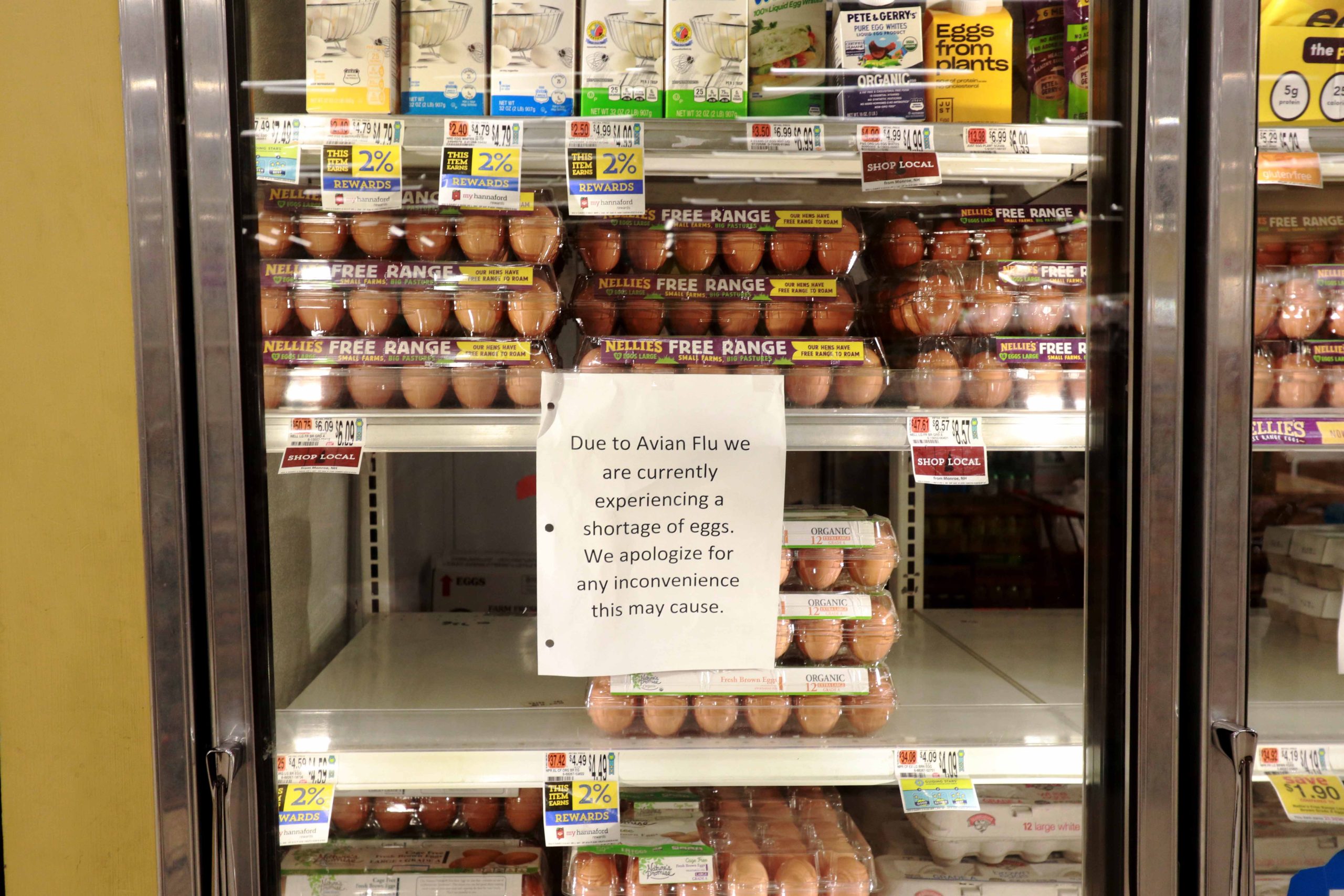
Egg prices have increased to an average of $4.95 a dozen, more than 15% more than a year ago, according to CBS News’ Price Tracker. In 2019, the price of eggs by the dozen was around $1.54. Over the last five years, egg prices have increased by over 170 percent, partly caused by the rising cases of bird flu in the U.S.
Students are also displeased with consistently rising egg prices.
Sophomore Kaley Basford expressed concerns over the federal government’s lack of action in tackling the issue.
“When you cut the FDA [Food and Drug Administration] funding, there’s going to be issues with the food. I feel like it’s that simple,” Basford said.
Other students shared their thoughts on the politics of the issue.
“The irony of it [egg prices increasing] happening after its been discussed, given the political change that has occurred, and yet things have changed with egg prices, but they’ve gone in the exact opposite direction [than was promised during the presidential campaign],” said junior Finnian Nibert.
Sophomore Gale Stewart spoke about the potential personal financial impact the price hikes could have.
“I’m lucky right now that I don’t have to buy those things but I know it’s going to suck when I have to start buying those things,” Stewart said.
“A lot of people can’t really afford that and things like eggs are household essentials,” Stewart added.
Another student, first-year Jon Grenier, said he was unphased by the recent price hikes.
“I have my own chickens at home, so I grow my own eggs, so I don’t really care about egg prices,” Grenier said. “Get your own chickens and you’ll be all set.”
Since January 2022, the H5N1 strain of bird flu has been spread throughout the country causing the death of more than 125 million turkeys and chickens, according to the American Veterinary Medical Association.
“The core reason doesn’t require a whole lot of explanation. We are facing a global pandemic that’s affecting factory farming and particular poultry herds,” said William McColloch, professor of economics. He added, “When you lose 100 million plus chickens, that kind of supply shock, it would be difficult to imagine it’s not going to have significant ramifications in terms of price increases.”
McColloch went on to say that breeding chickens and growing the population of poultry alike is not as easy as making the same thing over and over in a factory. With the virus reportedly moving into cattle herds now, these issues will not get better anytime soon.
“I think the nature of the supply bottlenecks that exist means that you can suddenly replicate that population … even feasibly within the next year,” he continued. “There isn’t any room there for retailers to try to manage those price increases on behalf of consumers, because really that’s what they have already been doing. I don’t see any signs of relief … within the next 12 to 18 months.”
According to Reuters, since President Trump took office, two federal agencies responsible for monitoring and reacting to the epidemic, the Centers for Disease Control and Prevention and the United States Department of Agriculture, have withheld bird flu reports and canceled congressional briefings and meetings with state health officials. Reuters states that Trump’s decision to withdraw the U.S. from the World Health Organization has also hindered communication that enables officials to track outbreaks and strains of the virus in other countries.
“This is unfortunate as the hold has been placed on many sources that have been a gold standard in providing health care providers with relevant health trends and latest guidance,” KSC Wellness Center Director and Chief Medical Officer Barbara Berthiaume stated. “Currently there are no reports of the bird flu in humans in N.H. or any of our surrounding states. This risk is relatively low to the public at this time. Please know that the medical community is following this and we will take measures to increase precautions and appropriately warn our community should it become more of a health concern.”
Dominic Rubio can be contacted at
Ryan Pacheco can be contacted at