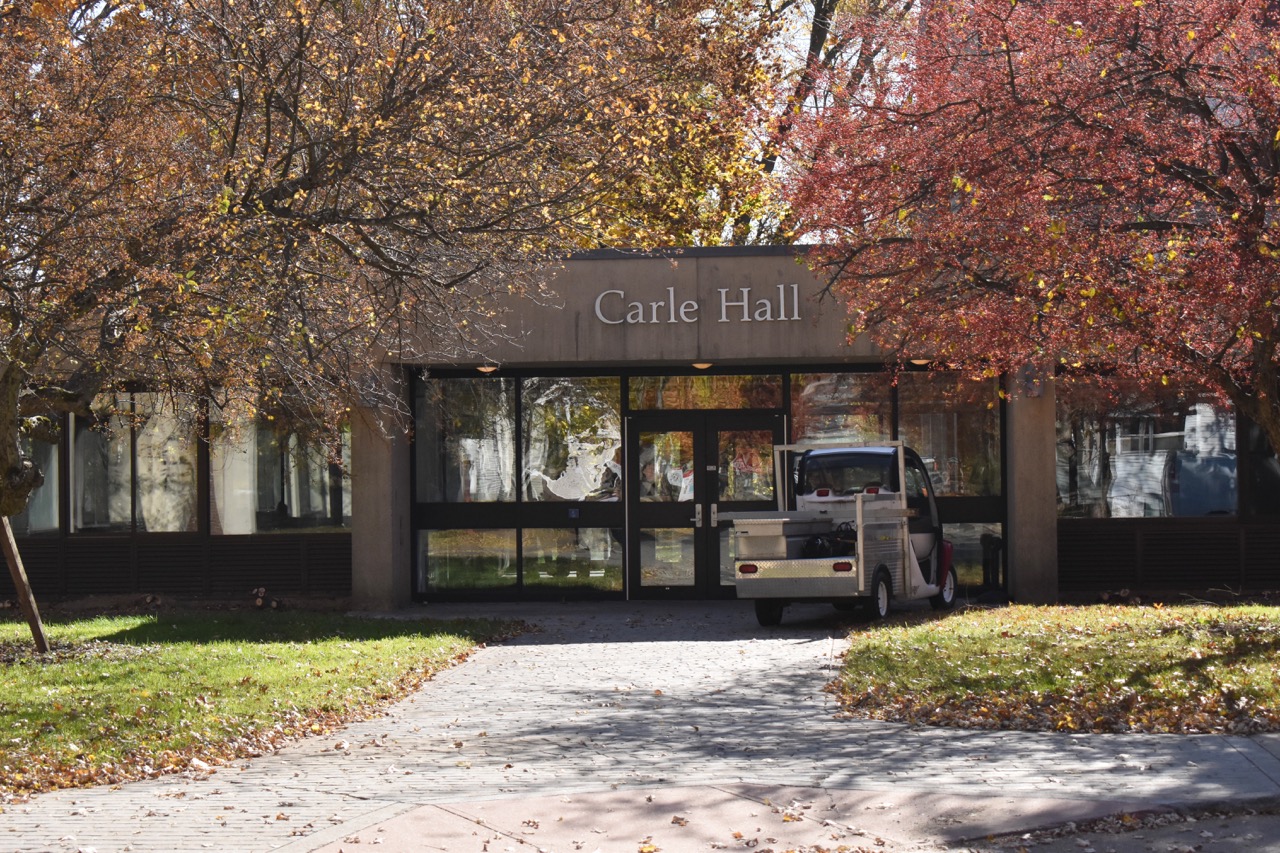
Rumors of mold in the electrical heating systems of Carle Hall’s dorm rooms are not backed up by findings of any relevant department at Keene State College.
The Equinox was made aware of concerns that a substance that looked like mold to a concerned student was recently discovered. However, no report was received by Community Director Isabelle Handy, Assistant Director of Facilities Services Colin Burdick or KSC Campus Safety.
The Equinox is in the process of contacting the concerned student to gauge the specifics of the incident that prompted the topic and will provide updates if new information surfaces.
The mold concerns relate to an unconfirmed material that was blown out of Carle Hall’s electrical heating system, after a reactivation to accommodate seasonal changes in temperature.
Burdick said he has not received any complaints of mold but said dust and debris that collects in heating systems over time can easily be mistaken for mold, especially when heating units lie dormant during the summer.
“Typically this time of year, when heaters haven’t been cleaned, and especially heaters with fans, turning them on for the first time all season can dislodge all sorts of grime and dust that’s collected,” said Burdick.
Burdick said it is common for students to mistake dust and dirt for mold, especially during periods when cold, flu and COVID-19 cases are on the rise.
“We’ve had this problem a lot in One Butler Court a lot this semester, where students would see stuff in the air vents that they thought was mold and turned out to be just regular dirt one would expect to find,” said Burdick.
“Mold can’t just be wiped off with a towel, it has to be physically scrubbed off. If you don’t know what mold looks like, and how it reacts, a lot of the stuff that we’re able to simply scrub away with a towel and duster can easily be mistaken as mold,” added Burdick.
Burdick encouraged KSC community members to play it safe, and contact residence staff and facilities staff with concerns, as well as educating themselves on the visual properties of mold.
“No matter what, if we receive a concern about mold, we’re going to be there and check it out to ensure that a problem isn’t going unchecked. When visually examining a concerning specimen, look for spores that radiate outward, which indicates mold growth as opposed to the dirty clumps that are often dirt that can be easily removed in ways that mold can’t,” said Burdick.
According to the United States Centers for Disease Control and Prevention (CDC), symptoms of mold exposure can include skin rashes, burning eyes, wheezing or coughing, a sore throat and a stuffy nose. Immuno-compromised people, people with Asthma, chronic lung disease or mold allergies may experience more severe symptoms.
Ryan Pacheco can be contacted at
rpacheco@kscequinox.com