

Does the rule of law still matter?
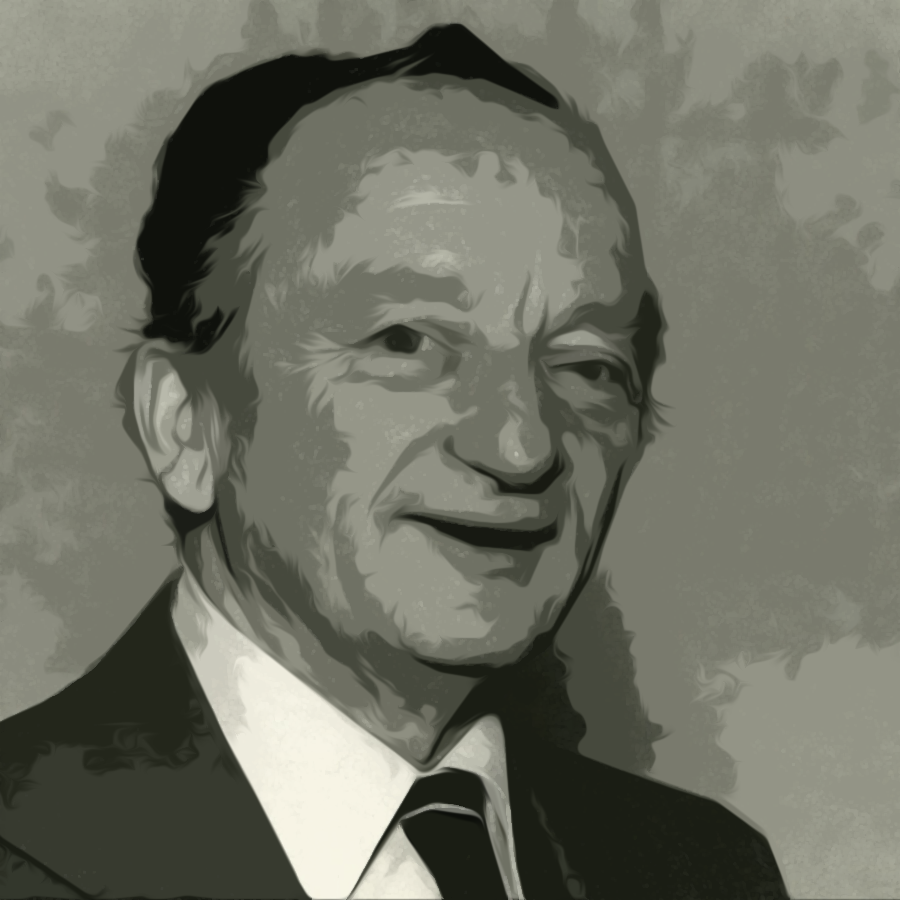
That was the central question of a lecture put on by the Cohen Center for Holocaust and Genocide Studies held on Wednesday, September 23. The guest speaker was Dr. Ben Ferencz, Nazi war crime investigator and last surviving, as well as chief prosecutor at the Einsatzgruppen trial, the ninth of the 12 military trials held by the United States as part of the Nuremberg Trials.
Ferencz was the first man to be assigned to the war crimes investigation, after his name was passed along by Sheldon Glueck, who was one of the first to write a book on the subject of war criminals and war crimes. Ferencz worked under Glueck prior to being assigned to the war crimes investigation.
Ferencz discussed the initial investigations he was assigned to, saying “We were originally looking at survivors that seemed to be coming out of some sort of camp and they looked starving.” The first camp Ferencz visited was the Buchenwald concentration camp. Ferencz described the scene, saying “I saw dead people looking up, and there was the stenching of burning bodies.”
After the initial investigation of war crimes, Ferencz was honorably discharged from the army, where he was subsequently sent back to Germany in order to act as a prosecutor for the Nuremberg Trials. Ferencz acted as the chief prosecutor at the Einsatzgruppen trial, which tried the Einsatzgruppen, the group that acted as a death squad, operating in Nazi-occupied Eastern Europe. Collectively, the group murdered around two million people.
Ferencz and the prosecution tried and convicted 22 members of the Einsatzgruppen, and 13 were sentenced to death. “It was not a victory when they were sentenced to death, I got a splitting headache by the first death by hanging,” said Ferencz.
“It’s tradition that if the prosecution won a case, the prosecution threw a party and invited the whole staff, I didn’t have a party, I went home and went to bed,” said Ferencz, regarding the aftermath of the trials.
“I’ve dedicated my whole life to create a humane and peaceful world,” Ferencz said. Ferencz has published two volumes of ‘An International Criminal Court.’ Ferencz concluded his presentation by saying, “Am I making progress? Hell no! But we’re making progress. Never say never, never say die, never give up.”
The presentation was followed by a question and answer session given by Dr. James Waller, Keene State professor of Holocaust and Genocide studies, Judge Patricia Whalen, former international judge of the War Crimes Chamber at the Court of Bosnia and Herzegovina, and Elisa von Joeden-Forgey, endowed chair of Holocaust and Genocide studies at Keene State.
“Trials and simply the fact of stating crimes by their proper name have a huge impact on international relations, public perceptions, domestically where the crimes are happening and abroad. They have a huge impact on domestic governments that don’t want to be seen in this light, it can lead to new trials and unearth new evidence, trials are always useful,” von Joeden-Forgey said, in regards to the importance of war crimes trials.
Tom Benoit can be reached at:
tbenoit@kscequinox.com