
The Keene State Archives program, in partnership with the Cohen Institute, has received new materials for their Mementos 2026 exhibition. The exhibit, located in the archives classroom in the Mason Library, is part of the holocaust and genocide studies collection.
It features a variety of objects related to survivors of the Holocaust, including those who participated in the liberation of concentration camps. The archival objects are often used for classes pertaining to holocaust and genocide studies, and will be up for general public viewing through December.
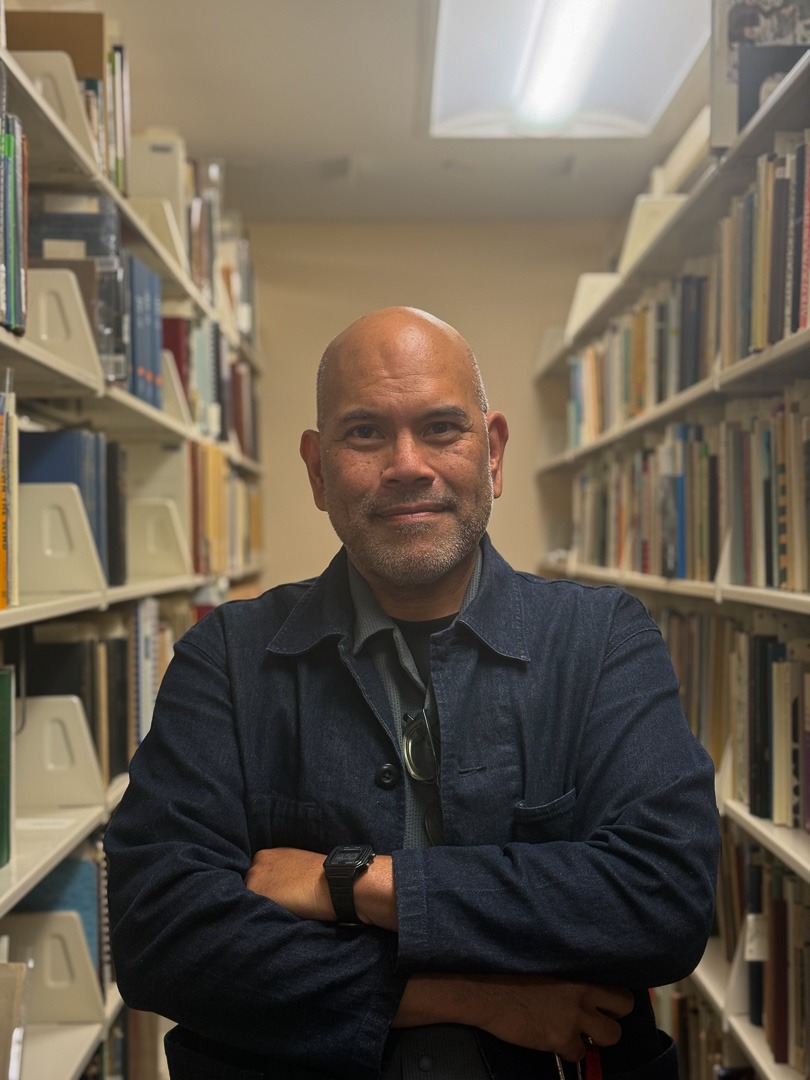
Rodney Obien, a Keene State associate professor and head of the Special Collections and Archives program, said archival work is important because of its impact. He said that the experience of holding an archival object is “powerful,” because it shows that there was once “someone else on the other side doing the same thing.”
“It gives perspective on why we’re where we are now. When we invite students in [to view the archives and special collections], it’s often their first time seeing something like this. If they’re studying a particular subject, like holocaust and genocide studies, or even English literature, being able to access things from the past is impactful,” Obien said.
According to Obien, prior to his hiring in 2009, the special collections were solely items that people could research. Since he joined the team, they’ve been working on ways to connect with students and “enrich what they’re learning in the classroom”.
Obien said that what most students experience in school is “abstract,” because it usually involves them looking at a screen or book. With archival objects, they’re able to garner a different experience that stems from holding or touching an item from a certain time period.
One form of student outreach was the utilization of archival objects in a pop-up exhibit. The exhibit, located on the wall left of the Cohen Institute, was a project for two cross-listed courses: COMM-472 [communication research methods] and ENG-308 [research for writers].
Dr. Kate Tirabassi, a communications professor and director of the Center for Research and Writing, said the project was meant to showcase the importance of archival research and primary documents. With help from KSC’s digital and assistant archivist, Mary Meagher, both classes were able to access a multitude of different Keene State artifacts, including previously released Equinox newspapers, yearbooks and photographs.
The project’s focus was on Keene State history, which gave students the opportunity to pick something of interest in that area. One student did their project on women’s sports at KSC, and another researched the college’s role in World War II.
Tirabassi prepared the students for their exhibit contributions by implementing archival-related readings into their coursework. The readings helped them understand what archival work was, the purpose of exhibits, and how to analyze digital archives. Tirabassi also said they had to consider their audience, which was primarily the Keene State community.
“We had the provost [Kirsti Sandy] and a bunch of faculty from different practices come see the exhibit. There was a trivia aspect [to the pop-up] too, where people from the class had to answer questions regarding their project or another person’s,” she said.
She continued, “We do a lot of qualitative research, so we’ll be doing other types of projects [after this]. But some students will need to do field research, so they might need to use archives again or do a combination of the archives and other research models.”
Another way that Obien plans to involve students is the creation of a bachelor’s degree in history and archives, mirrored from the current master’s degree in the same discipline. Obien said the idea was to create distinction between history programs in the USNH system, with KSC putting its attention towards applied history. Currently, the proposal is awaiting collegiate senate approval, and was submitted as a request to adjust the department and degree name.
Obien said, “So with that [name change], there would be an increase in courses relating to archiving, preservation and anything with applied history. We’d be using new and emerging technologies to archive and preserve cultural heritage. The idea is, how can we apply history to our everyday life?”
Obien encouraged students to take advantage of what the archives and special collections offer, especially on Mondays and Fridays, when former Keene State student Brian Buford ‘72 volunteers in the archives classroom. Buford was a history major, and went on to become the New Hampshire State Archivist. During the aforementioned times, students are given the opportunity to talk with both Buford and Obien to learn about their work. Additionally, there are both volunteer and internship opportunities with the archives and special collections program.
“If you’re interested in the archives, archiving work, or special collections, you can definitely stop by and meet us. In general, whether you’re interested in a career, a hobby, or if you’re just curious, we’d be glad to talk with anyone about what we do and what the collections have,” said Obien.
Samantha Menard can be contacted at
smenard@kscequinox.com