

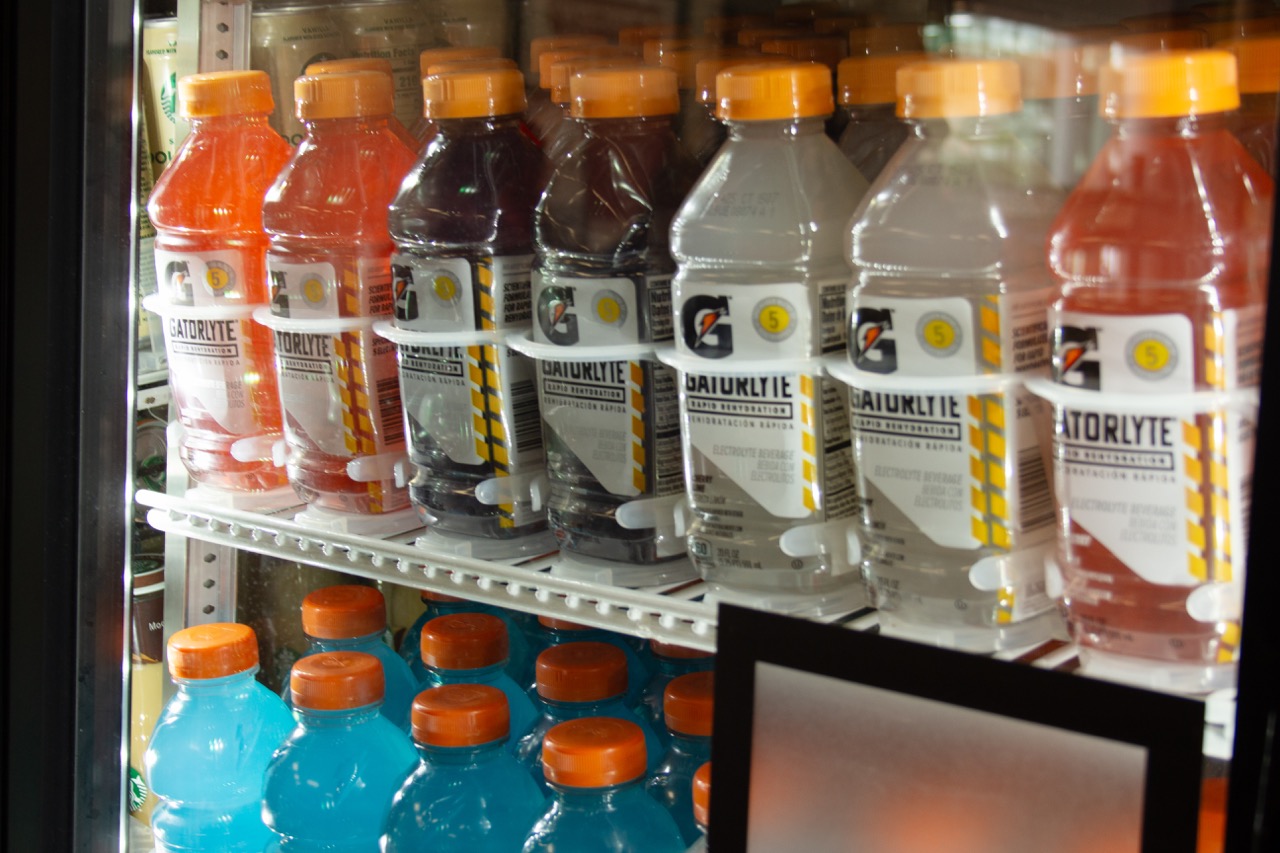
Electrolyte drinks seem to be the new fad. Whether it be for athletes, gym-goers or the average busy person, a lot of people have one in hand.
Jeanelle Boyer, a health sciences professor at Keene State College said Prime, Gatorade, Celsius and other electrolyte drinks are being consumed by students.
“They can be beneficial for a person who is exercising or doing hard physical work, especially in the heat. The drinks can help replenish the electrolytes that are lost through sweating.”
Boyer said there were drawbacks with electrolyte drinks as well.
“They also contain a lot of sugar and things like food dyes and colors,” Boyer said. “For those two reasons, I do not recommend them for the average person or even a person who is doing more recreational exercise. I even think that there are often better options for an athlete as well.”
Boyer said she personally prefers to not use electrolyte drinks in day-to-day life and offered alternatives.
“I do a lot of long-distance running, and I choose not to use electrolyte drinks,” Boyer said. “Instead, I drink plenty of water for hydration and then gain the necessary nutrition through food by eating things like nuts, granola bars, bananas, apples and oranges.”
She added, “The only time that I may use electrolyte drinks is if I am exercising for a long time like two-plus hours and it is very warm out.”
Electrolyte drinks can be helpful with giving an extra boost of energy. Jada Pabon-Camacho, a sophomore who played basketball at KSC, shared, “I drank a lot of Gatorade and then when Celsius came around I drank a Celsius on the bus ride. It didn’t really affect me playing-wise. I kind of felt more energized, but Gatorade energized me more.”
Sophomore Megan Strzegowski, a member of KSC softball and dive teams said, “I drank Celsius. I feel like when I first tried it I felt a lot of energy and now it doesn’t really affect me.”
These drinks can help with dehydration, but there are more drawbacks due to sugar and dyes.
The National Library of Medicine states, “The sugar content is mainly in the form of sucrose, glucose or high fructose corn syrup. Therefore, high energy drink intake may increase the risk of obesity and type 2 diabetes.”
Also, after consuming caffeinated energy drinks, the effects long-term lessen. Just like coffee, one can build a tolerance to caffeine. Consuming lots of sugar can cause the same effect; sugar tolerance can grow over time.
Anika Christ, registered dietitian and director of the client optimization at Life Time, discussed in an interview with CNET caffeine tolerance and whether it’s something to really worry about. She said, “Developing a caffeine tolerance essentially means that the stimulating effects of caffeine become less noticeable after an amount of time,” Christ explained. “This is because your body becomes less responsive to the effects.”
KSC Wellness Center Nurse Practitioner Anaka Nunnink did not respond to The Equinox’s request for comment by the time of publication.
Madelyn French can be contacted at
mfrench@kscequinox.com