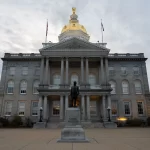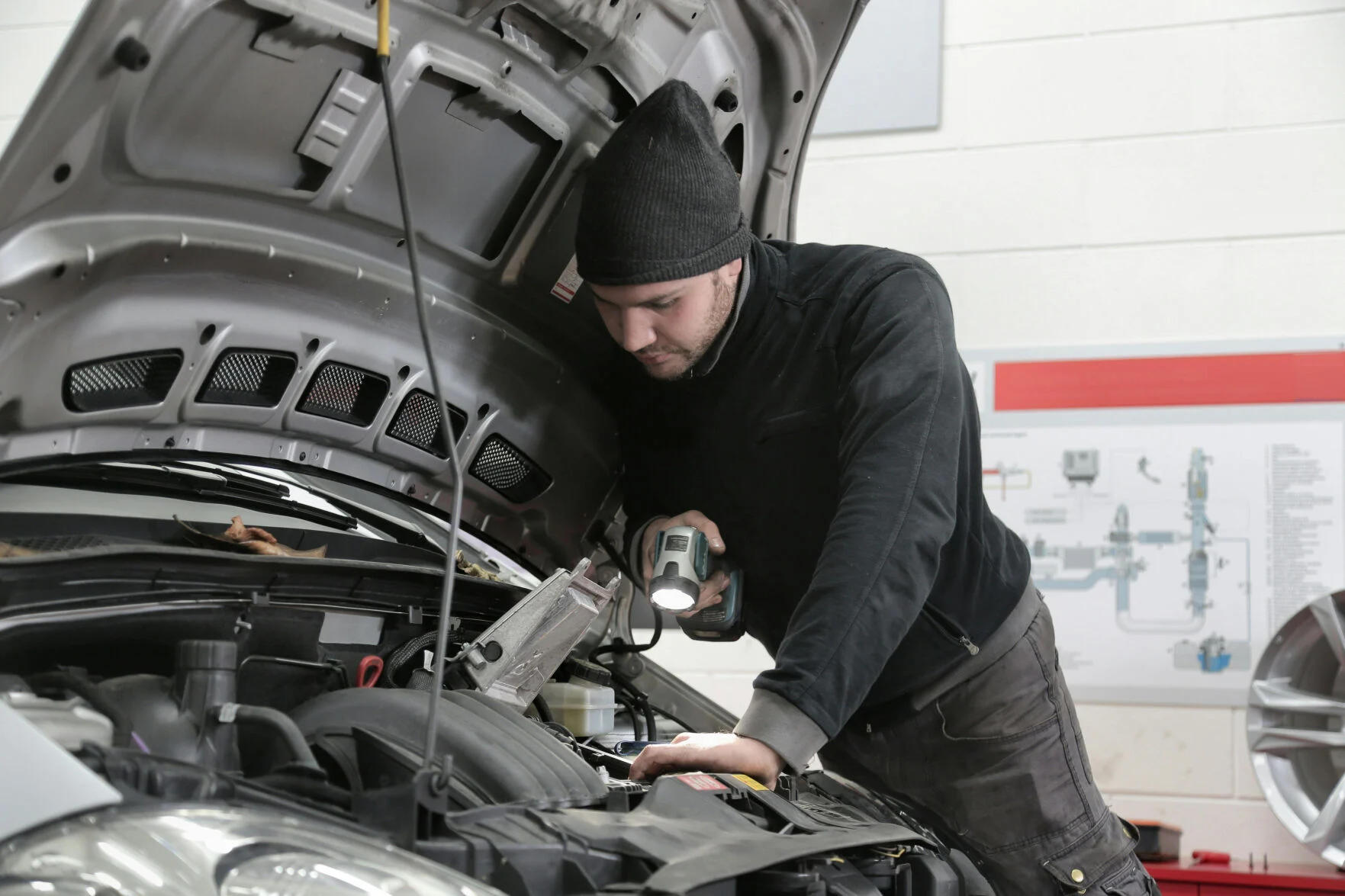
The Environmental Protection Agency said Monday it will preliminarily decide by early summer and give a final decision before year’s end on New Hampshire’s request to do something it has already done — end its mandatory vehicle inspection program.
Gordon-Darby, the Kentucky-based company that ran the inspections, is suing New Hampshire in federal court because the state sunset the program without approval from the EPA, which is required under the federal Clean Air Act.
The yearly inspections included a check of monitoring systems for a vehicle’s emissions equipment.
The state asked the EPA for approval on Dec. 24 and ended the program on Jan. 31 under legislation Gov. Kelly Ayotte signed into law last summer. The EPA has up to 18 months to decide on such requests, but Administrator Lee Zeldin promised in a news release Monday it won’t take that long.
“EPA is working at record speed with the state to ensure all decisions are made in accordance with requirements under the Clean Air Act and to provide the people of New Hampshire relief from burdensome regulations,” he said.
“The Trump EPA firmly believes that collaborating with our state air partners is the best way to deliver results and ensure clean air for all Americans.”
Part of the EPA’s decision-making process will be a chance for the public to weigh in on the proposal.
New Hampshire is among a group of Northeast states that make up what the EPA classifies as the Northeast Ozone Transport Region. States in this region are required to submit an implementation plan under the Clean Air Act and devise controls for the pollutants that form ozone, commonly called smog.
By ending inspections without approval from the EPA, the state is not complying with the Clean Air Act. It is also not complying with a federal judge’s order that it continue inspections.
Gordon-Darby has asked that New Hampshire be found in contempt of court and fined.
Meanwhile, the state said in a legal filing that its request with the EPA to end inspections includes “a required technical demonstration showing discontinuing the [inspection] program will not interfere with the attainment of air quality standards in New Hampshire or any other state in the so-called ‘Northeast Ozone Transport Region.’ ’’
Given the lawsuit and federal judge Landya McCafferty’s order that the state continue inspections, N.H. Attorney General John Formella asked the N.H. Executive Council in early February to temporarily extend Gordon-Darby’s contract to run the program.
But the Executive Council declined, voting 3-2 not to extend the contract, even though Formella said failure to do so would put the state at risk of fines under the Clean Air Act.
Formella filed an appeal with the First U.S. Circuit Court of Appeals in Boston last week, contending that Judge McCafferty, who is based in Concord, exceeded her authority by ordering the state to continue the program.
Mechanics, automobile dealers and AAA, among others, told lawmakers last year that inspections find vehicle flaws that can have deadly consequences, and that these examinations are especially important in snowy states like New Hampshire where road salt corrodes vehicles.
On the other hand, some motorists argue that inspections are an unnecessary nuisance since most accidents are caused by driver error and people have mechanics look at their cars from time to time anyway.
The N.H. Legislature did not pass a standalone bill to end the inspection program, but instead inserted language to end the program into a budget bill needed to fund state programs.
The lawsuit names as defendants Robert Quinn, commissioner of the N.H. Department of Safety, and Robert Scott, commissioner of the N.H. Department of Environmental Services.
Rick Green can be reached at 603-352-1234, extension 1435, or rgreen@keenesentinel.com.
These articles are being shared by partners in the Granite State News Collaborative. Don’t just read this. Share it with one person who doesn’t usually follow local news — that’s how we make an impact. For more information, visit collaborativenh.org.