
Following the U.S. Supreme Court Decision on June 30. in Biden v. Nebraska, the Biden-Harris administration is looking for new ways to provide some relief to borrowers.
The proposed plan would have canceled up to $10,000 for non-Pell Grant recipients and up to $20,000 for Pell Grant recipients, according to the Federal Student Aid website.
According to a New York Times article from March 2023, “What you need to know about Biden’s student loan forgiveness plan”, borrowers whose loans were dispersed before June 30 2022, would have been partially forgiven.
The new path that the Biden-Harris administration is proposing is to relieve borrowers of debt through the Higher Education Act of 1965. According to the fact sheet posted on The White House website, they plan to enter into “negotiated rulemaking” – a way of rulemaking where the agency, in this case, the Department of Education, and affected groups negotiate new rules – this fall.
According to the Department of Education website, the proposed plan that was struck down would have cost approximately $30 billion annually, amounting to $305 billion over a 10-year period.
The Equinox spoke with one of Keene State’s economics professors, William McColloch, to learn about the overall macroeconomic effects that canceling student loans would have.
Overall he said, the negative effects would be minimal. He noted you might see some mild effect on inflation, but taxes rising would not be of much concern.
“We’ve been running massive deficits for years and years,” McColloch said.
Additionally, canceling student loans might positively affect the economy, he said.
“You would expect people are left with more disposable income and there’s some modest stimulus to demand as a consequence of that.”
When asked about how student loans were paused for the past three years due to the COVID-19 pandemic, with payments due to restart on Oct. 1., he said, “[It] lays bare the fact we can suspend payments for three years, clearly there aren’t these disastrous consequences of doing that.”
He described the payment pause as a ‘trial run’ for what student loan debt cancellation might look like.
A study called “The Macroeconomic Effects of Student Debt Cancellation” conducted by the Levi Economics Institute of Bard College in New York researched what complete student debt might look like stating, “We find that student debt cancellation produces positive feedback effects that improve several macroeconomic variables, including GDP and job growth, while imposing only moderate increases on the federal deficit and interest rates and no significant inflationary pressure.”
For Keene State students graduating in May, they will begin repaying after a six-month grace period.
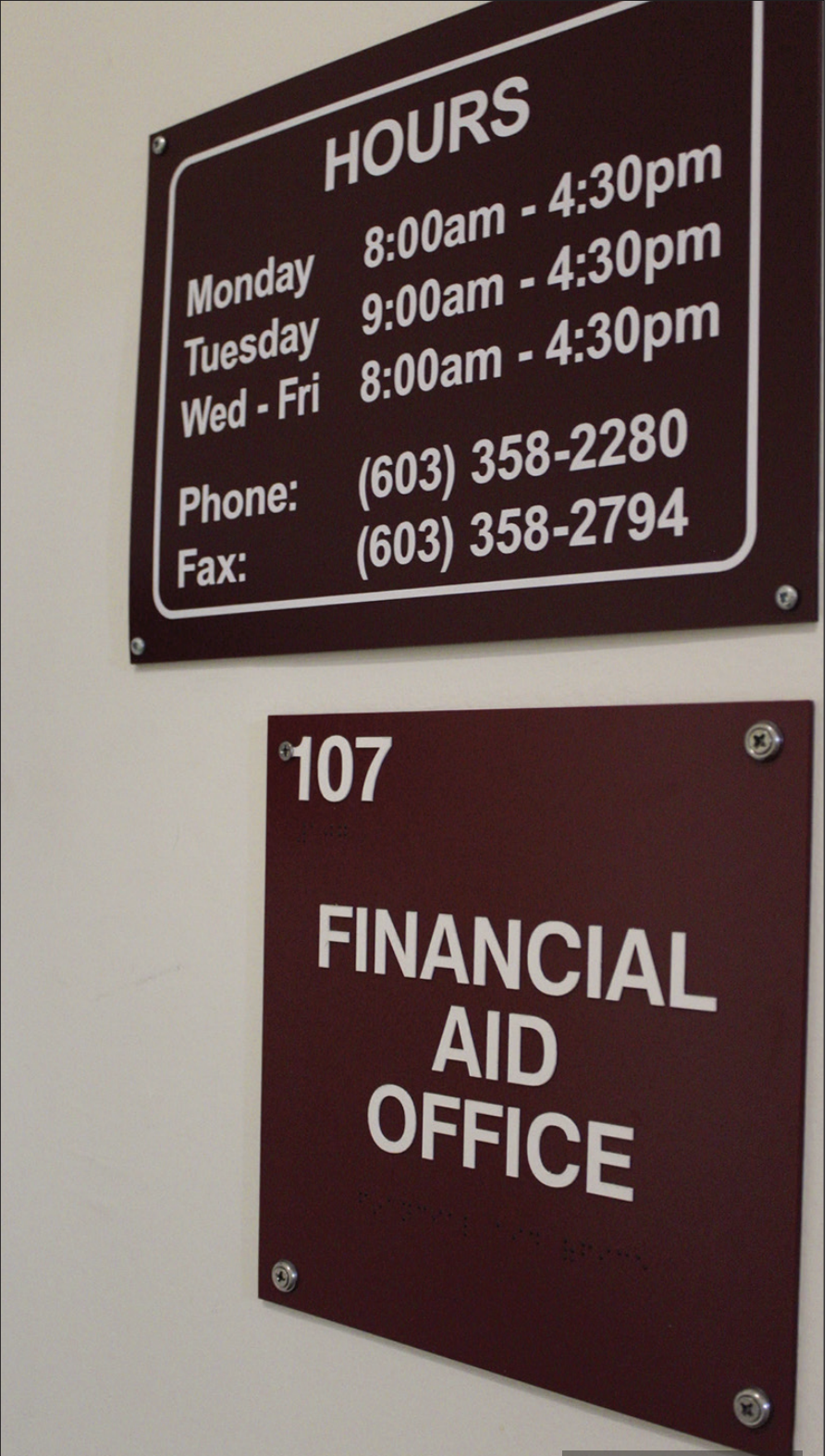
While the Keene State Financial Aid Office does not offer anything ‘broad-based’ to help navigate loans, they offer help depending on the person and situation, Cathy Mullins, director of financial aid and scholarships, said.
According to Mullins around 90-95 percent of students enrolled at Keene State receive some type of financial aid.
One thing she noted, if students receive outside private scholarships, KSC does not reduce the amount of gift aid they give to those students.
“Students work hard to get those scholarships and we want them to reap the benefits of it,” she said. “And that’s borrowing less.”
In addition to that, KSC hands out merit-based scholarships depending on what a student’s GPA is based on the requirement for the program they are in, either 2.5 or 3.0.
KSC also provides students with need-based scholarships, which can be between $500 and $12,000.
“It really is a wide range depending on the demonstrated need that the student is showing us,” Mullins said.
When putting together “financial aid packages” for students, students receive scholarships, state/federal grants, and institutional money. Lastly, they see if they have room for a loan within their budget.
“Unfortunately, almost every student still has room in their budget for a loan or two,” she said.
Timothy Bruns can be contacted at
tbruns@kscequinox.com