
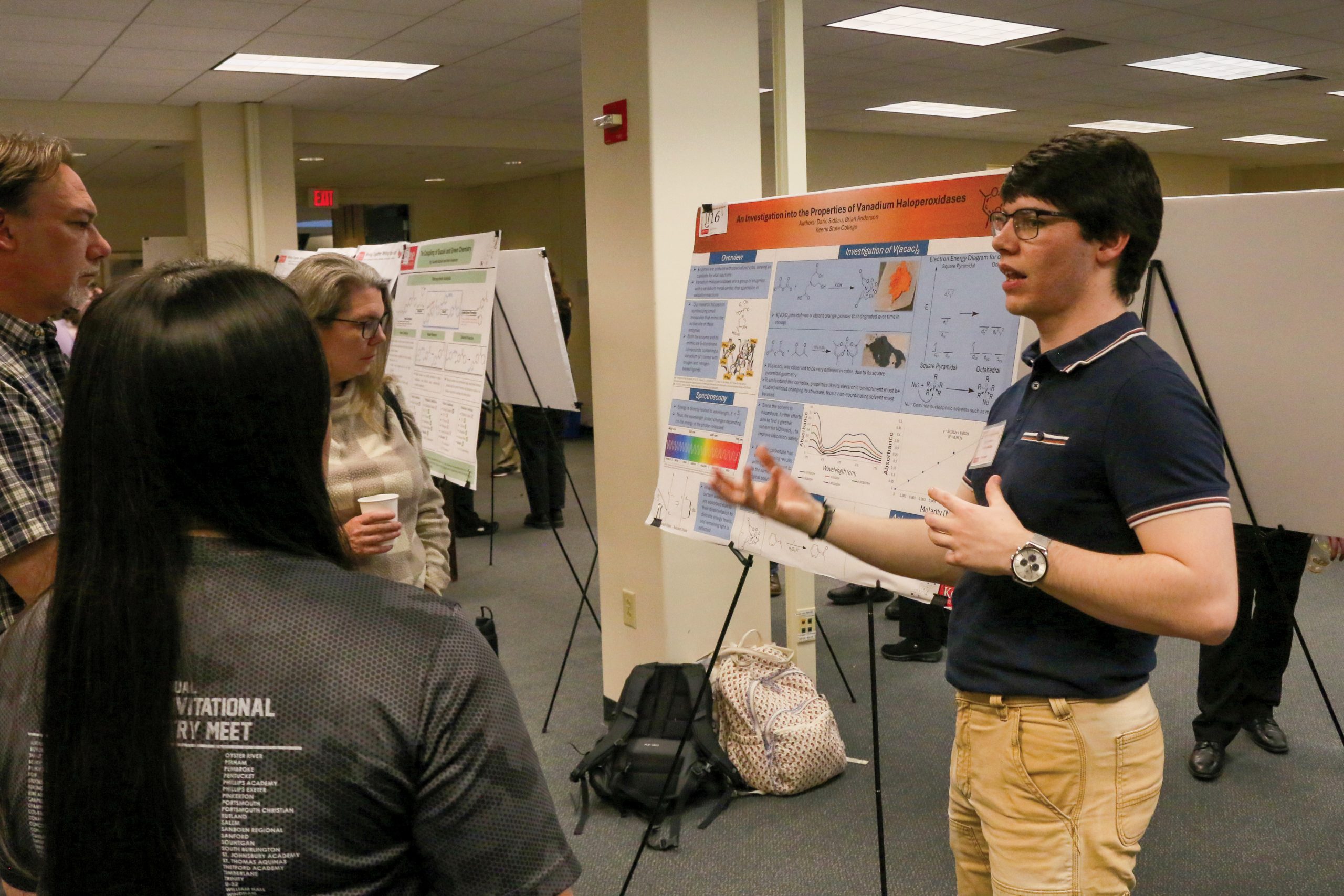
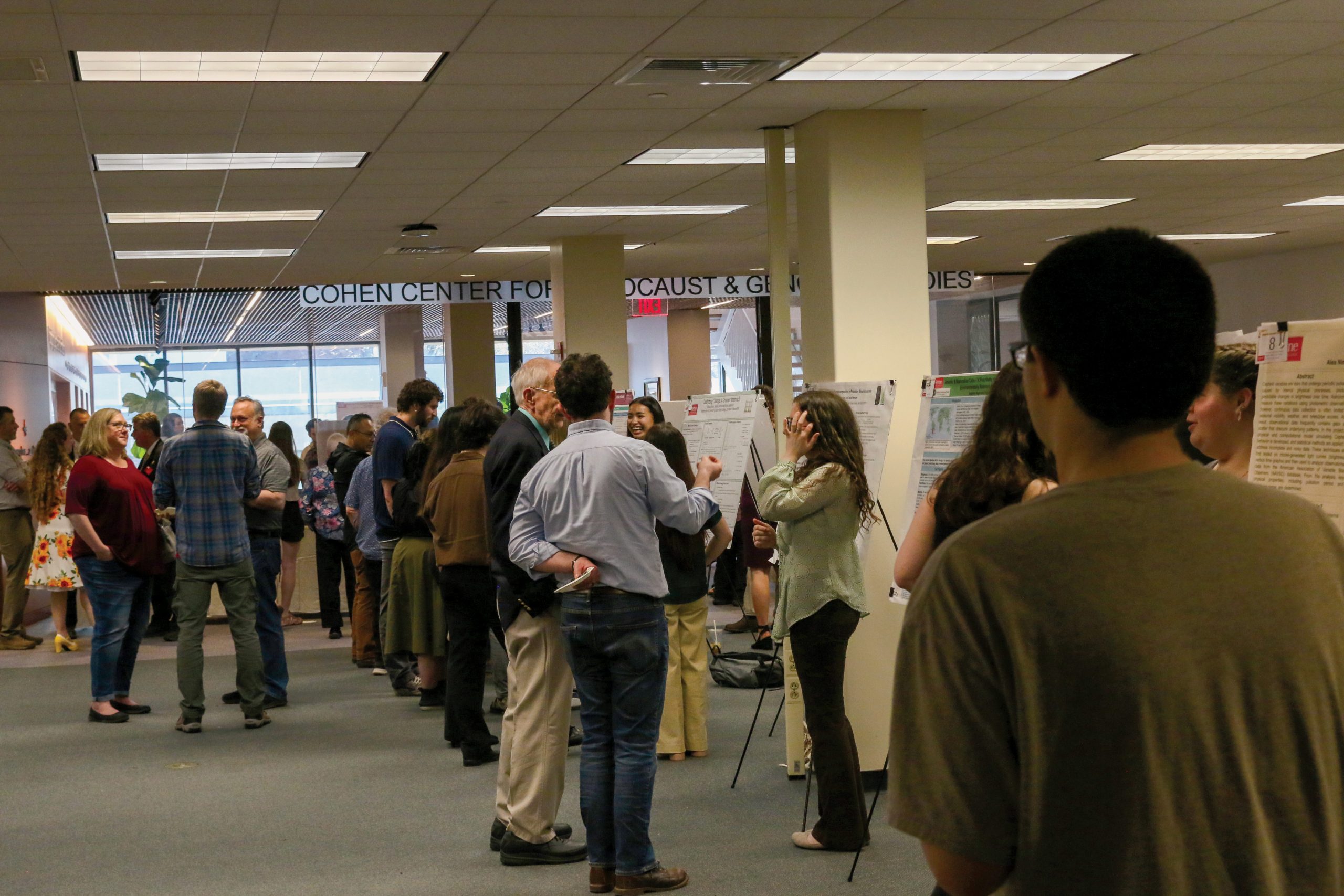
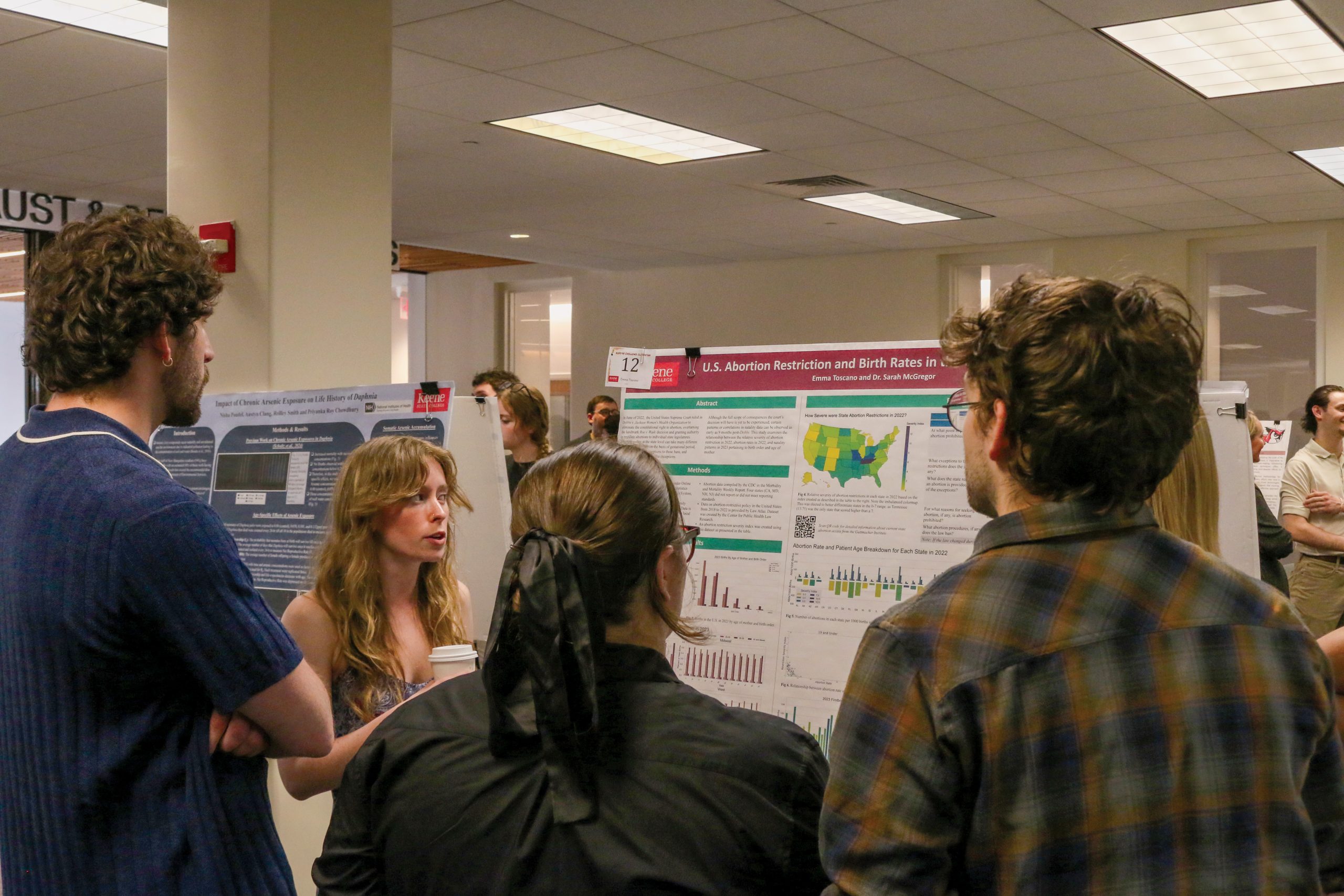


KSC welcomed community members to campus for the annual Academic Excellence Celebration (AEC) last Friday, where a selection of students across majors spent the day sharing their semester-long research projects.
The event was an all-day affair on April 17, beginning with an Opening Keynote discussion between communication and philosophy Professor Nigel Malcolm and Provost and Vice President for Academic Affairs Kirsti Sandy. Following this were three sessions of oral presentations, film presentations and panels by students in the Science Center before the day finally concluded with a poster session in the Mason Library.
Physics Department Chair Sarah McGregor, who was the chair of the committee that organized the AEC, highlighted the versatility of the event and explained how it provides students with an opportunity to showcase their work.
“It is a place where students, independent of their discipline, get to showcase what their scholarship is and what they’ve been working on. We have people from all different types of fields that are coming together,” said McGregor. “I think it’s really important that the students have these fantastic experiences and it’s almost like a culminating spot then, where the students get to show all of the really amazing and important things that they’ve been able to do.”
For her role, McGregor said she was part of a group that planned the event and was there to support students throughout their preparation process.
“It does take a really large group of people to be able to try to pull this off, so I am a small cog in a very big machine,” she said. “I’m very thankful for all of the faculty and staff that worked together to make this happen.”
McGregor explained that students featured in the AEC had to apply for the event in the fall and go through a feedback process before they were able to present their work.
“The students have gone through a pretty rigorous process of submitting abstracts first, having those abstracts evaluated by our committee and feedback is provided,” said McGregor. “Sometimes students have to rethink a little bit about how they’re presenting. It’s always done in a way to try and help because we want to make sure that students are being able to show their best selves.”
From there, McGregor said the work involved supporting students by helping them write abstracts, make posters and practice for those who were doing oral presentations. She also said that students were able to work with tutors from the Center for Research and Writing to help them write abstracts and prepare to present their research.
After making it through the preparation process, McGregor said there were “a ton of benefits” for students who presented their research at the event. In particular, she said that it helped students see that the work they do matters.
“You get to show people the amazing things that you’ve done and that last piece of communicating it is so important for showing people that what they’ve done matters,” she said. “If you do it in a vacuum you might not realize it, but every single thing that these students have done matters, and they get to show people that and then in some cases finally get to feel it.”
Senior and biology major Isabella Nagle was one of the students who presented their work in the poster session portion of the event in the library, where she shared her research on environmentally relevant concentrations of arsenic in Chinese hamster ovarian cells. She explained why it was important to her to be able to share her work with the community at the event.
“This is my first AEC presentation, which I find really important because arsenic contamination is actually a really big problem in this area in our groundwater, and a lot of the population drinks off of private wells,” Nagle said. “Being able to inform people about that is really important to me to get their wells tested for that arsenic.”
The goal of informing the community about important issues was echoed by sophomore Ysaiah Arezzo, who worked with McGregor on a semester-long project about cybercrime and how people can avoid falling victim to it.
“Cybercrime has been increasing. In the last few years, we have lost a lot of billions of dollars in the U.S.,” said Arezzo. “This is how to protect people, by changing their passwords and informing them of not clicking any links that they receive so they don’t get caught in this.”
First-years Evan Martus and Carter Beauchesne presented their project about artificial intelligence (AI), aviation and warfare at the event, focusing on how drones used in war could utilize AI models. They said the most challenging part of preparing for the AEC was figuring out how to compile their research in a way that could be shared with the community.
“It definitely makes us think about all the work we’ve done, finding this research and compiling it to best present to other people to show why it’s important to know this stuff,” said Martus.
“The hardest part about this whole thing is putting it together and putting it into a form that’s presentable to the public, and more importantly, easy to interpret,” added Beauchesne.
Justin Dearborn can be contacted at