


After two weeks of cold and darkness, the sun has finally returned to Berlin. With the warming weather for February, there is a hope that it will not snow anymore.
The Berliners cannot handle snow for the life of them; we got .5” of snow overnight on Feb. 16, and nothing worked correctly. The trains were not on-time and services were reduced, but aside from that relatively minor inconvenience, there are a few aspects of European life I want to reflect on.
Firstly, the means of transportation are so much easier; it is frankly despicable. It has been nearly four weeks since I left the U.S. and I have had no reason to drive or get into a car. The ability to more or less travel just about anywhere with no vehicle is both amazing and refreshing. It has also significantly cut down my expenses as I am no longer paying for fuel every week.
Secondly, expenses; everything is significantly cheaper when it comes to basic needs. Food at the grocery store is, at worst, a similar price to what it is in the U.S.. Delicious street food is all too common, with equally shocking prices; you could throw a rock and hit a Turkish shop selling Döner im Brot the size of your face for four euros. A night in the city will save you as well, three fifty for a pint of beer and similarly priced bar food will comfortably cost you 15 euros or less by the end of the night. Reasonable laws and social expectations of young people make socializing in a bar not a crime here as opposed to the U.S., but merely an aspect of life.
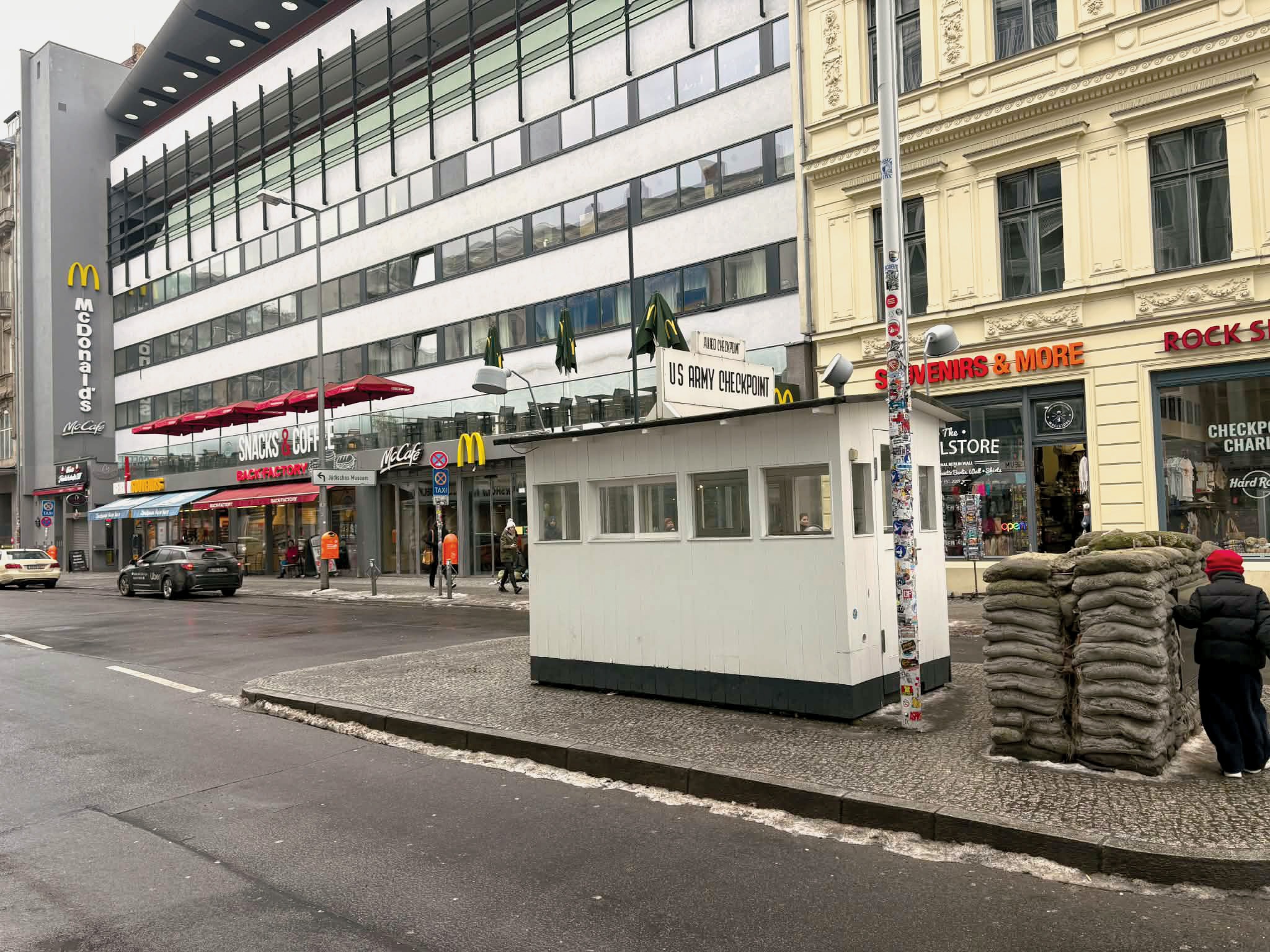
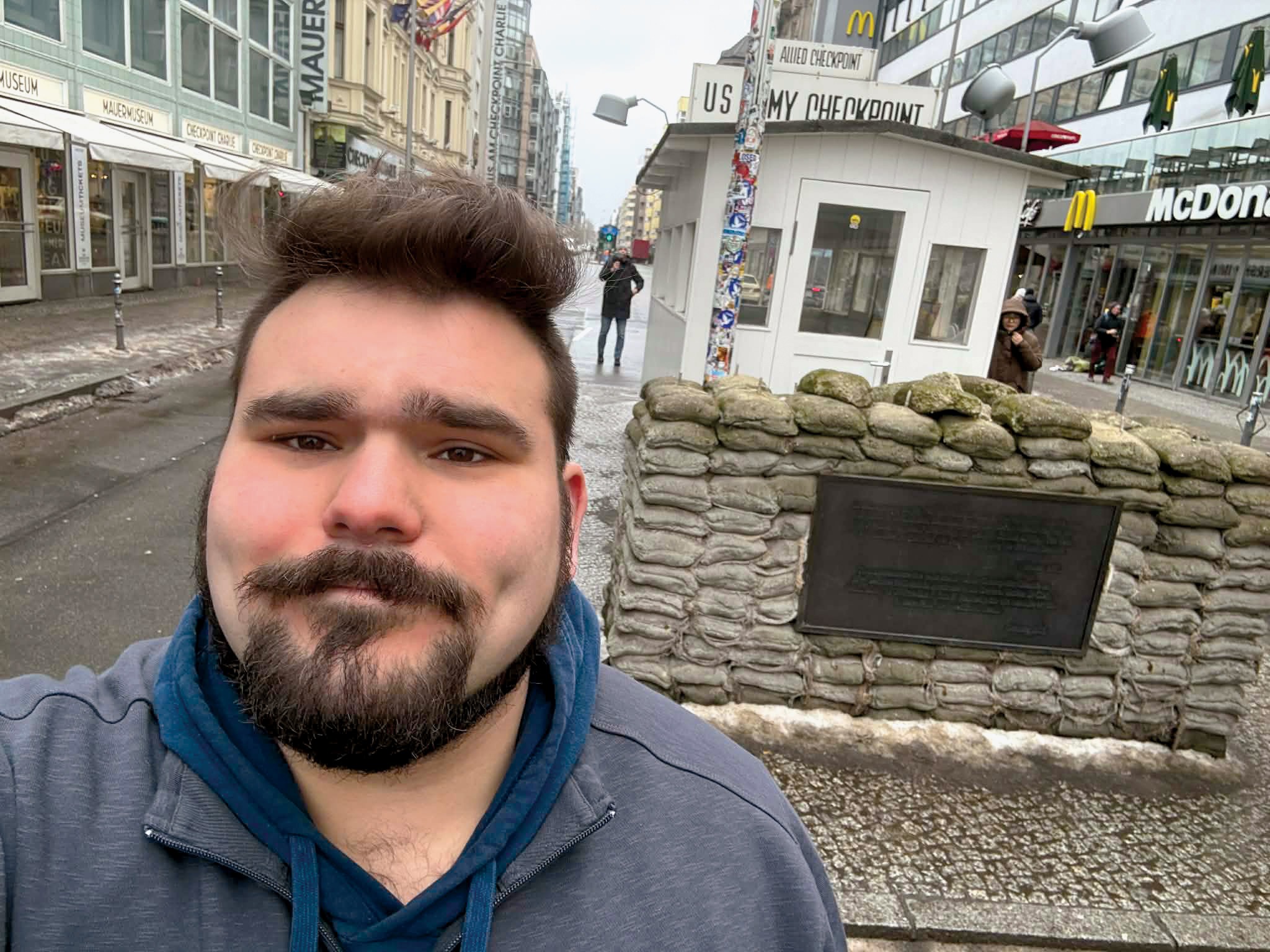
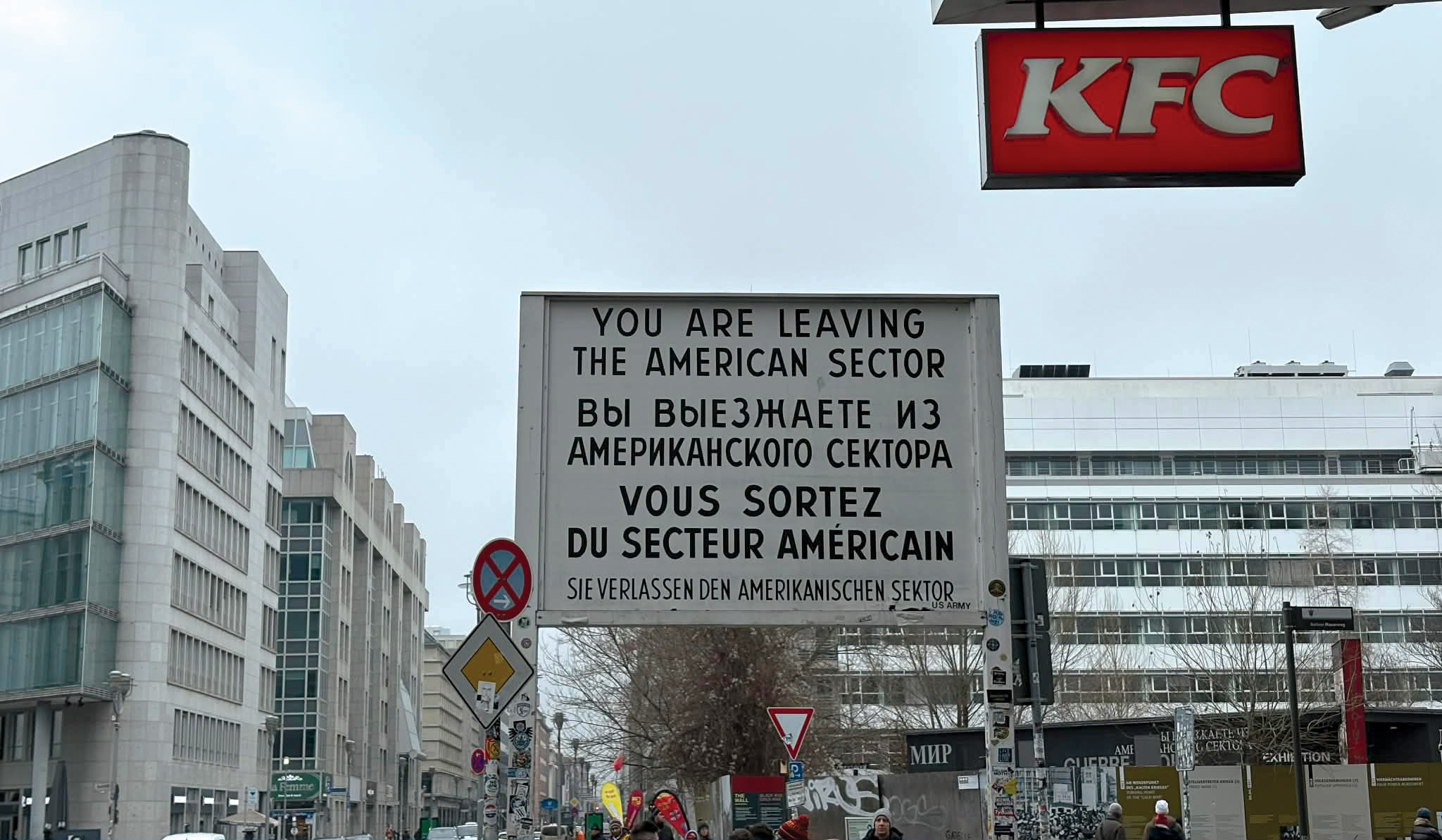
I thought about this when I saw Checkpoint Charlie at the beginning of February, an icon of the Cold War symbolizing the purported struggle between good and bad or freedom and authoritarianism. A guard house and a multi-lingual sign stand between you and the other side of the Berlin Wall as you look out at a busy intersection that was no-man’s-land merely 37 years before. It gave me a moment of reflection on my current state of being as an American abroad.
Somewhere along the way, we lost the plot; maybe we never found it to begin with. While I have many critiques of the U.S. and understand its complex history in the 20th century, it felt like standing on the precipice. A slice of time, standing still and looking at a ghost of U.S. past; a religious experience of sorts. It reminded me of a George Carlin quote that is a particular favorite of mine, “Do you know why it’s called the ‘American Dream’, because you have to be asleep to believe it.” It hit me like a ton of bricks as I reflected on my experiences of the past two weeks.
Classes are manageable, only one two-and-a-half-hour session per week and the liberty to do whatever strikes you at the moment with little consequence. No pinching pennies or unnecessary hindrances and being treated as the adult you are, without the assumption you are a twenty-something-year-old child like in the U.S. There were no strange expectations or social limbo, a glimmer of the so-called ‘American Dream’, save it was 3,800 miles away. Maybe we had this before at some point, but to whatever degree it existed, it no longer does. The best lesson I have received so far is how to be a better American.
Timothy Fitzpatrick can be contacted at