

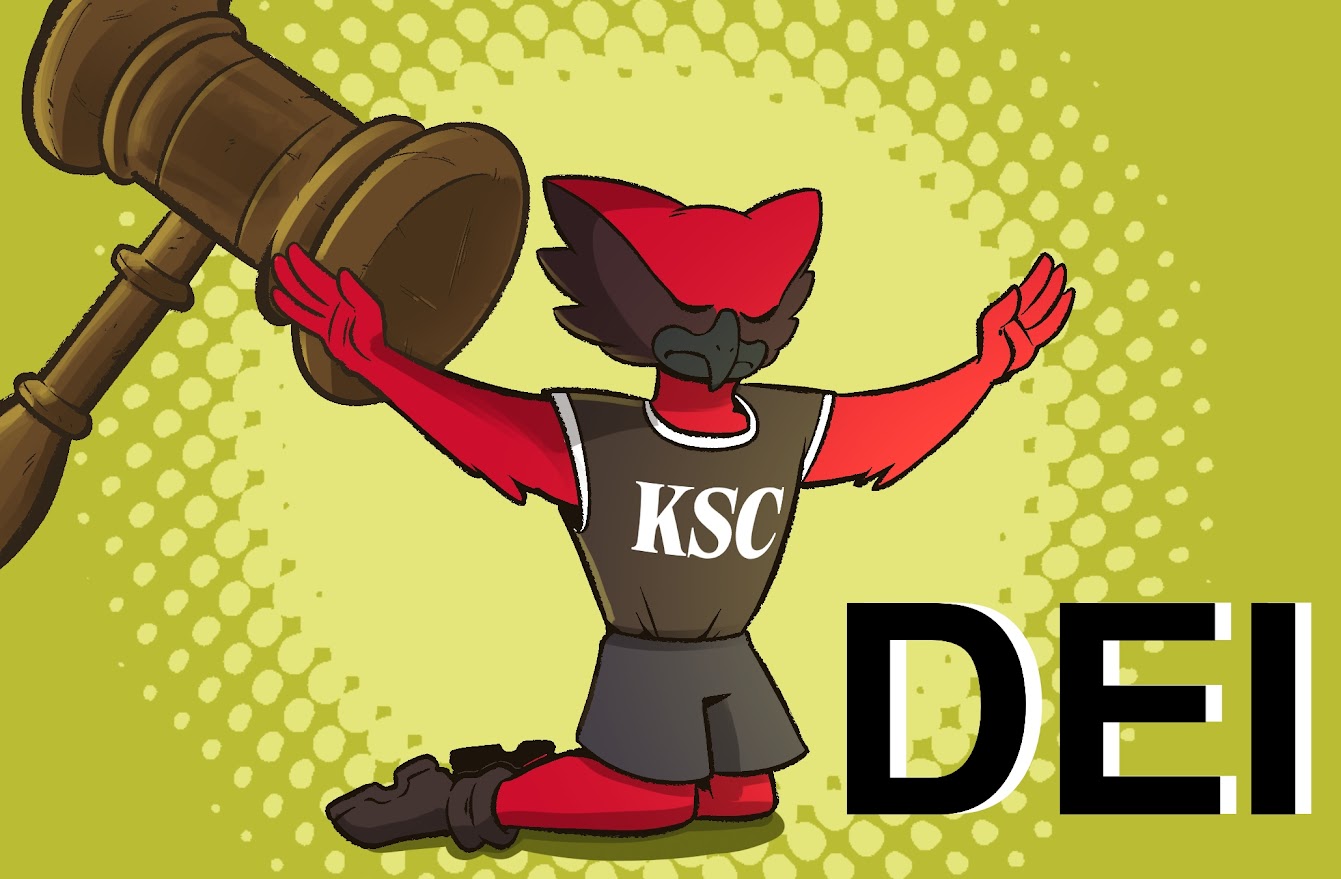
The governmental whiplash that New Hampshire and the U.S. more broadly have experienced this past year has brought much change and volatility to an already fragile political climate.
One of the biggest targets of discussion and legislation amid a seemingly cultural shift toward conservatism was diversity, equity and inclusion (DEI) practices, typically those seen in educational settings.
Less than a month into President Donald Trump’s second term as president, the U.S. Department of Education issued a “Dear Colleague” directive citing federal civil rights laws as its reasoning for cracking down on DEI programs.
“DEI programs, for example, frequently preference certain racial groups and teach students that certain racial groups bear unique moral burdens that others do not,” the Feb. 14, 2025, letter from the U.S. Department of Education stated.
The move led many schools and higher education institutions to scramble to comply with an executive directive that claimed to be based on law, with universities such as Ohio State dismantling its DEI office in response to the letter.
Closer to home here in the Granite State, N.H., separately experienced its own DEI crackdown through the state’s budget bill, HB 2, a vaguely-written law that prohibited the programs or risk losing funding, according to the state’s education department.
As a result, Keene State scrubbed its DEI-related webpages in July 2025, prompting a 404 error on the college’s https://www.keene.edu/campus/diversity/ page.
KSC also rapidly renamed and rebranded its offices and employee titles for those working in DEI areas, such as shifting the title of Associate Vice President for Diversity and Inclusion Dottie Morris to the associate vice president of community and belonging, as well as changing the title of former Coordinator of LGBTQ Student Support Ian Kaplan to coordinator of student programs at the Office of Community and Belonging. Kaplan later left the college.
While The Equinox appreciates the college’s commitment to maintain its programming in these areas despite governmental attacks, we find it short-sighted and disappointing that the college buckled so soon to state pressure, especially given the reversal of these actions via court order.
The Trump administration dropped its ban on DEI initiatives after a ruling from Federal Judge Landya McCafferty dismissed the case in a win for several plaintiffs, including school districts, civil rights groups and the National Education Association of New Hampshire, according to New Hampshire Public Radio’s reporting.
“DEI as a concept is broad; one can imagine a wide range of viewpoints on what values of diversity, equity, and inclusion mean when describing a program or practice,” McCafferty wrote in her ruling. “It is no surprise that several courts — including this one — have struck down similar laws as void for vagueness.”
McCafferty’s ruling really hits the nail on the head. These laws and executive actions are vague on purpose and are meant to scare education administrators across the country. Unfortunately, many institutions fell for the bait and moved to comply without so much as fighting out the legal battle in court.
Now, in retrospect, it seems silly that our college would bend to the state’s will when it already knew a legal challenge was filed, and the law was unlikely to be upheld.
Everything seems like a game of risk aversion in higher education today; do whatever we need to do to minimize any potential clash between us and other entities, and if we are good enough in the eyes of bad actors such as the current state and federal government, then we will be back in their good graces, but that could not be further from the truth.
Let us not forget that paired with HB 2’s anti-DEI language was a $17.5 million cut to the University System of New Hampshire, of which KSC is a member institution. Before KSC, Plymouth State or the University of New Hampshire even had a chance to comply with the new language, they were already being hit with a multi-million dollar budget cut.
It is clear to us that the current composition of the state legislative majorities, particularly that in the statehouse, is not to be reasoned with. It is an unfortunate truth that a certain section of lawmakers in the Granite State will continuously move the goalposts and micromanage every aspect of our institutions until they either become a complete shell of their former selves or cease to exist entirely.
The very least KSC can do is continue to defend our programming across campus fiercely and fight for our identity as a college. That does not mean that we should stop adapting to changing market conditions or not address enrollment challenges; in fact, it means exactly the opposite. If we lose our identity or the programs that make KSC a welcoming environment for all, we risk losing the very students we need to keep to persevere through the challenges we face.
When the state falls short, it is time for us to step up and be a beacon of hope and promise for young adults who aspire to do something bigger than themselves and to go forth and serve, as the KSC motto says.