

At the end of the summer, Colorado State University (CSU) junior Aubree Miller, a Supplemental Nutrition Assistance Program (SNAP) recipient, had just $20 in her bank account. Miller spent the summer in Washington, D.C., working 35 hours per week during her unpaid internship for The Washington Center, a nonprofit focused on higher-education-to-career pathways.
Miller, a journalism and media communications major, took the opportunity to gain experience and to build out her resume, but the realities of being a food insecure student became even more apparent during the course of her work in the summer.
“I’m very grateful for the opportunity that I had and the internship that I did because it was really great, but I barely made it work,” Miller said. “Even with my SNAP benefits, and that was a huge advantage, but also if I didn’t have that, I wouldn’t have been able to go.”
SNAP is a federally funded program through the United States Department of Agriculture that provides funds for low-income individuals to purchase groceries monthly. According to a 2024 report from the U.S. Government Accountability Office, 1.1 million college students received SNAP benefits based on 2020 data from the National Postsecondary Student Aid Survey, though 4.5 million met income requirements for the program.
Miller had applied for SNAP benefits one year prior, in August of 2024, after moving off-campus and no longer having a meal plan at CSU.
Miller said she receives just under $300 per month through the SNAP program, which, paired with her subsidized apartment’s monthly rent of $420, means that she is able to get by financially as a student at CSU.
Even while working two jobs, Miller finds herself relying on the two programs, in addition to governmental financial aid such as the Pell grant, as vital lifelines that allow her to attend school at all.
Currently, Miller earns $15 an hour and works 12 hours per week in her position as the Life and Culture Editor at The Rocky Mountain Collegian, CSU’s independent student newspaper. In addition to her editor role, Miller works as a Peer Mentor at CSU’s Fostering Success Program, where she makes $18 an hour at 15 hours per week.
In total, Miller earns $450 per week before taxes, which she said has allowed her to start saving money for the first time in her life.
“Before, I tried budgeting and I just couldn’t,” Miller said. “I didn’t have enough to put into my savings account.”
Even with the position she is currently in financially, Miller still grapples with the weekly fears and mental strain that come with being a food insecure student.
“It takes up a lot more space in my mind every day than I think I would like it to or that people maybe don’t see super clearly,” Miller said. “I think [about] the time that I have to spend being really, really careful about my grocery list and making sure that I have time to go to the grocery store and figuring out how long it’ll take me to get there, how long I’m going to spend there, even remembering to bring reusable grocery bags because Colorado charges you for paper bags.”
Every decision relating to food becomes a careful calculation made to ensure there will be enough to eat daily and that the grocery budget is within one’s means, and even then, things do not always turn out as you plan.
Miller described one instance where she ran out of SNAP benefits unexpectedly.
“I wasn’t expecting it because most months I had been able to have a little bit extra and it would roll over, but I did go through all of it, and that was really scary to me at the time,” Miller said. “I was panicking and I didn’t know what was wrong and then I felt embarrassed and I think I cried a little bit.”
However, the fear, the uncertainty and the harsh realities that all come with being a food insecure student are not unique to Miller.
The Hope Center for Students’ Basic Needs Security conducted a survey in 2025 of more than 73,000 students nationally, detailing that 41% of college students reported experiencing food insecurity in the past 30 days.
The USDA defines food insecurity as “the limited or uncertain availability of nutritionally adequate and safe foods, or limited or uncertain ability to acquire acceptable foods in socially acceptable ways.”
An estimated 13.5% of U.S. households in 2023 were food insecure, according to a USDA report. When squared with the Hope Center’s numbers, it appears the college student population experiences food insecurity at significantly higher levels than others, but why is this the case?
Feeding America, a national nonprofit organization with a network of over 200 food banks in the U.S., states many reasons contribute to why college students do not typically have the means to secure consistent, reliable and nutritious food: rising tuition costs, expensive meal plans, and limited hours of campus dining locations were listed as contributing factors to the issue.
College tuition and fees have risen by 1,542.78% from 1977 to 2025 when adjusted for inflation, according to data released by the U.S. Bureau of Labor Statistics, representing a $308,556.52 difference in value. Tuition experienced an average inflation rate of 6% per year during that time period, outpacing the overall inflation rate of 3.53% nationally.
Meal plans at higher education institutions have also increased in price. According to a 2025-2026 analysis by Elfi, a student loan refinancing company, the average annual meal plan increased from roughly $4,500 in 2017 to $5,656 in 2025, representing around a 26% price increase before adjusting for inflation.
Elfi’s analysis looked at 150 colleges and universities, including some private schools, of which 98% required first-year students to purchase a meal plan.
The analysis also compared college meal plans to the USDA’s moderate and liberal food plans, which are meant to show the amount needed to maintain a healthy diet based on one’s income.
“Assuming a college student followed the moderate plan over the course of an academic year — about nine months — a male student would spend $3,423.60 on food — about 39% less than the average cost of college meal plans,” the analysis stated. “A female student following the moderate food plan would spend $3,228.80 on food during the academic year — nearly 49% less than the average cost of college meal plans.”
With meal plans and tuition both increasing over the years, the question arises as to whether the average income of a college student has risen with them — the short answer is no, based on the available data.
According to data compiled by USA Facts, the cost of tuition, fees and room and board increased by about 59% when adjusted for inflation from 2000 to 2019, while the inflation-adjusted median earnings for workers with a bachelor’s degree rose by about 5% over a similar period.
An analysis of data from the National Center for Education Statistics also found that college students have to work much longer than ever before to afford tuition.
“30 years ago, the average student at a public university could pay for a full year of tuition by working around 500 hours at a minimum wage job — a little less than 10 hours per week throughout the year,” the analysis stated. “Today, our analysis finds the same student would have to work 2,022 hours on average at a minimum wage job to cover a year of tuition at a public university — about 39 hours each week, all year long.”
Students often have to work longer hours than ever before, all while balancing a full course load in many cases, just to make ends meet.
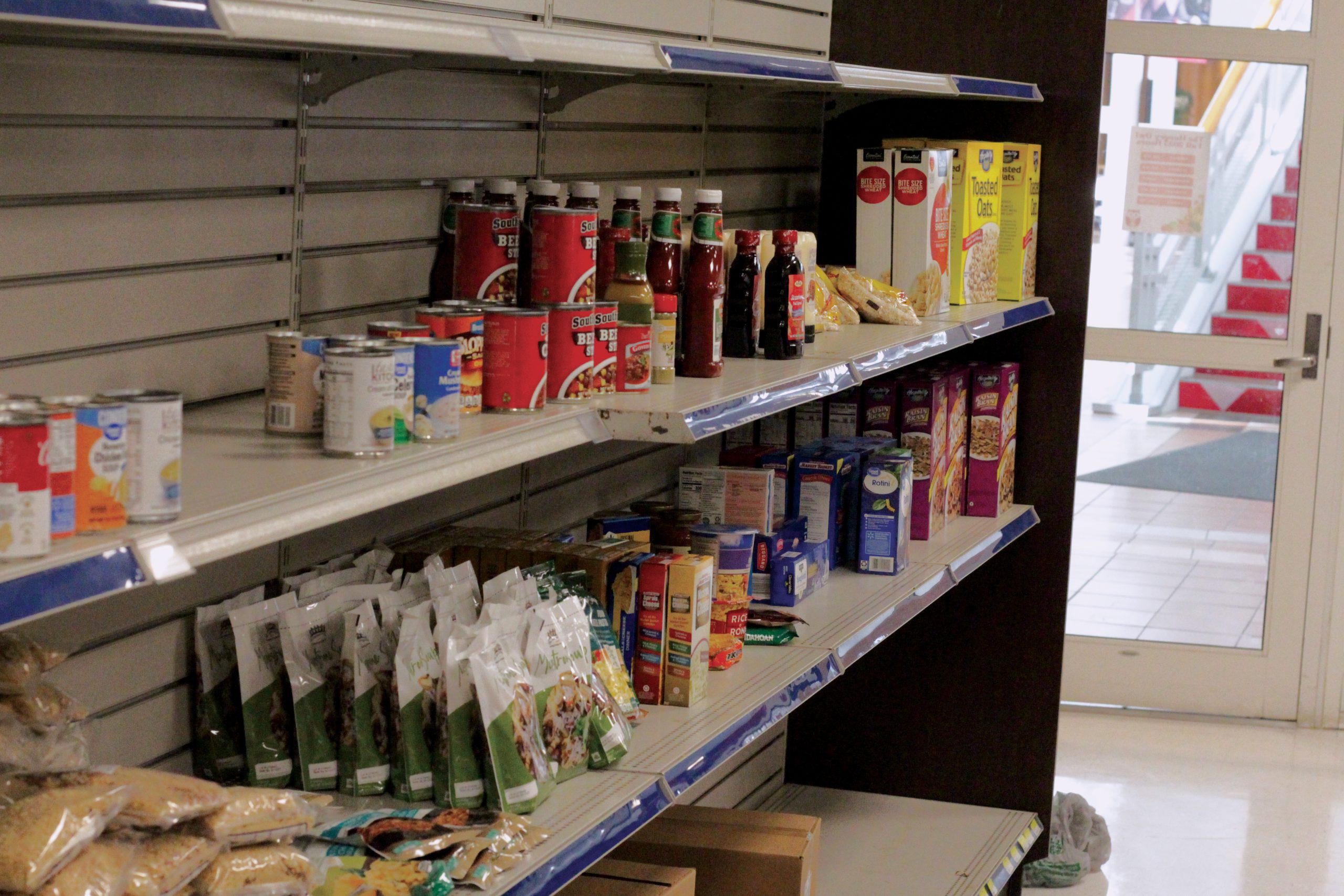
Emily Alexander, the senior coordinator of student involvement and well-being at Keene State College, spoke to the challenge of food insecurity among the college student population.
“It’s easy for students, when they’re at college, to slip through the cracks if they’re experiencing food insecurity, especially because people imagine the dining commons and all of these resources and places they have on campus but if a student is living off campus, maybe doesn’t have a meal plan and isn’t aware of some of the community spaces, it can be really difficult for them to source food,” Alexander said.
Alexander, who graduated from Plymouth State University with a master’s degree in public health education and promotion and eating disorders in 2021, has overseen operations at the college’s on-campus food pantry, The Hungry Owl, for over a year.
“Students are students first and so sometimes, they’re not able to work due to their class schedule or they have internships that aren’t paid,” Alexander said. “It takes the time that they could be working, so financials are definitely a struggle for our students, staff and faculty, our community as a whole.”
Alexander said students often come to KSC from outside of the area and are unfamiliar with campus resources such as The Hungry Owl, but even when they learn of them, there is a stigma surrounding using them.
“People in general are maybe less likely to, or sometimes resistant to using community resources because they don’t want to take from somebody else who might need that, even if they’re not, and there’s plenty to go around,” Alexander said.
The issue of food insecurity impacts all areas of a student’s life, often causing them to struggle in class and with mental health, Alexander said.
“It’s difficult to focus on academics if we’re not getting the food and nutrition that we need or the resources we need and it really impacts mental health, it impacts our physical well-being, our academic standing, just our overall experience of life,” Alexander said.
A multi-year study of more than 2,300 students at colleges and universities in Georgia, published in the Cambridge University Press, found that food-insecure students earned lower GPAs than their food-secure peers, an effect largely driven by higher levels of stress, anxiety, and poor mental health associated with having unreliable access to food.
A 2024 study of 75 college and university students in the U.S. found that both very low food security and higher levels of psychological distress were significantly associated with lower college GPAs, with reduced food security also tied to worse mental health outcomes.
“We [food insecure students] deserve to be able to eat and live and go to school and get a degree and eventually get a job,” Miller said. “More people rely on things like SNAP and food pantries than you would expect and they’re vital resources for so many people and so many people wouldn’t be able to survive or go to school or work without it and I think especially in college, that can be overlooked.”
For students like Miller, programs like SNAP and campus pantries may be the only thing allowing them to attend a college or university in the first place, though stereotypes persist of the “broke college student,” not being able to provide for themselves, thus furthering the sense of shame food-insecure students feel.
“While that is at least probably partially true, I think that that generalizes things a lot and can make it harder for students of marginalized backgrounds to get the support and help that they need,” Miller said. “The idea that we have of the college experience is one that can exclude a lot of people … And some people might need a little bit more support, but that doesn’t mean that they’re not worth it.”
Nathan Hope can be contacted at