

Let’s face it: housing is getting expensive. I’m not talking about Keene State’s $10,000 residence halls that seem like they go up in price every year despite the rooms staying the exact same: I’m talking about real housing in N.H.
According to WMUR, a family would need to earn $182,000 yearly to be able to afford a median-priced home in the state. Here’s the catch: only 15% of the states’ population actually makes that much. Even if both parents of the home are working, that’s a minimum of $91,000 income required for each just to break even.
Apartments are just as bad. The average monthly cost for a one-bedroom apartment is $1,401, according to NHPR, forcing a person to make $16,812 just to afford housing. But since housing costs should be no more than 30% of a person’s expenses, it would be expected for someone to make $56,026 a year. An NHPR article stated that it is impossible to reach the rent demands unless you share that apartment with someone else, spend more than 30% of your income on housing or work less than 40 hours per week.
Let’s be honest: I don’t think many of us are going to put a mortgage down for our first homes the second we graduate. Student loans are going to haunt us for a very long time, so putting any more bills on top of that is already too much. You have to take care of your car if you have one, you have to worry about insurance on a number of levels and you have to get food to keep yourself alive. All of it seems like it’s too much to ask for nowadays.
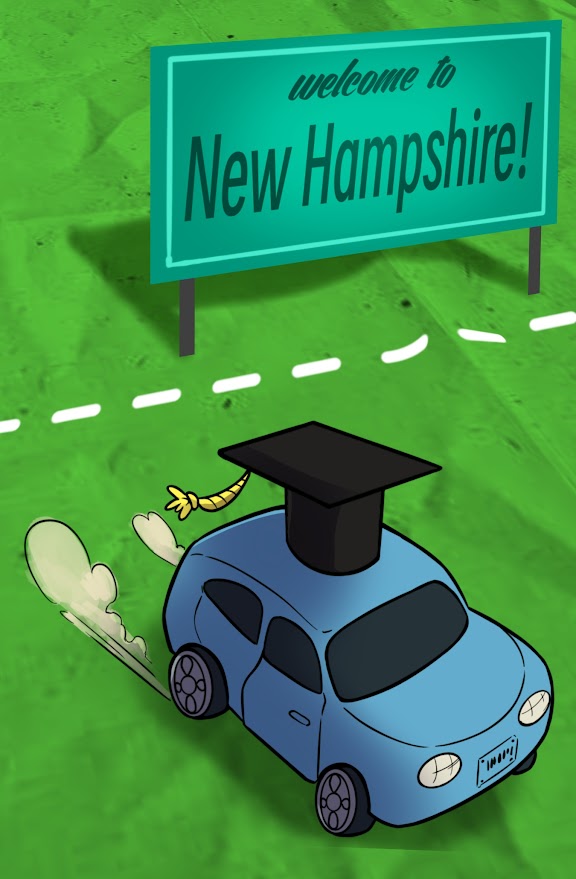
In our world, it’s expected of us to graduate, get a job and get a home. We are already struggling with the first two parts of this, so adding rent and housing costs into the mix is set for failure. So what’s going to happen? Those of us who can afford cars are going to move to a state cheaper to live in and N.H. businesses are going to be out of luck for making money off of the youth. This is not only known by the people affected but also deeply known by those advocating for better and fair housing prices.
What about the older people with a fixed income? Inflation seems to affect everything but our paychecks. Making $50,000 back in 1990 is not the same as making the same amount now in 2025, leaving many adults on the brink of homelessness if they are not already there. It’s a loss all around. Cutting at the roots of a tree is eventually going to knock it down.
According to WMUR, these factors are hurting people from all over, which seems transparently clear to everyone in the state, whether they are or are not struggling with this issue. In a perfect world, statewide housing prices would be lowered to an affordable price that everyone can enjoy and live off of, but that’s not happening. What I am expecting out of this problem is for the prices to go up and make living just that much harder, but maybe the state could establish payment plans that make housing costs cheaper until the renter can pay full rent, which then they can “catch up” on the money they couldn’t pay.
In other words, if someone is magically paying $1,000 a month for rent, but they can only afford to pay $800 for a year, then when they could start paying full price they would already be $2,400 behind. Then, they could pay more monthly until they fully pay back that money, like paying $1,200 monthly instead, so the attendant would be square by the end of another year.
To keep a state running, you need people living in it, and to get people living in it you need places for these people to live. The solution isn’t to keep building apartments in every single square inch of land possible like I’ve been seeing in my hometown, but rather to lower costs. Not satisfying one’s basic needs is turning them away, and that’s the quickest way to kill a society.
Hayley Doda can be contacted at