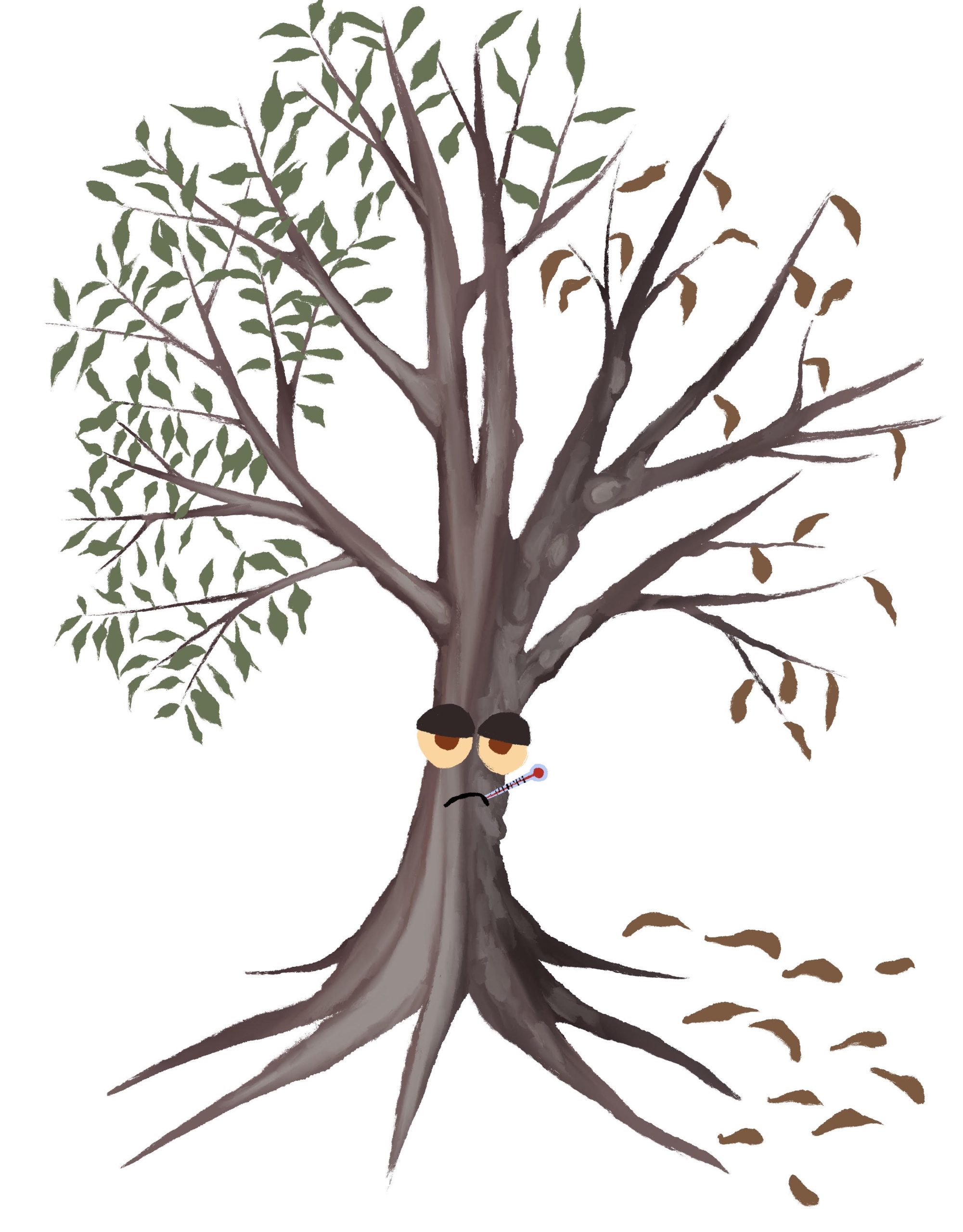
Beech leaf disease is ripping through one of New Hampshire’s most abundant and crucial hardwood trees, and there is still much that scientists don’t know about it.
The disease was first spotted in the state back in 2022, according to reporting from New Hampshire Public Radio (NHPR).
Although the disease has spread more slowly than expected this year, environmental scientists in the state are still raising concerns about the impact the disease will have.
New Hampshire is just one of 15 states that have reported the presence of beech leaf disease, according to NHPR’s reporting.
Kyle Lombard, a forest entomologist with the Division of Forest Lands, told NHPR, “There’s no bio controls that we’re aware of. Pesticides are not really a thing for ecosystem wide control.”
It is deeply concerning that this also comes at a time when N.H. is experiencing a drought, with 90 percent of the state being reported as being in a moderate drought.
It is difficult to see all of the negative news that is coming out lately, overall, but also specifically when it comes to our environment.
We are fortunate to live in a state that has many skilled and knowledgeable environmental scientists and conservationists, but I can’t help but worry about how long their work will continue being supported by their employer, especially if that employer is public.
It is no secret that N.H. is far behind its New England neighbors on several issues, including environmental concerns.
We certainly do not invest nearly enough into supporting the crucial work of conserving our natural resources and stewarding our ecosystem to the extent that is required.
While looking at what is happening with beech leaf disease, I wonder how much worse it could get if the research in this area has its funding cut.
Although we don’t currently know as much as one would hope to know about this disease, it just further reinforces the fact that we have to make sure scientists can do their best work in getting to the bottom of it.
Beech trees are critical to our ecosystem and our wildlife, and it is hard to explain just how detrimental it would be to lose the trees entirely in the state.
While I wish that was the end of the bad news, there is also a separate disease, beech bark disease, though this disease does not target young saplings or seedlings, according to NHPR.
There’s no sugarcoating it; the combination of these factors poses a significant threat to our state’s beech trees. These trees are surviving, for now, but they are suffering, as stated in NHPR’s reporting.
Though it may not be the case in this instance, when the federal government cancels millions of dollars of research grants and funding toward environmental science work, it sends a message that our country does not care about preserving the natural beauty of this country.
Supporters of President Donald Trump may say that the funding being cancelled is just frivolous pet projects or woke agenda items, but when work such as legume system research, something that is critical for understanding key aspects of farming, is put to a halt for seemingly no reason, there is a deeply worrying trend.
We are deeply fortunate to live in such a naturally beautiful state; now it is time to show that we want to keep it that way.
Nathan Hope can be contacted at