
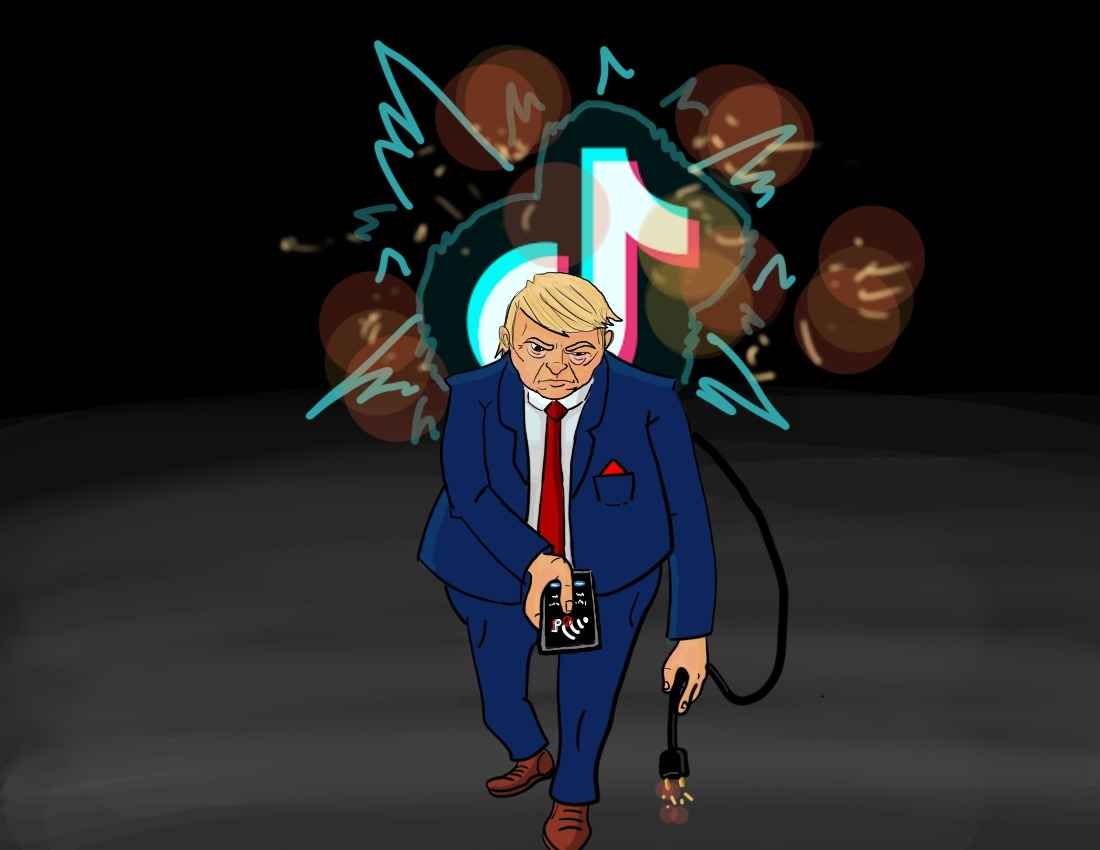
I’ve become numb to the news of President Donald Trump’s TikTok ban. It seems that every few weeks we’re told that it will finally happen. At this point, it’s hard to believe it will ever take place. So when I heard that a deal might really, truly, finally be going through, I was filled with a shock so mild I barely blinked. But this offers us all an opportunity to reflect on the nature of this ban, though it still seems hypothetical for the time being.
I have not used TikTok regularly since 2022. Before then, I was a frequent flyer on the video-sharing app. I left it because I found little joy in spending tens of hours a day unable to avert my eyes from the wreckage of the comment sections – those circular conversations filled with some crude cocktail of vitriolic transphobia, racism and political mudslinging. Suffice it to say, I am not a fan of the platform. I have thought to myself many times that if TikTok were to simply vanish one day I really wouldn’t mind, but that is not what is happening here. I believe that a TikTok ban has vastly dangerous implications for the future of censorship in America.
The Land of the Free has had a rampant rise in censorship in recent years. While many will cite our First Amendment rights as one of the cornerstones of American democracy, many others seem to think it is their duty to limit others’ uses of it. The recent uptick in book bannings is a frightening reminder of this. While all the old favorites are there – Bradbury, Orwell and Rowling’s bestsellers are still being taken off shelves – writers of color as well as queer writers have felt the brunt. This should be immensely concerning to any American with a head on their shoulders. This is how the fascist regimes of 20th century Europe began their reigns of terror. While fascism is a word that gets thrown around a lot these days, the parallels are so clear it feels like we’re living through a satire.
Proponents of the ban cite concerns of national security. At first blush, this seems an entirely reasonable concern, but my contention with this position is twofold: One, we have little evidence of such behavior on the part of the Chinese government, and two, where is this energy with regard to more homegrown data collectors? American tech giants Google and Meta have access to user data on levels comparable to or even exceeding that of ByteDance, if not greater. Why, then, are they not being held accountable to the same degree as their Chinese competitor? Simple: Google and Meta generate profit for the United States and ByteDance does not. Generating profit for the U.S. has been one of the primary focuses of Donald Trump’s second term: He has made it clear that he will do anything in his power to do what he deems good for U.S. business interests, no matter how based in reality those decisions are. I fear that, as has happened before, the president’s ham-fisted approach to foreign policy will have troubling side effects and implications. Trump either fails to consider these or chooses to ignore them. I just don’t know which is worse.
May Cassidy can be contacted at
mcassidy@kscequinox.com