

Conservative podcaster, author, public speaker and Turning Point USA co-founder Charlie Kirk was shot and killed while holding a public debate at Utah Valley University (UVU) on Wednesday, Sept. 10.
Kirk’s assassination happened while engaging in one of his signature on-campus debates, a hallmark of Kirk’s legacy which included the speaker tabling at a college campus and debating a variety of different social, political and cultural topics against members of the audience. The UVU debate was a part of Turning Point USA’s “American Comeback Tour,” in which Kirk was scheduled to appear at college campuses across the country for similar events. Kirk founded Turning Point USA alongside fellow conservative activist and mentor Bill Montgomery in 2012.
At 12:23 p.m. (Mountain Time), Kirk was shot in his neck while debating an audience member and transported to Timpanogos Regional Hospital in Orem, Utah. Kirk died from the gunshot wound, which was announced by President Donald Trump via a post on Truth Social.
No other fatalities were reported at the scene of the crime.
An initial suspect was placed in police custody and released following the shooting. George Zinn, 71, initially claimed responsibility for the shooting, according to reporting by KSL-TV (NBC, Salt Lake City). Zinn reportedly told police that he claimed responsibility to give the real shooter time to get away; however, no connection to the actual shooter has been discovered. Zinn, who has a history of making terrorist statements, was released shortly after.
On Thursday, Sept. 11, Tyler Robinson, 22, turned himself in to police custody. Robinson, who is currently being held without bail at the Utah County Jail, was charged by Utah County Attorney Jeffrey Gray with aggravated murder, felony discharge of a firearm, two counts of obstruction of justice, two counts of witness tampering and committing a violent offense in the presence of a child, according to reporting from CBS News. Gray announced the state of Utah will seek the death penalty in this case.
Robinson, who lived in an apartment near St. George, was a third-year student at Dixie Technical College and was not a student at UVU.
Robinson’s first court appearance was held virtually on Tuesday, Sept. 16, appearing before Judge Tony Graf. According to virtual communications between Robinson and Robinson’s roommate, which were provided by the roommate to law enforcement, Robinson expressed a desire not to be caught. The messages between Robinson and his roommate include evidence of a private disclosure to the roommate that Robinson is responsible, including asking the roommate to check for a written note under Robinson’s keyboard.
Robinson’s next court appearance is scheduled for Monday, Sept. 29, at 10 a.m. (Mountain Time).
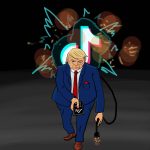
Kirk was a controversial public figure, and his death has yielded a slew of polarized reactions from supporters and critics. Some of Kirk’s critics have responded by satirizing his death in online spaces with memes and jokes. Kirk was widely viewed by his critics as responsible for spreading hateful rhetoric that targeted racial groups, immigrants, women and the LGBTQ+ community. Many of his critics have expressed viewpoints that claim Kirk was partially responsible for a pre-existing culture of political violence, as well as inflaming an ongoing culture war within the landscape of American politics and social reckonings.
Kirk’s supporters view the conservative powerhouse as a benevolent champion of free speech, with a legacy of fostering civil debates between conflicting viewpoints. Kirk’s assasination has also been referenced by some of his supporters as evidence of a rise in political violence and suppression of conservative ideology. This sense of persecution and violence among conservative supporters of Kirk has resulted in coordinated online efforts to report instances of people joking about Kirk’s death to their employers in an effort to get critics fired from their jobs. People from various socio-economic classes and positions, including a slew of professors at various universities have been fired over public social media posts that were critical of Kirk.
Following recent comments made by late night talk show host and comedian Jimmy Kimmel, the long-running late night show “Jimmy Kimmel Live!” was suspended indefinitely by ABC on Wednesday, Sept. 17. Kimmel’s suspension coincided with criticisms brought by Federal Communications Commission (FCC) Chairman Brendan Carr, which has been viewed by many as evidence of increased government control over free speech. ABC backtracked on the suspension days later and restored Kimmel to his previous status, following backlash from supporters.
Kirk’s death has also revitalized debates surrounding Section 230 of the Communications Decency Act, which historically upholds the right of interactive computer services, such as social media platforms, to retain censorship authority over user-generated content.
While many people perceive political polarization to be at an all-time high, KSC Chair of Political Science Michael Welsh said a majority of the American people are fundamentally less polarized than it can sometimes seem.
“The desire to take and spin so that reality contorts to one’s outlook is something that’s more prevalent on the extremes of political culture, rather than the general public. There’s a lot of research and data that says that the average person is within a standard deviation or two of the ideological middle,” said Welsh.
“They may be clearly into what they consider to be Democrat or Republican party affiliations, but their policy preferences sort of hang out in the middle. If you put it on a spatial scale, the great mass of people in the middle are probably closer to each other if they are Republicans and Democrats than say a Democrat might be spatially to the extreme variant of that,” added Welsh.
According to senior Jordan Elci, the news of Kirk’s death disgusted him.
“It was pretty disgusting. Anybody should have the ability to have free speech, whether you agree or disagree with their opinions. That doesn’t give anyone the privilege or right to take someone away from their family and change someone else’s life,” said Elci.
Junior Colin McLaughlin echoed Elci’s sentiment and said he would like to see better regulations for firearms.
“I don’t think anybody deserves to die over politics. I do think there needs to be a little more regulation when it comes to gun laws, but truthfully, I don’t think anyone deserves death over their political views. People should be nicer to each other at the end of the day,” said McLaughlin.
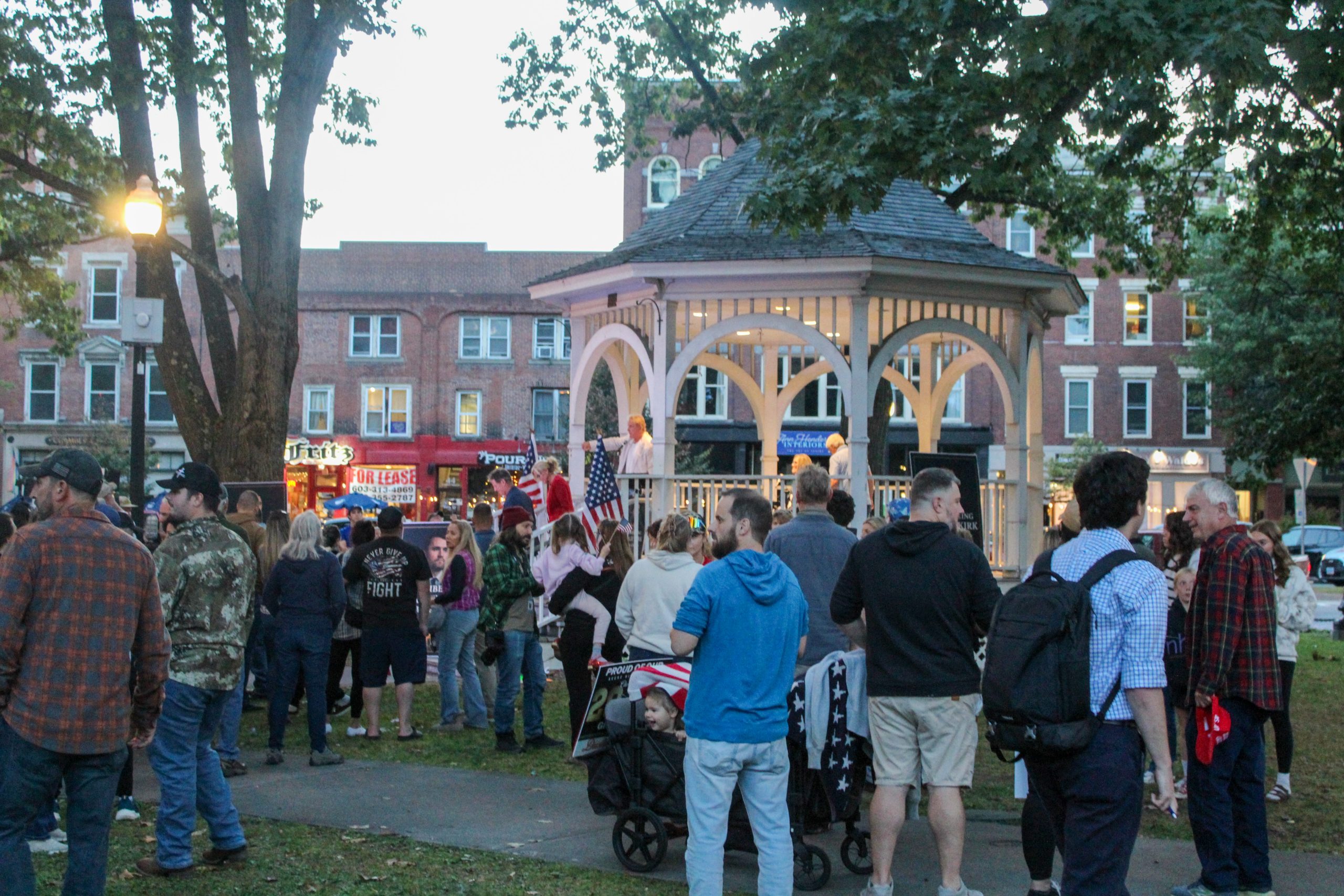
A memorial service for Kirk was held on Sunday, Sept. 21 at the State Farm Stadium in Glendale, Ariz. On Monday, Sept. 22, a candlelight vigil was held for Kirk in Keene’s Central Square, featuring a variety of speakers, including former Massachusetts Senator and Ambassador to New Zealand and Samoa Scott Brown.
Community member Timothy Riesler attended the vigil to pay tribute to Kirk’s memory and his religious faith.
“I wanted to honor the life of Charlie Kirk and what he meant to this country, the youth at college campuses, and especially what he meant to God and his message of the gospel,” said Riesler.
Community member Kevin Clark came out to support Kirk and said it was his first time attending this type of event.
“I’ve seen [Kirk] online a couple of times and he never looked like he was doing things the wrong way, allowing people to talk and shoot ideas back and forth. Because of the tragedy of him being killed the way he did, I decided to come out for my first time to a rally like this,” said Clark.
Ryan Pacheco can be contacted at
rpacheco@kscequinox.com