
The White Mountains are a New Hampshire staple, an 87-mile span of national forest that occupies about a quarter of N.H., as well as a portion of Maine, full of year-round outdoor recreations, attractions and plenty of Mother Nature’s touches of beauty in its spanning forests and lakes.
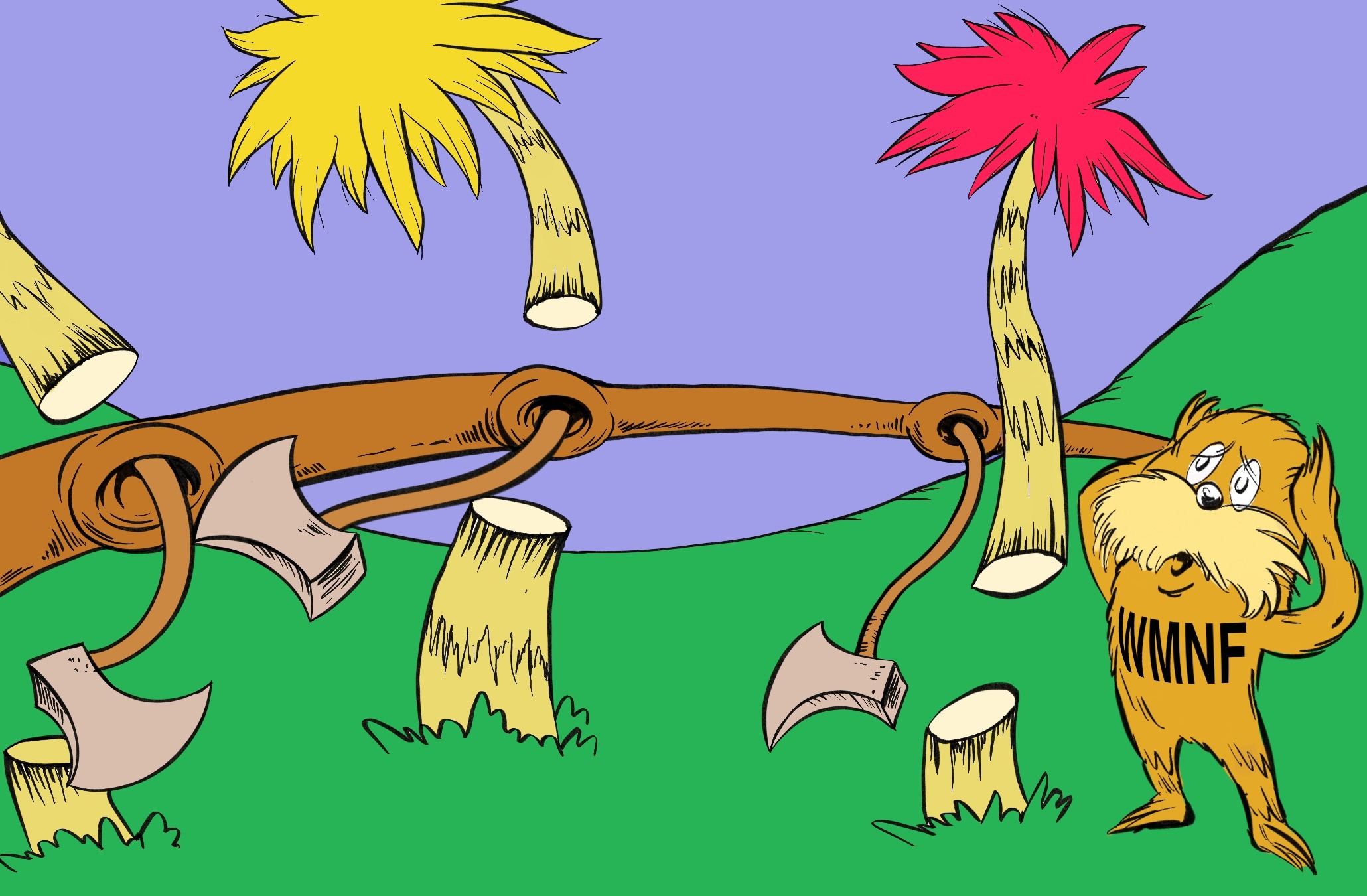
Now, a large portion of the forest is at risk due to the government’s decision to potentially cut a lot of it down, according to NHPR. It would increase timber production with the benefit of decreasing the risk of wildfires, according to the United States Department of Agriculture (USDA); however, what does this sudden need for logging mean for the environment?
The USDA told the forest service that the action was under an “Emergency Situation Determination” (ESD), meaning it skipped the routine of what major projects usually have to do. Typically, agencies have to do detailed environmental rules and allow the public to object to the project, but not with the determination that was made in this case.
The focus of cutting down trees is a “sanitation harvest,” which means the USDA is trying to prevent the spread of insect infestations to the whole forest. Also, they are going to cut trees near trails and roads to reduce safety hazards.
About 60 percent of the forest is at risk of being cut down because of these risks, so makes sense to cut down on some trees in order to maintain the whole forest, but it can’t be that much of an emergency.
This isn’t an isolated action, though. This came after another one of President Donald Trump’s random orders, this one targeted at an expansion of timber production throughout the country, putting 280 million acres of previously protected national forests on the table for logging, according to The New York Times. What made the order suddenly necessary, I don’t know.
What makes me wonder about this whole situation is the bypassing of the usual routine for large projects. While the USDA says it will be better for the forest itself, an environmental advocacy group called Standing Trees makes it seem like a slippery slope. The somewhat vague reasons make it seem like a way to justify commercial logging, especially since the public isn’t allowed an opinion on the matter.
I see both sides of the equation, yet I have to lean more toward the environmentalist side. If this really is for the better of the forest, then I’m on board, but it shouldn’t have been determined as an ESD. It only takes the democratic system out of the whole thing and could lead to more of this happening in the future with situations that aren’t really emergencies. With how secretive the government has been recently, this could just be another false cover just to do more logging.
Forest service officials really need to look into a better method of preventing these kinds of risks to the forest that does not include completely chopping trees down. It’s another mindless attempt to quickly ramp up lumber protection, putting the environment and wildlife of the country in danger. Soon enough, there will be no forest left for tourists to come to. Maybe we’ll have to resort to plastic ones.
Hayley Doda can be contacted at
hayley@kscequinox.com