

The University System of New Hampshire (USNH) has been reeling from the recent passing of the N.H. House of Representatives budget on April 10, with a proposed 30 percent cut to the system’s budget.
This would require significant cuts to USNH institutions to accommodate the drastic loss of funding. These cuts are on the heels of N.H. continuing to be the state with the lowest funding for public higher education in the country, according to State Higher Education Finance’s 2023 report of state education spending from FY 1980 to FY 2023.
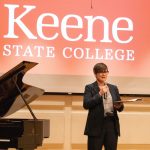
The N.H. House’s solution to the drastic cut in funding left a sour taste in the mouth for some. Keene State College President Melinda Treadwell, described the situation as “a very unpalatable cut and the use of a 529 fund to cover operations, both of which have been historically problematic.”
The 529 fund in question, as Treadwell explained, is the New Hampshire UNIQUE scholarship, an endowment that disburses money to N.H. students that are enrolling in both two-year or four-year college/university. The proposed budget that was passed then would attempt to soften the blow from a straight $25 million cut by supplementing the system with $15 million from the UNIQUE scholarship, Treadwell added.
However, Lecturer of Communications and Philosophy Michael McCarthy said the issue with funding in N.H. is a deeper problem with a “pledge” that some politicians take.
“The Pledge,” according to the Citizens Alliance of New Hampshire website, is a multi-plank pledge that N.H. politicians, most of which being Republicans, take as policy standards. One of those planks is to “Vote to cap or reduce state spending and tax rates.”
“‘The Pledge’ is what elected people who are running for office in New Hampshire promise to not institute a broad-based tax,” said McCarthy. “I heard about this in 1977 when I moved to Vermont because people laughed about the idea that Vermont has a sales and income tax.”
McCarthy continued that broad-based taxes, such as a graduated, progressive income tax, would provide many benefits to citizens but are not in the best interest of those who are well-off. McCarthy suggested there is a skew of interest in the N.H. House because of its structure, with representatives being paid $200 per term, unofficially limiting candidacy to older retirees who can afford the time required.
Professor of Political Science Michael Welsh said it leaves the legislature’s hands tied.
“It’s a policy that has fewer negative impacts in good times. But if it is a constrained situation where the budgets are tight or there is some need for resources, you know [it’s like] having a tool taken out of the toolbox. I’d say that is the situation we are often in,” added Welsh.
Timothy Fitzpatrick can be contacted at
tfitzpatrick@kscequinox.com