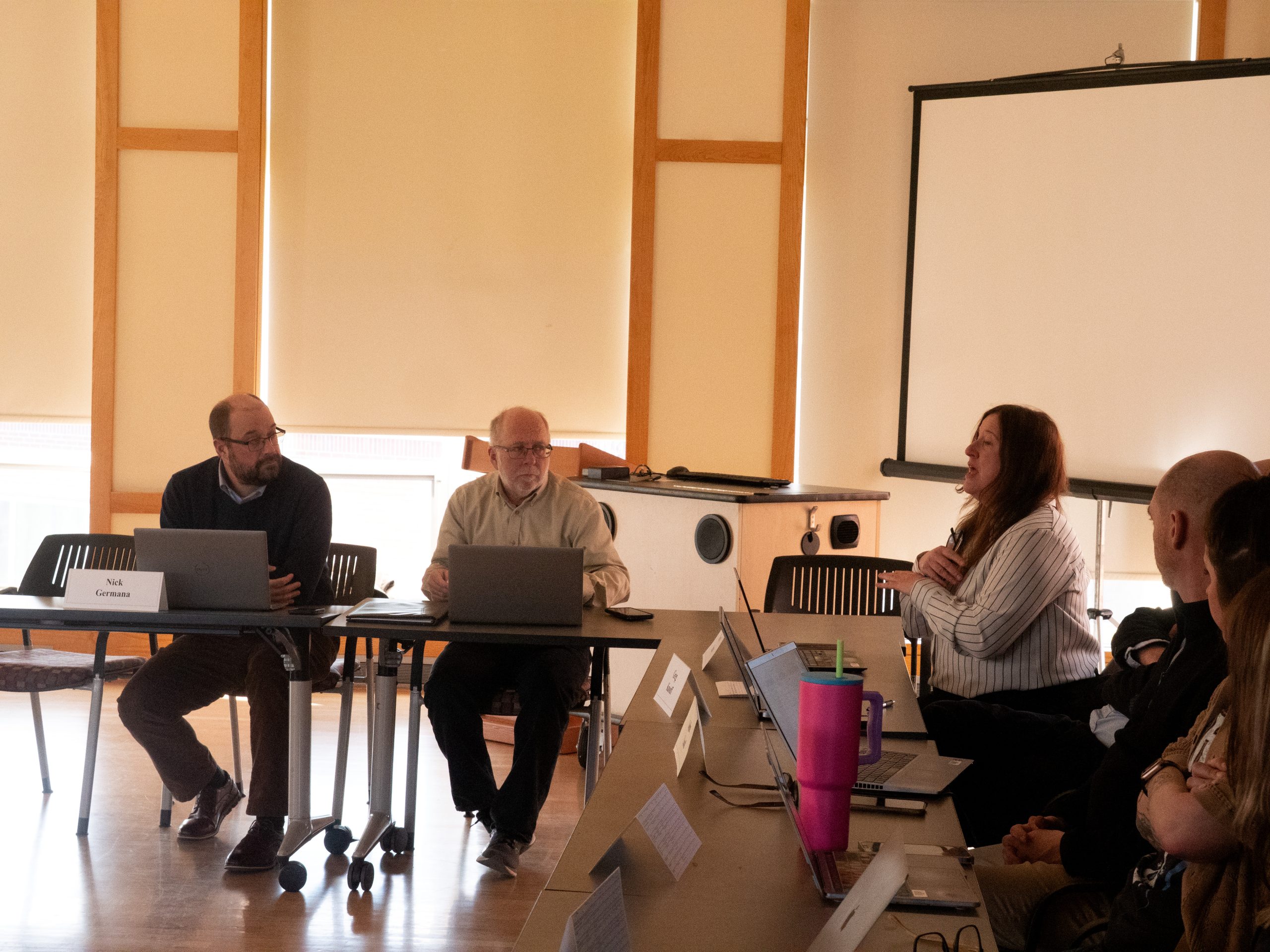
The KSC Senate approved transition plans relating to the new general education program at its most recent meeting and discussed a curriculum pause to be voted on at the next meeting.
The transition plan for integrative interdisciplinary (II) courses details three options for what departments can do with such courses as the college rolls out the new general education program; the courses can be inactivated, offered as disciplinary courses within their respective programs or offered as a general education courses within the new program, according to the meeting agenda packet.
Professor of History and Senate Curriculum Committee Chair Nick Germana said departments transitioning II courses to the gen ed program will need to select a liberal arts category the course fits in and/or a college-wide learning outcome (CWLO) it satisfies. Each course will have a primary and secondary CWLO designation to balance the categories.
“There won’t be any specific litmus test. Departments are making those decisions,” Germana said. “One of the important pieces for us is to try to get as equal in distribution as possible so that students will have a roughly comparable number of intercultural perspectives courses, civic engagement [courses], et cetera.”
The transition plan for the catalog year details the difference in accreditation for students declared in a catalog year prior to 2026/27 versus after; those declared in prior years can have new gen ed courses fulfill their previous Integrative Studies Program (ISP) requirements and those declared after can have ISP courses fulfill gen ed requirements.
Compliance and Licensure Coordinator and Senator Emily McGuiness clarified the reason for allowing students declared after 2026/27 to fulfill requirements with II courses.
“You can change your catalog year while you’re here, so someone could have entered the college as a catalog year ‘25 but then choose to declare the new catalog year and so they would have been here for a while and maybe taking those courses, so that’s what it’s answering,” McGuiness said.
The curriculum pause would take place over the 2025/26 academic year for the purpose of allowing the registrar’s office and academic departments to work on implementing the gen ed program. Germana explained the significance of the pause.
“The extraordinarily heavy lift the registrar’s office has ahead of them to stand up changes to the general education program that we have already approved – that is going to be a tremendous amount of work,” Germana said. “Along with that is that this is a time for all programs to really think about the relationship between programmatic offerings and general education, what of your current course offerings would fit well within the general education program, which of your current course offerings might best be only for majors. One of the other things that we’re going to encourage programs to think about is, if there are courses that you’re just not able to deliver anymore, to really think about inactivating these courses.”
Senior and Senator Jacob Favolise urged the senate to carefully consider where priorities lie with regard to resource management.
“This is probably one of those votes that I will be thinking about until I walk into the room and have to take the vote on it,” Favolise said. “I will say that, as sympathetic as I am in my ‘general member of campus’ role to the workload concerns with the registrar’s office, ultimately the workload pieces are a principal administrative responsibility to manage as far as I see it, so I do think we have to be careful in thinking about the rationale here for this. … I do think we have to be careful about marrying resource questions and considerations to some of the decisions that we make.”
The KSC Senate will next meet on April 23 for its last meeting of the academic year.
Charlotte King can be contacted at
cking@kscequinox.com