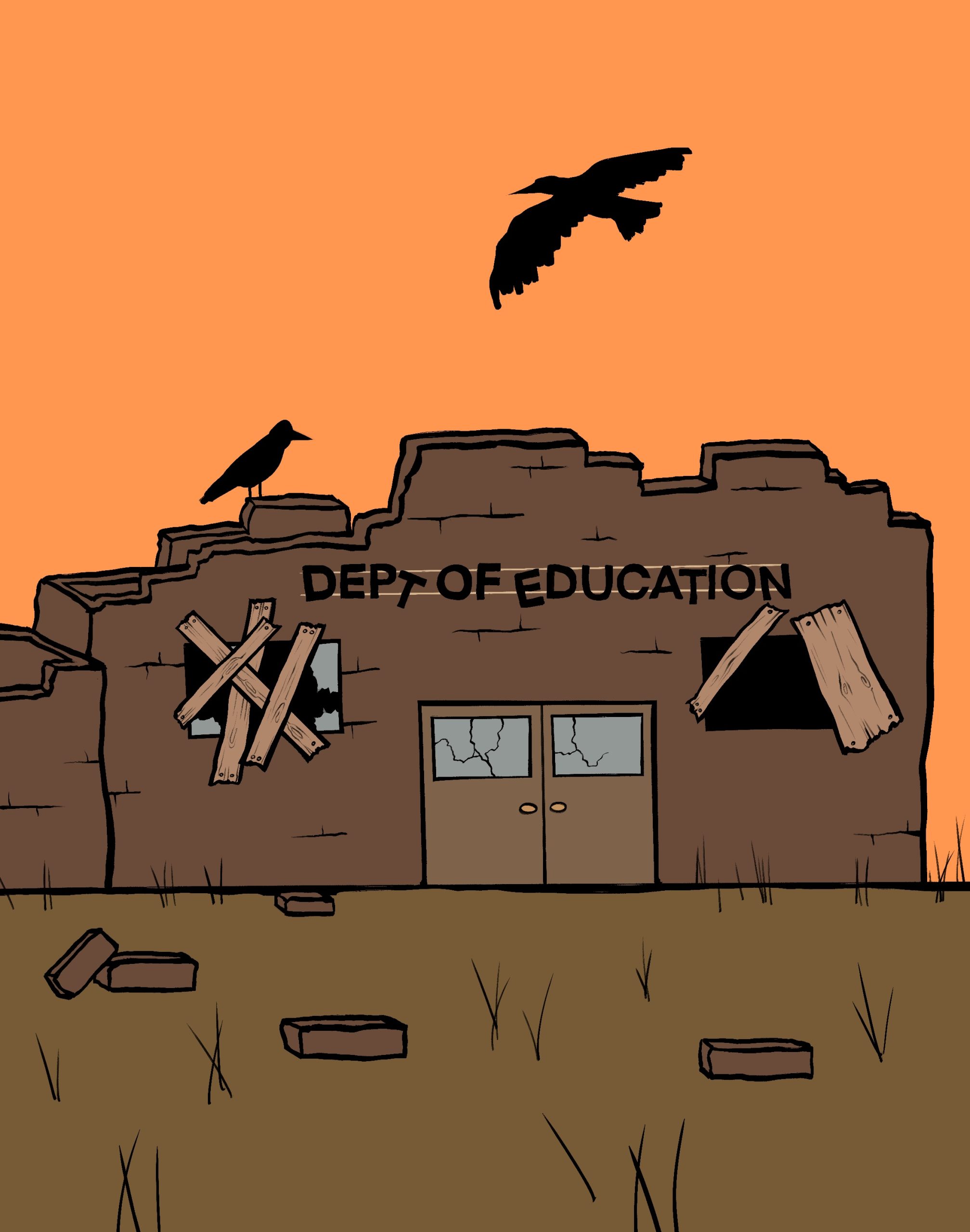
With the recent actions in our federal government, the U.S. Department of Education has had its funding cut significantly and 50 percent cut to the workforce, according to a March 13 National Public Radio (NPR) article. These cuts will affect the education system more broadly, according to NPR; however, this will significantly affect student financial aid, civil rights enforcement and aid for students with disabilities as well.
KSC President Melinda Treadwell commented on how the cuts may affect Keene State.
“I think realistically for us, it’s going to be a lot of churn,” Treadwell said.
Vice President for Finance and Administration Nathalie Houder explained the importance of government funding as it relates to KSC.
“[KSC] currently gets approximately 14 million [dollars] in funding from the state; most revenue comes from tuition, so we really rely on the funding we get,” Houder said.
“We are the public liberal arts college of New Hampshire; the value we add to the state is enormous,” Houder adds.
First-year Ruth Cassidy expressed disappointment in the cuts.
“I think that cutting federal budgets for education is very indicative of the current political climate,” Cassidy said.
According to the New Hampshire Fiscal Policy Institute, N.H. ranks as one of the lowest in the country in terms of receiving support from the state for higher education.
“I believe that schools like Keene are particularly susceptible because they are publicly funded, and especially when our financial situation isn’t great,” Cassidy said.
“We certainly have some financial challenges at the college,” Houder said.
What could this mean after budget cuts begin? Houder explained how the state’s budget process may pan out.
“A four percent recommended budget cut was presented by the governor, which would mean a loss of about 570,000 [dollars] if everything was approved according to the governor’s recommendation,” Houder said.
The state house received the governor’s recommendation and suggested a 30 percent cut to the budget. Following passage in the house, it will go to the senate, which will give its recommendation as well.
All this must happen before the budget is finalized.
However, Houder said, “We are working with the legislature to help them understand what their money is going towards and the impact of higher education in our state.” Houder added, “It’s not all about cuts; it’s about creating efficiencies.”
Treadwell commented on the potential lack of federal involvement in administering education going forward.
“I don’t think we know what will ultimately happen in the department of education. The secretary of education will have to be making those decisions over the course of her appointment. I think what is very likely is that the federal agency work and funding, perhaps, will be passed out to the states,” Treadwell concluded.
Katie Aguilar can be contacted at