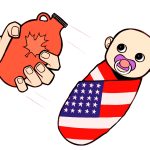

The NH House voted in favor of a bill that will stop the state’s Medicaid program from paying for the circumcisions of poor children by one vote. Advocates of the bill have pointed to the practice’s Western history, which is linked with Victorian-era efforts to diminish sexual pleasure. Opponents brought up that it could send the wrong message to Jewish and Muslim families.
Let us first tackle that fraught history of circumcision in the West. The circumcision boom of the 19th century that began in England and subsequently spread to the US is inexorably linked to the pseudoscience of the day. One can argue that it still happens in our modern day, but the twisting of scientific data to suit the day’s moral fashions is a practice so tied to the Victorian day that it still warrants parody today. It was believed that circumcising young boys would prevent them from indulging too frequently, and it should be noted that it was believed that sexual activity outside of that which took place in marriages for the purposes of procreation was believed to cause blindness and even “spermatorrhoea”, a so-called disease that referred to any such activities.
The religious side of circumcision seems like an entirely different issue. Westmoreland representative Paul Berch said that the bill singled out Jewish and Muslim families, and while I think that is a valid concern, I am always an advocate for actually hearing what people from these communities think. It is entirely likely that many Jewish or Muslim families who depend on Medicaid to cover circumcisions might not know anything about it. While I can make guesses, as someone who is neither Muslim nor Jewish, I cannot say for certain, and neither can a majority our lawmakers.
In general, the arguments from either side of the aisle are shaky at best. Julius Soti, the primary sponsor of the bill, noted that the historic leaders whose portraits hang in the House Chamber were not circumcised, which has absolutely nothing to do with the issue at hand. This seems to have been an attempt to outline the procedure’s pointlessness, but it comes out of left field and seems more like a strange appeal to authority than anything else.
If Victorian half-science was still the primary driver behind today’s parents’ decision to have their children circumcised, perhaps backing the bill would make more sense. As it stands, however, parents who decide to have their children circumcised these days are doing it more for practical reasons if not for solely religious ones. The most compelling arguments against circumcision come instead from the standpoint of consent. An infant is unable to say whether or not it wants to be circumcised, and while satisfaction rates for circumcision are high, I doubt that most people would voluntarily choose to get circumcised if it were not an immediate health concern. At the end of the day, this is a decision on which it is vital to attain more information about how many families depend on Medicaid coverage of the procedure.
May Cassidy can be contacted at
mcassidy@kscequinox.com