

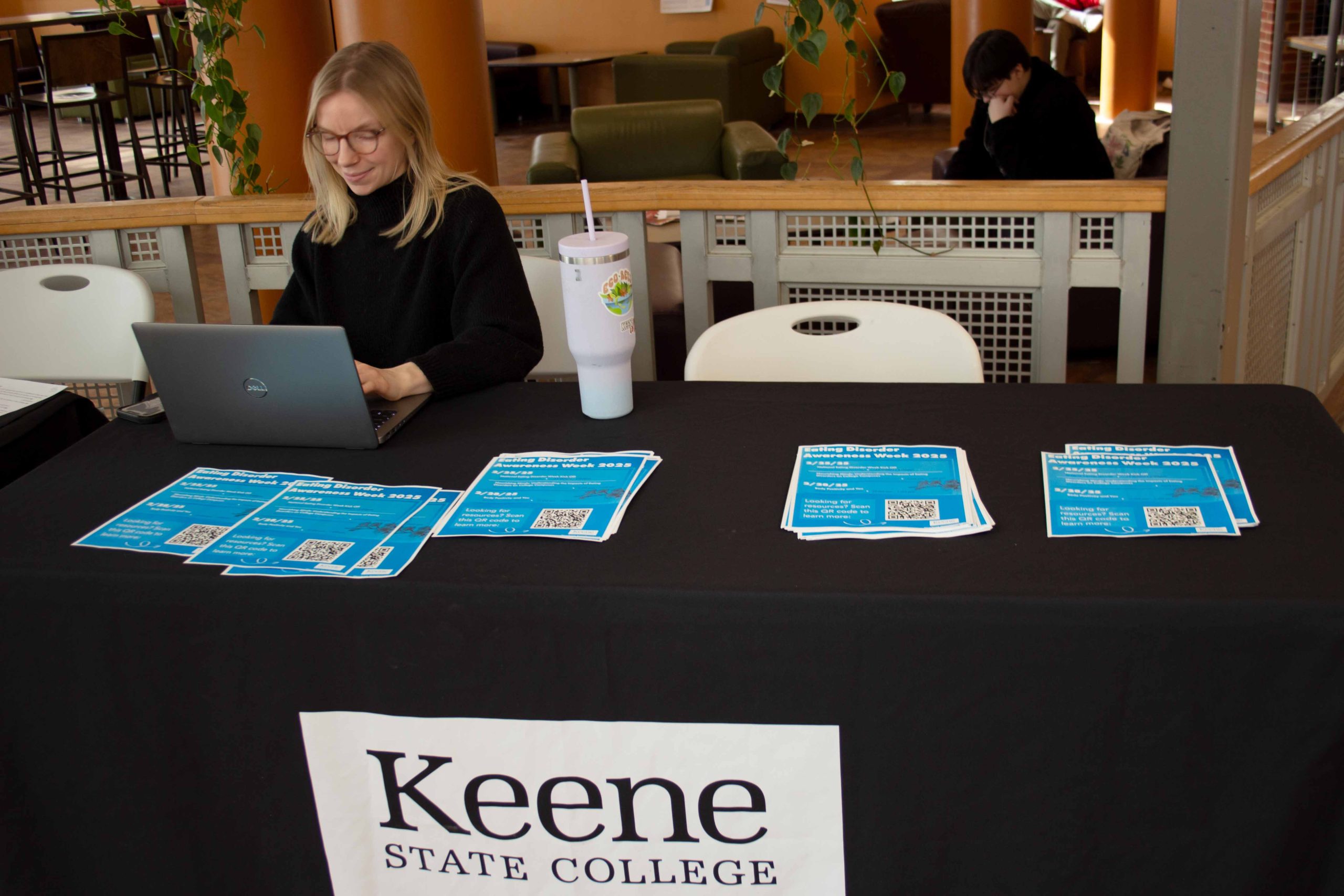
Keene State College’s Office of Student Involvement held different events over the past week to participate in Eating Disorder Awareness Week.
Eating Disorder Awareness Week took place from February 24 to March 2 this year. According to the National Eating Disorders Association, the week is intended to educate people about the realities of eating disorders. The association also aims to provide help and comfort to anybody who is affected by eating disorders, whether they have a loved one who is struggling or they themselves suffer from those disorders.
The office of student involvement had three events throughout the week.
The first, on Tuesday, Feb. 25, was a tabling event in the L.P. Young Student Center intended to inform students of the upcoming events for Eating Disorder Awareness Week and help students learn how to intervene and support someone struggling with an eating disorder.
There was intended to be a presentation on Tuesday at 6 p.m. to discuss how eating disorders affect college students; however, Senior Coordinator of Student Involvement and Wellbeing Emily Alexander, and the presentation speaker, said she was forced to cancel due to a lack of attendance.
On Friday, Feb. 28, student involvement tabled in the student center with a focus on body positivity. Students could stop by and make bead bracelets, create a vision board or take a card with a positive message on it.
“Part of my goal is to increase awareness of eating disorders and what they are and how they impact college students,” said Alexander. “It’s a really prevalent experience that a lot of people have that can be really…detrimental. So…taking the stigma away from talking about it and increasing education is really my goal.”
Alexander also spoke on the importance of providing education on and raising awareness for eating disorders.
“I think that our culture really is heavily influenced by diet culture. It is really prevalent and sneaky and I think that it’s really normalized,” said Alexander. “So a lot of people don’t realize that maybe some of the behaviors that they themselves or their friends or loved ones are engaging in can be unhealthy.”
“[Eating disorders] don’t discriminate on socioeconomic status, race, gender, identity, age, any of that,” Alexander continued. “It’s really important to provide education … so that students and individuals know what to look out for so they can help themselves or their friends.”
Orion Corbin can be contacted at